

Home > Products > RFID TAG > RFID Seal Tag
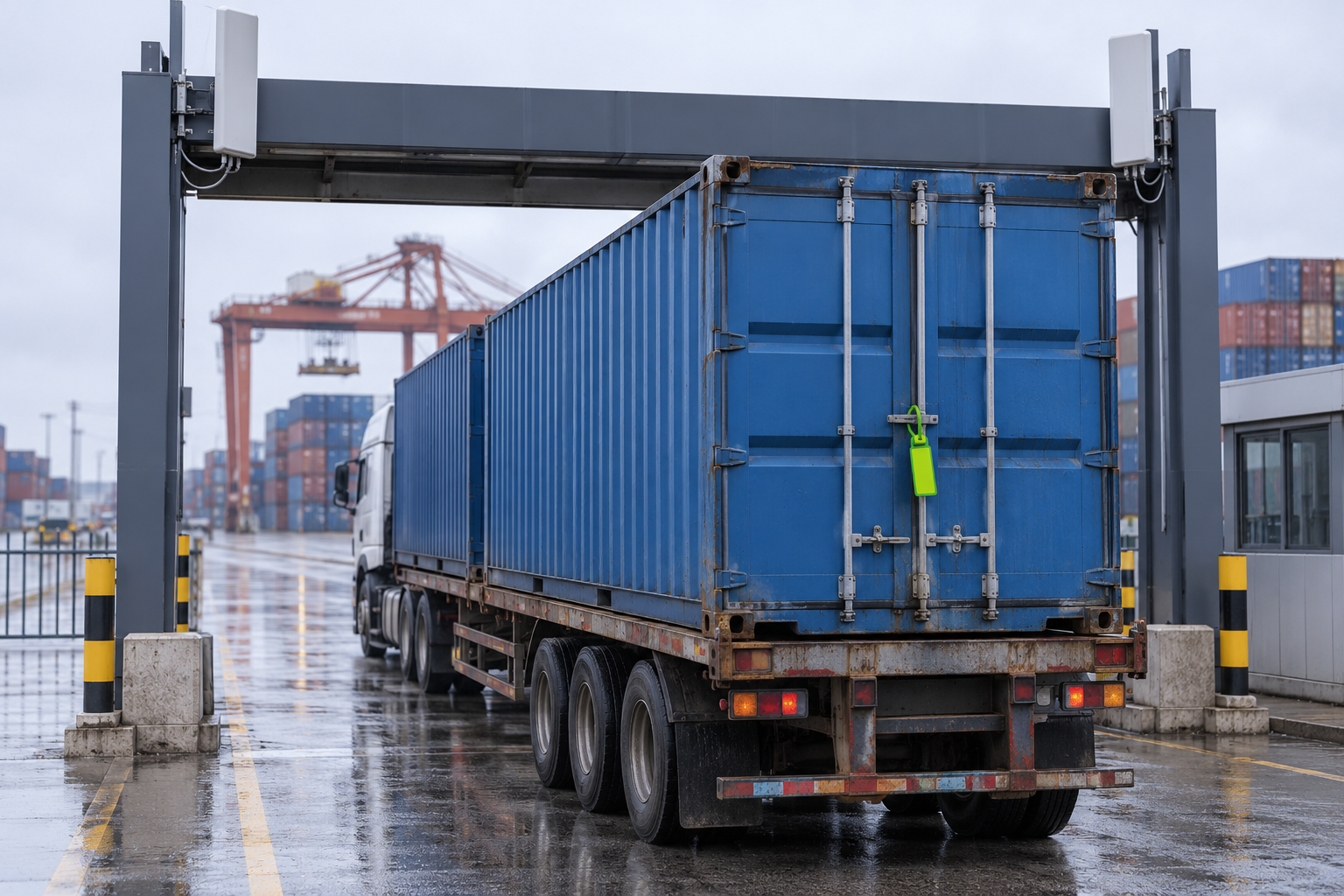
Container and cargo sealing
A numbered cable seal with an RFID chip in the flag. Pull it tight by hand, and the only way into the container is to cut the cable — which is the evidence.
The product does two jobs that are usually bought separately: it proves whether a container was opened, and it tells a reader which container it is without anyone walking up to it. The tamper evidence is mechanical and needs no power; the chip is what turns a visual check into a record. Two things decide whether it suits a given route: the classification it has been tested to, and which read distance belongs to which version.
| 30 cmcable, pulled tight by hand | UHF or HF860-960 MHz, or 13.56 MHz | 3000 Ntensile |
The classification behind the words
This product a High Security RFID Cable Seal. In freight that phrase is not an adjective: ISO 17712, the standard for mechanical freight container seals, sorts seals into three classes — I for Indicative, S for Security, and H for High Security — and each class has to pass its own tests.
| Class | What a buyer understands by it | What it means when you specify |
| I | Indicative. Shows that a seal was fitted and whether it has been opened, with the least mechanical resistance. | The cheapest class, and the one most plastic ties fall into whether or not anyone says so. |
| S | Security. Passes a defined set of mechanical tests: tensile, shear, bending and impact. | A cable tie with a steel locking mechanism is the usual route to this class. |
| H | High Security. The class customs programmes look for, and the one the phrase in the table implies. | If the seal is class H, ask for the certificate number and quote it on the customs paperwork. If it is not, the phrase “High Security” is the first thing a forwarder will challenge in a tender. |
Our tensile figure is 3,000 N, which is a number to compare against the class you need — not a class in itself.
Two read distances, one table
The parameter table gives a reading distance of 0–40 mm, the introduction says UHF seals can be identified from up to 26 ft (8 m). Both figures are current, and they belong to different versions of the product, so which one applies depends on the radio you order rather than on the seal.
| Version | What it is read by | The published figure |
| HF, 13.56 MHz NTAG213 as listed |
A handheld or a phone held against the flag. Near-field, so the reader has to be close and the flag has to be presented. | 40 mm is the far edge of what a phone will do — expect the working distance to be a few centimetres. |
| UHF, 860–960 MHz Monza R6-P as listed |
A fixed reader at a gate or a portal, reading a truck load of sealed containers as it passes, or a handheld at a metre or two. | The 8 m figure belongs here. Read as “identified from up to 26 ft (8 m)”, which is a portal claim and not something to quote for a handheld. |
The chip
The chip list pairs NTAG213 with ISO 14443A and Monza R6-P with ISO 18000-6C, which is correct, and the first and ISO 18000-6C with the second. The introduction also mentions ISO 15693 compatible NFC Type 5 (NFC-V) readers, which is a third option — NTAG213 is neither: it is an ISO 14443A part, NFC Forum Type 2.
| Item | What it actually is |
| NXP NTAG213 | ISO/IEC 14443A, NFC Forum Type 2. A phone reads it, and it carries 144 bytes of user memory. |
| Impinj Monza R6-P | Impinj Monza R6-P, ISO/IEC 18000-6C. |
| ISO 15693 / NFC Type V | Not one of the two parts in the chip list. ISO 15693 is the ICODE family, and it needs NFC-V readers rather than NFC Type 2 phones. |
Chip descriptions follow the NXP NTAG21x and Impinj Monza R6-P product families. Our published memory figure is left as it stands, with the comparison above, rather than replaced with an estimate.
How the seal works
The mechanism is worth explaining, because it is the part a buyer is actually paying for. A steel locking element inside the flip latch grips the cable one way: pull it tighter and it clicks, pull it back and it holds. Nothing releases it except cutting the cable, and a cut cable cannot be re-threaded to look untouched.
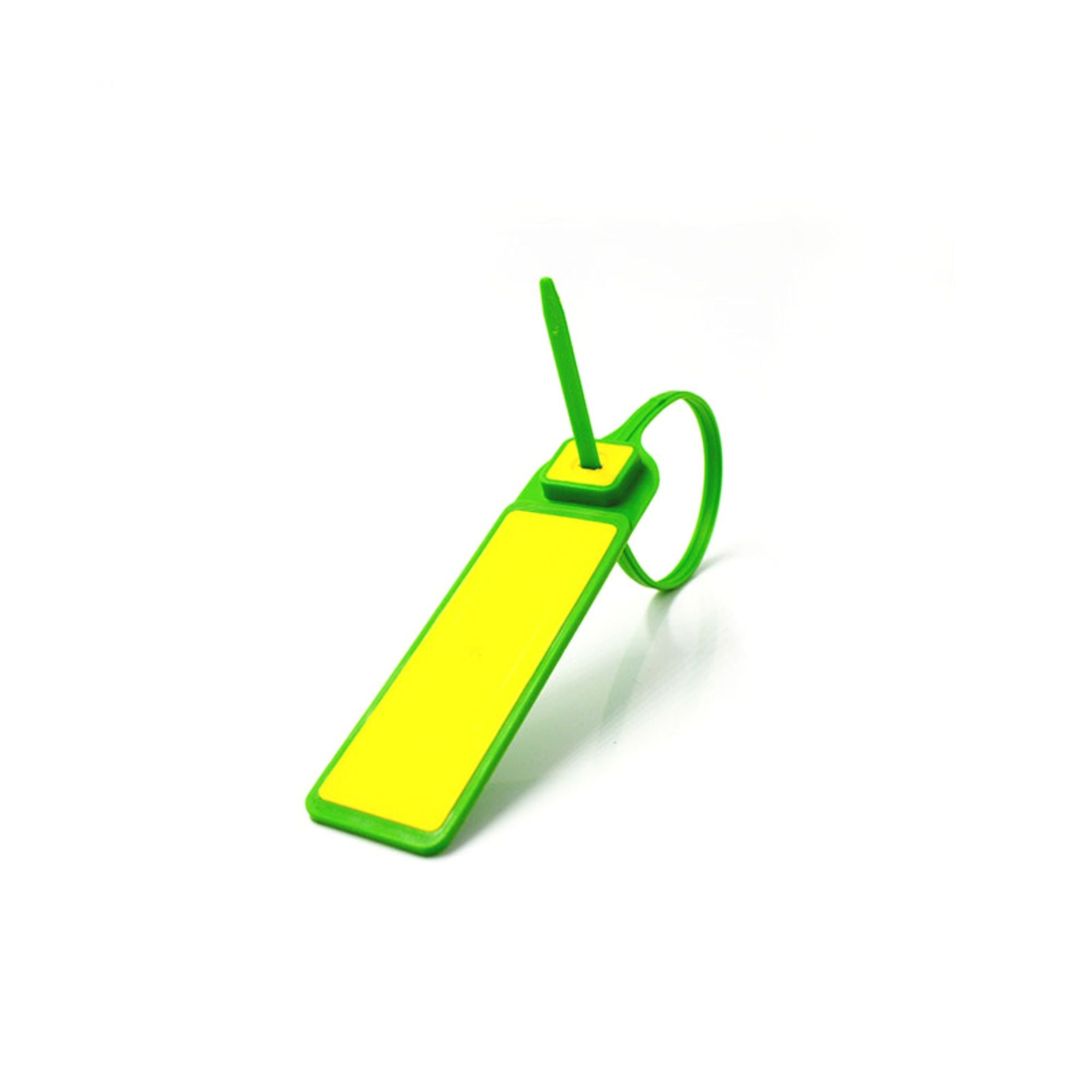
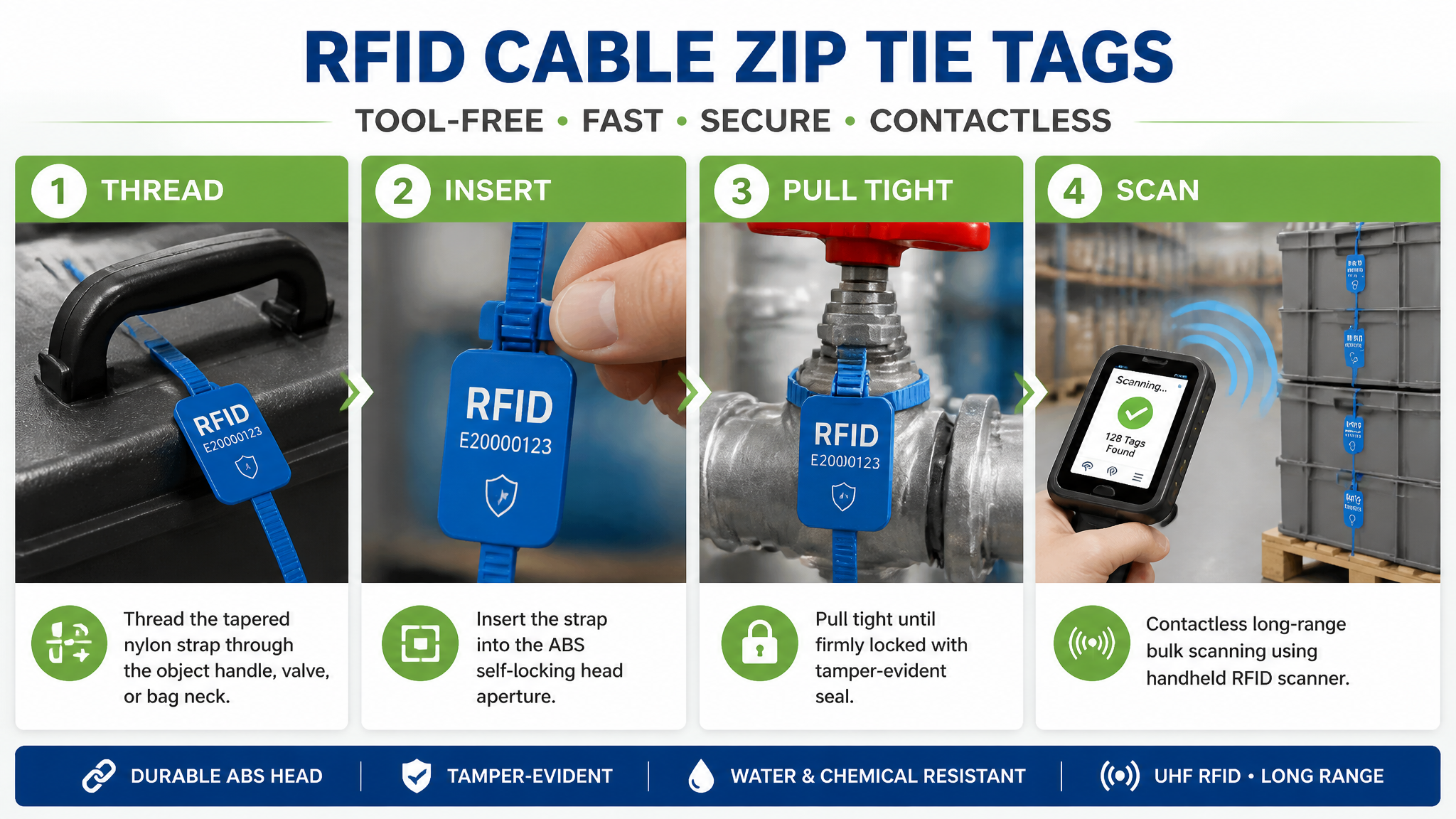 The flip latch, closed. The cable enters at the top and the flag hangs below it — and that position is the point: the chip sits in the flag, outside the loop, so the thing being sealed does not sit against the antenna.
| Feature | What it means in use |
| “Pull tight by hand, locking range is adjustable” | No tool is needed to fit it, and the same seal suits a door hasp and a tarpaulin eyelet. |
| “Flip latch location, cable tie tape insert will not exit” | The latch covers the entry, so the cable cannot be backed out and re-inserted after a tamper. |
| “Chip in the label binding external position” | A real and underrated point: the chip is in the flag rather than inside the loop, so a steel hasp does not detune the antenna. |
| Tensile force, published as “more than 3000N” | The breaking strength of the cable and latch assembly, and the number a security buyer compares across suppliers. |
Specification
| PHYSICAL | |
| Product | RFID cable seal tie tag |
| Total length | 30 cm |
| Cable diameter | 1.8 mm as standard, or customised |
| Material | ABS body with a galvanised steel locking element |
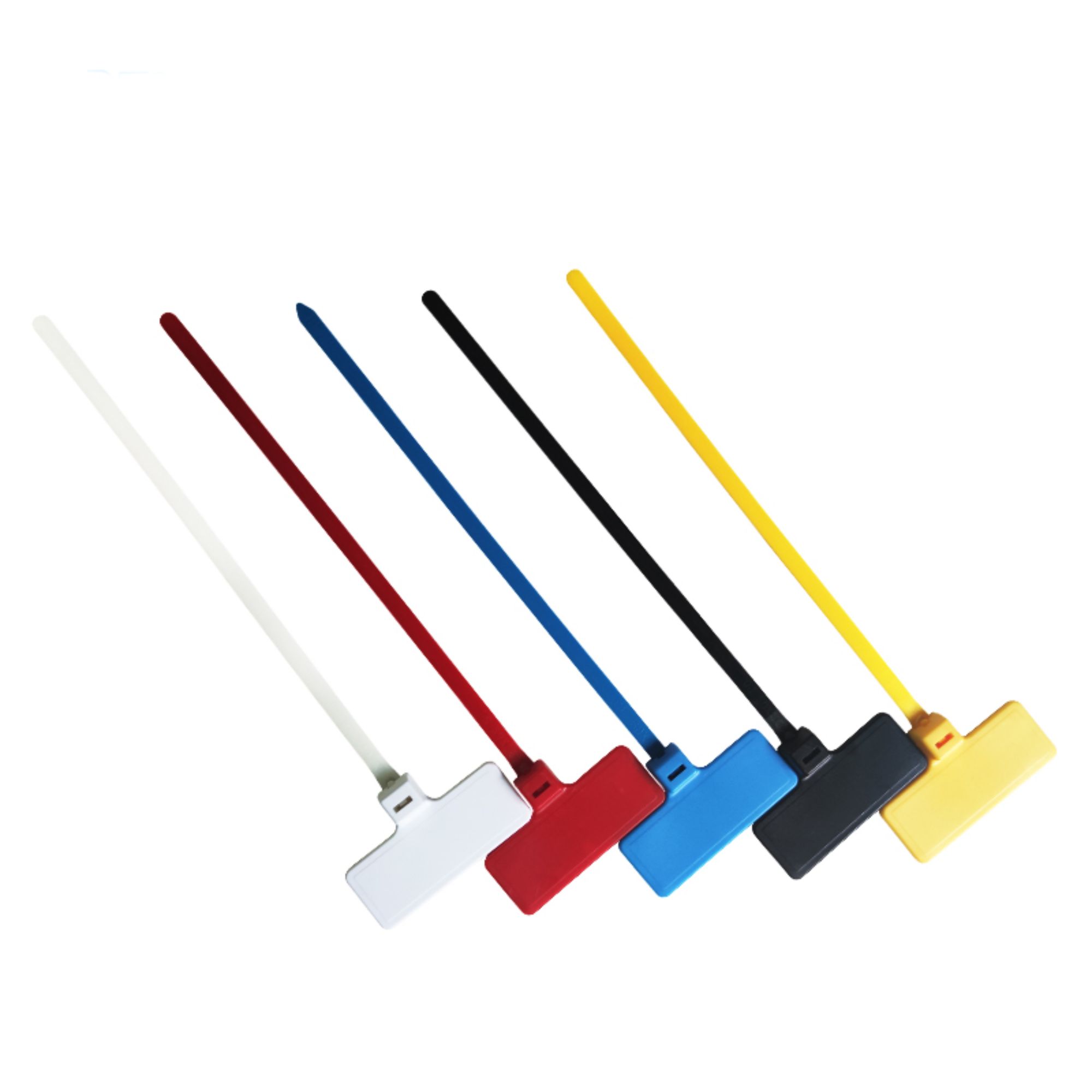
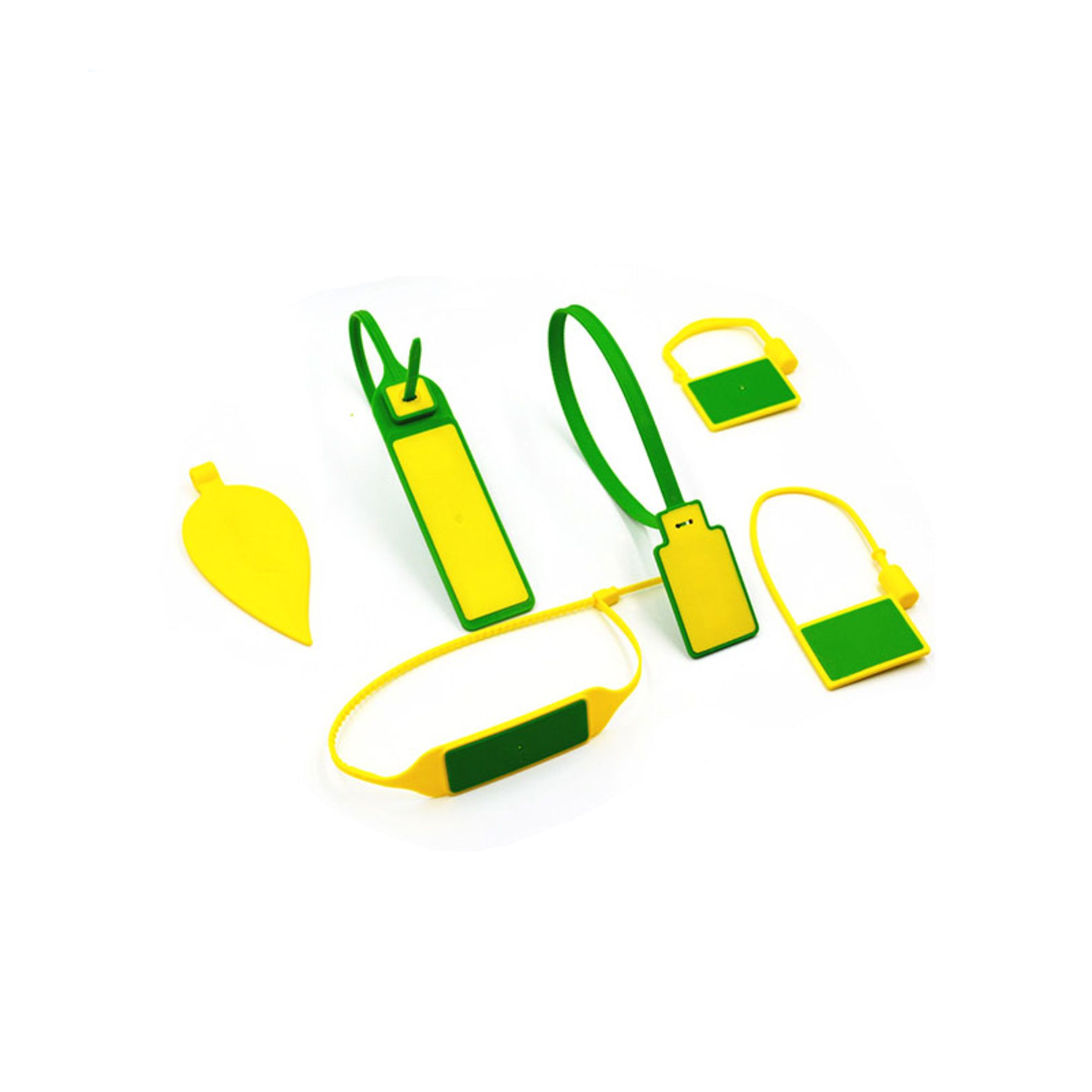
| Colour | Red, white, black, yellow and blue, or any custom colour |
| Weight | 17 g per piece |
| RADIO | |
| Frequency | 13.56 MHz or UHF 860-960 MHz |
| Chip | NXP NTAG213 for the HF version; Impinj Monza R6-P for the UHF version |
| Protocol | ISO/IEC 14443A on the HF version, ISO/IEC 18000-6C on the UHF version |
| Read distance | 0-40 mm on the HF version, read against the flag; up to 8 m (26 ft) on the UHF version through a portal |
| MECHANICAL | |
| Tensile strength | More than 3,000 N as published, with the test method to follow |
| Latch | Flip latch over the cable entry, so the tail cannot be withdrawn and re-inserted |
| Fitting | Pulled tight by hand, with an adjustable locking range. No tool required |
| Reuse | Single use by design. The seal is removed by cutting the cable |
| ENVIRONMENT | |
| Working temperature | -40 to +100 °C |
| Chemical resistance | corrosion-resistant |
| PRINTING AND DATA | |
| Marking | Serial number, letters, logo, barcode or a simple image, by laser printing or hot stamping |
| Encoding | Chip encoding available. Ask for the number series and whether a printed-to-chip mapping file is returned |
Where it fits
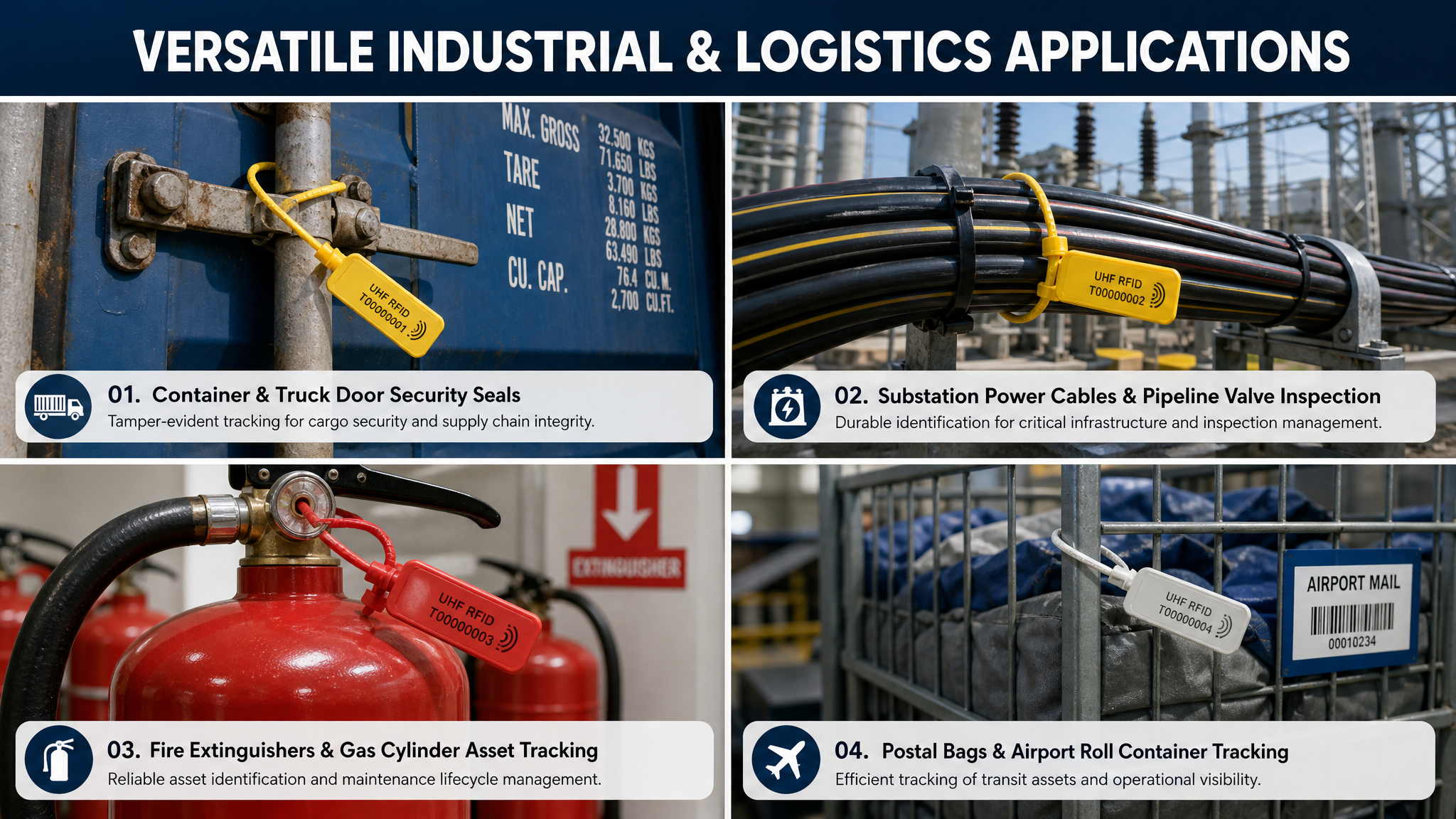
A cable seal is specified where a container has to be shown to have been closed for its whole journey: from the loading bay to the receiving bay, through however many hands. These are the five settings where that argument is made, and the thing to check in each.
| Setting | What the seal does there | Check first |
| Container shipping, FCL and LCL | A numbered seal on the door hasp proves the container was not opened between loading and delivery, and the chip lets the number be captured without walking the row. | Whether the buyer’s customs programme requires an ISO 17712 class, and which class. This is the first question in every container enquiry. |
| Tankers and bulk trailers | Seals on every compartment or discharge valve, so a tampered valve is visible at the receiving bay. | That the hasp on the valve is inside the loop range. The minimum and maximum loop diameter is not published. |
| Customs transit and bonded goods | A seal number that appears on the transit document and can be verified against the physical seal. | Whether the printed number can be matched to the chip number, so the document and the reader agree. |
| Air cargo and ULDs | Seals on unit load devices and on consignments that pass through several handlers. | That the seal survives the handling and the cold. Read range at -20 °C is worth testing before a winter contract. |
| Cash in transit and banking | Sealed bags and cassettes where the seal is the chain of custody. | Whether a tamper-evident bag is also needed. A cable seal proves the container was closed; it does not prove what was inside. |
In use
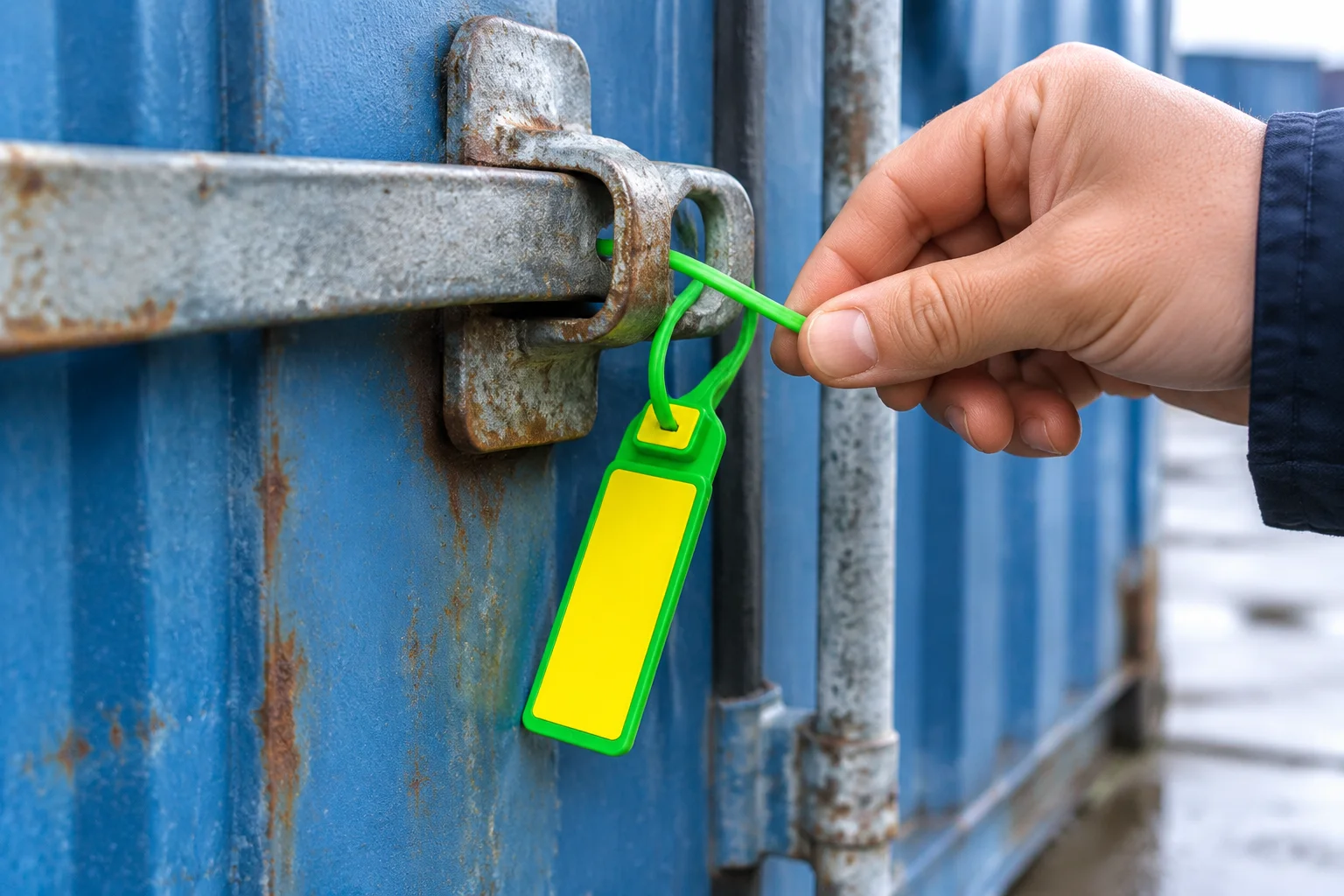
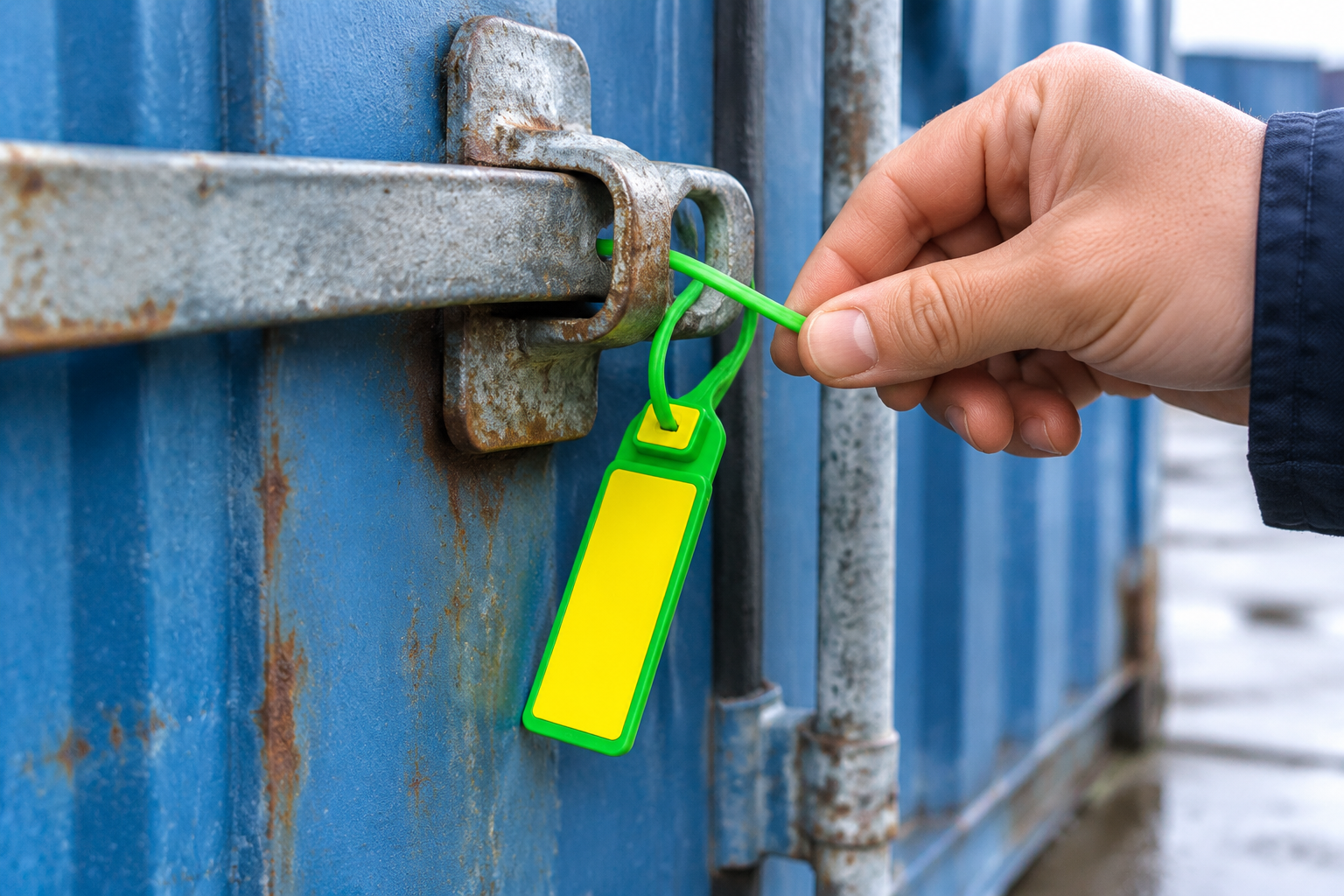
The seal in place. The tail is through the hasp, the latch is closed, and the flag hangs free — which is exactly where the chip has to be for the steel hasp not to detune it.
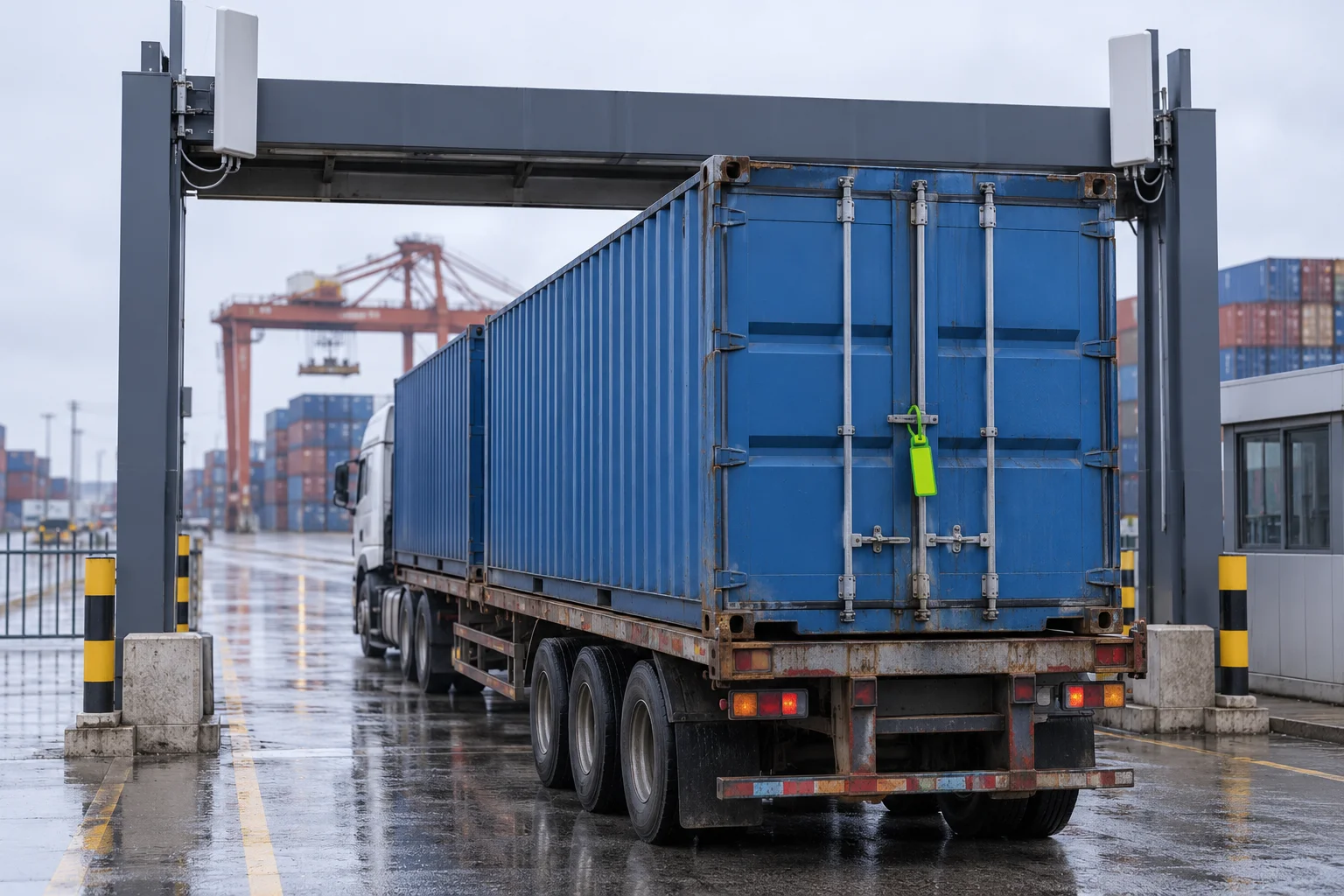
The reason to put a chip in a seal at all: the truck does not stop. This is the 8 m claim in the introduction, and it is a portal figure, not something a handheld at the window will reproduce.
Questions we are asked
| Question | Answer |
| Is this seal ISO 17712 certified? | ISO 17712 sorts freight container seals into class I, S and H, and a container buyer, a carrier or a customs programme will ask which one applies. Tell us which class your programme requires and we will send the test report for that version. Until we have one, we will not put a class on the page. |
| Which version, HF or UHF? | HF at 13.56 MHz, read by a phone or a handheld held against the flag, if a person checks each seal. UHF at 860-960 MHz if the seals have to be captured as a truck rolls through a gate — that is the version the 8 m figure belongs to. |
| Why are there two read distances? | Because there are two versions. 40 mm suits the HF seal read by a handheld; 8 m is the UHF portal figure at a gate. |
| Can the printed number match the chip? | It should, and for a customs seal it has to. Ask for the number series to be encoded into the chip and printed on the flag in the same run, and for a mapping file back. A printed number that disagrees with the chip is worse than no number at all. |
| Can the seal be reused? | No. It is removed by cutting the cable, and that is the point. A seal that can be re-closed provides no evidence of anything. |
| Will it fit our door hasp? | The cable is 1.8 mm and 30 cm long, pulled to the loop you need, but the minimum and maximum loop diameter are not published. Send a photo of the hasp and we will confirm before you order a carton. |
Related. The wider tag range is on the RFID tag page. For capturing seals as a vehicle passes, see fixed readers, and for checking them by hand, handheld readers.
Copyright © ©Copyright 2024 Greatest IoT Technology Co., Ltd all rights reserved - Privacy policy