

Home > Products > RFID TAG > RFID LED tag
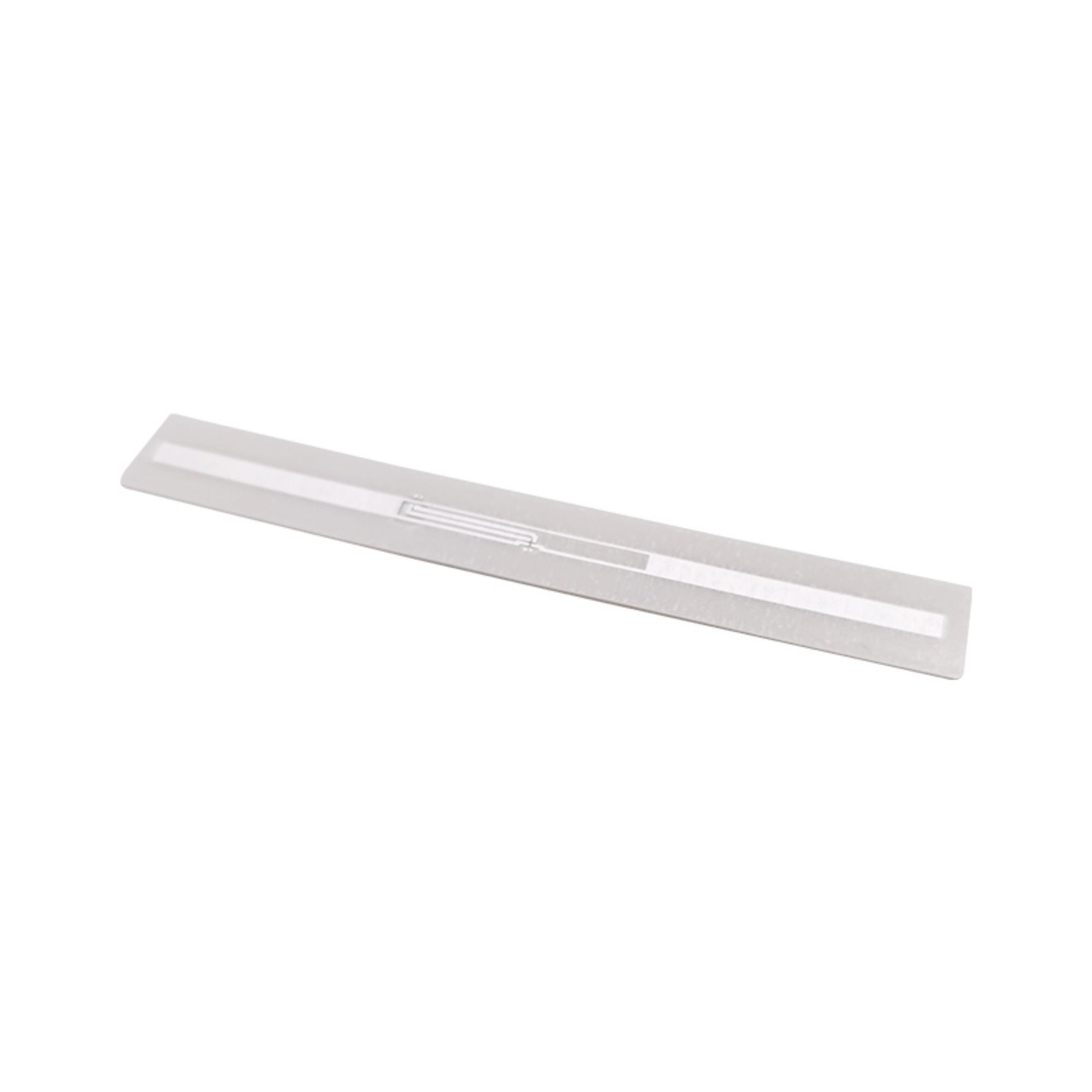
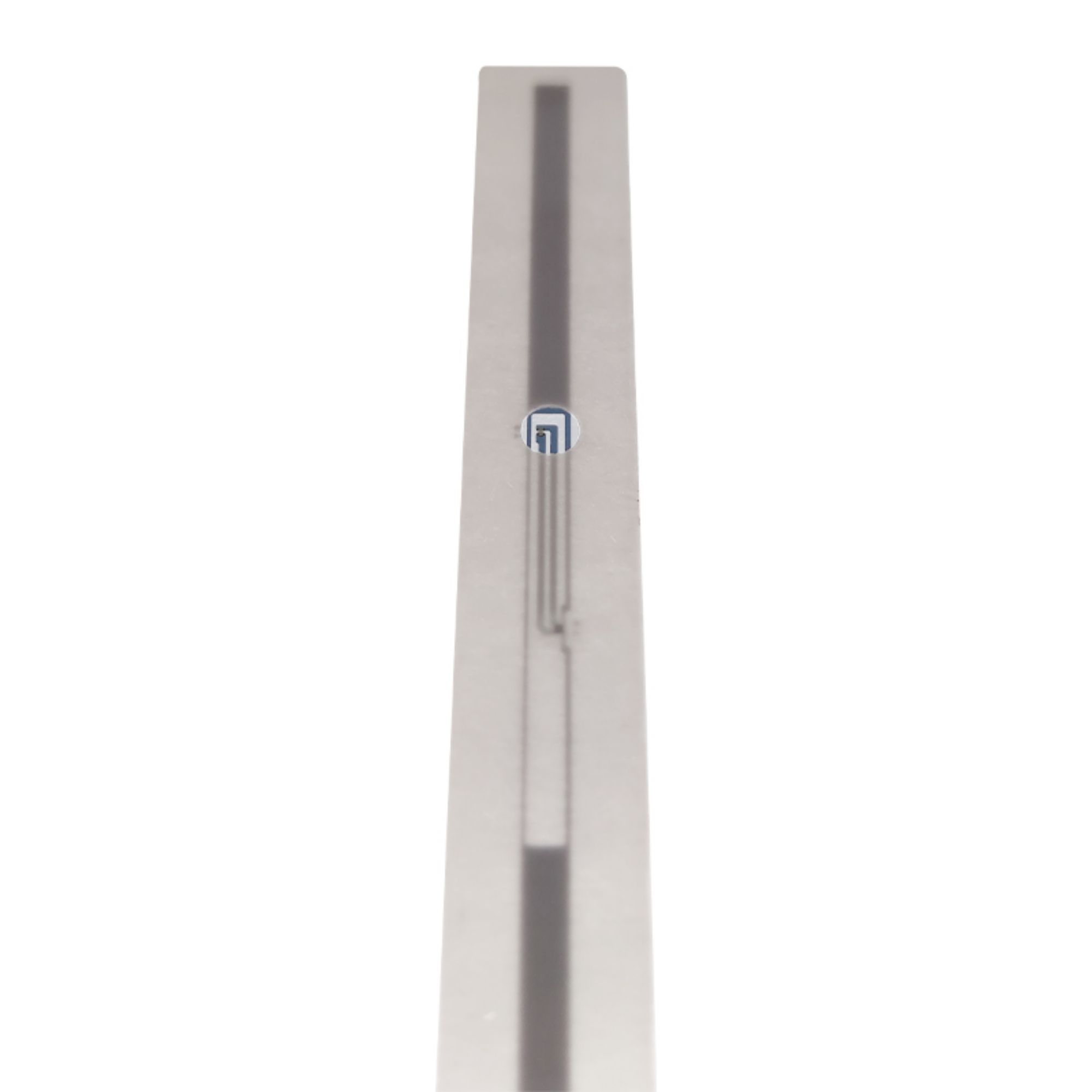
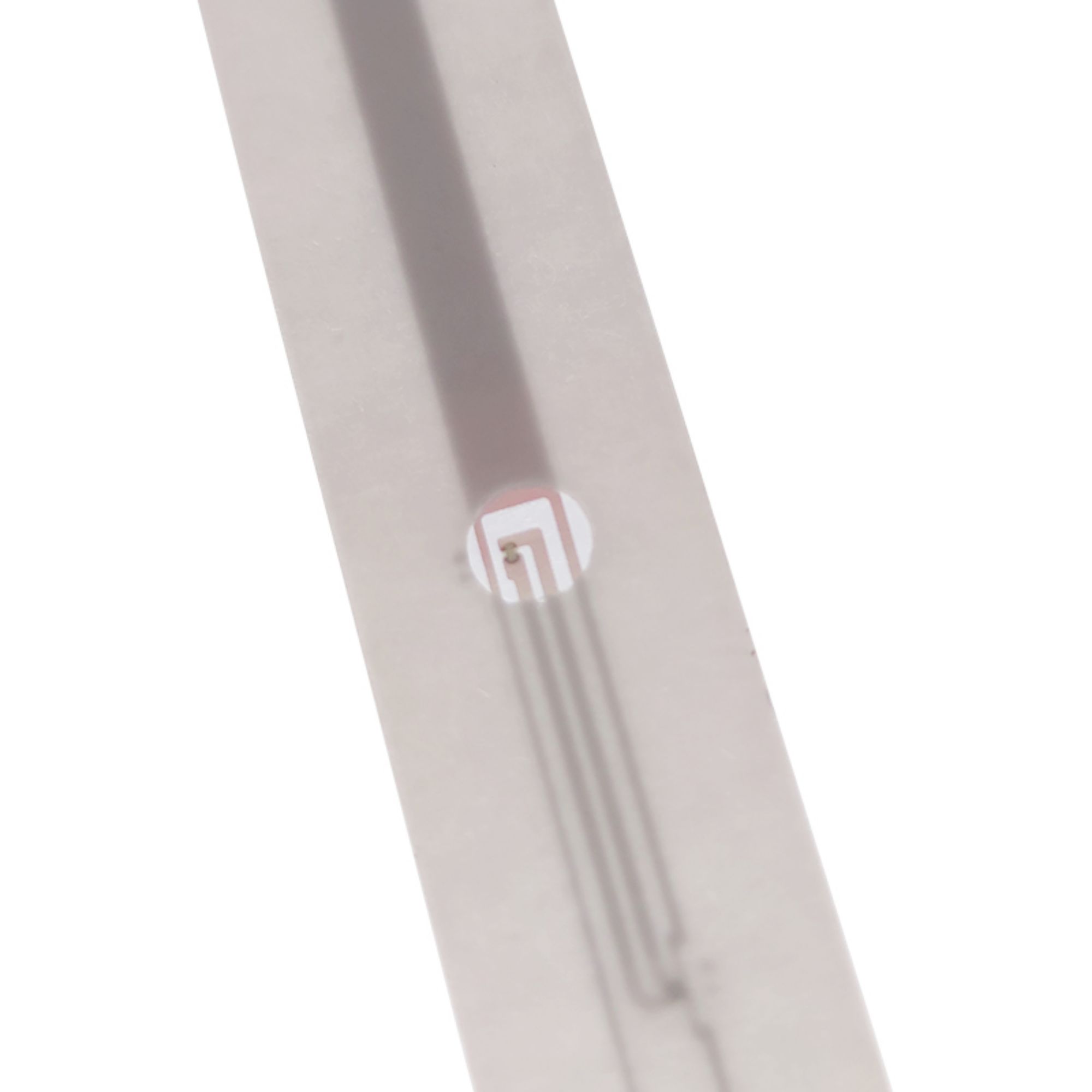
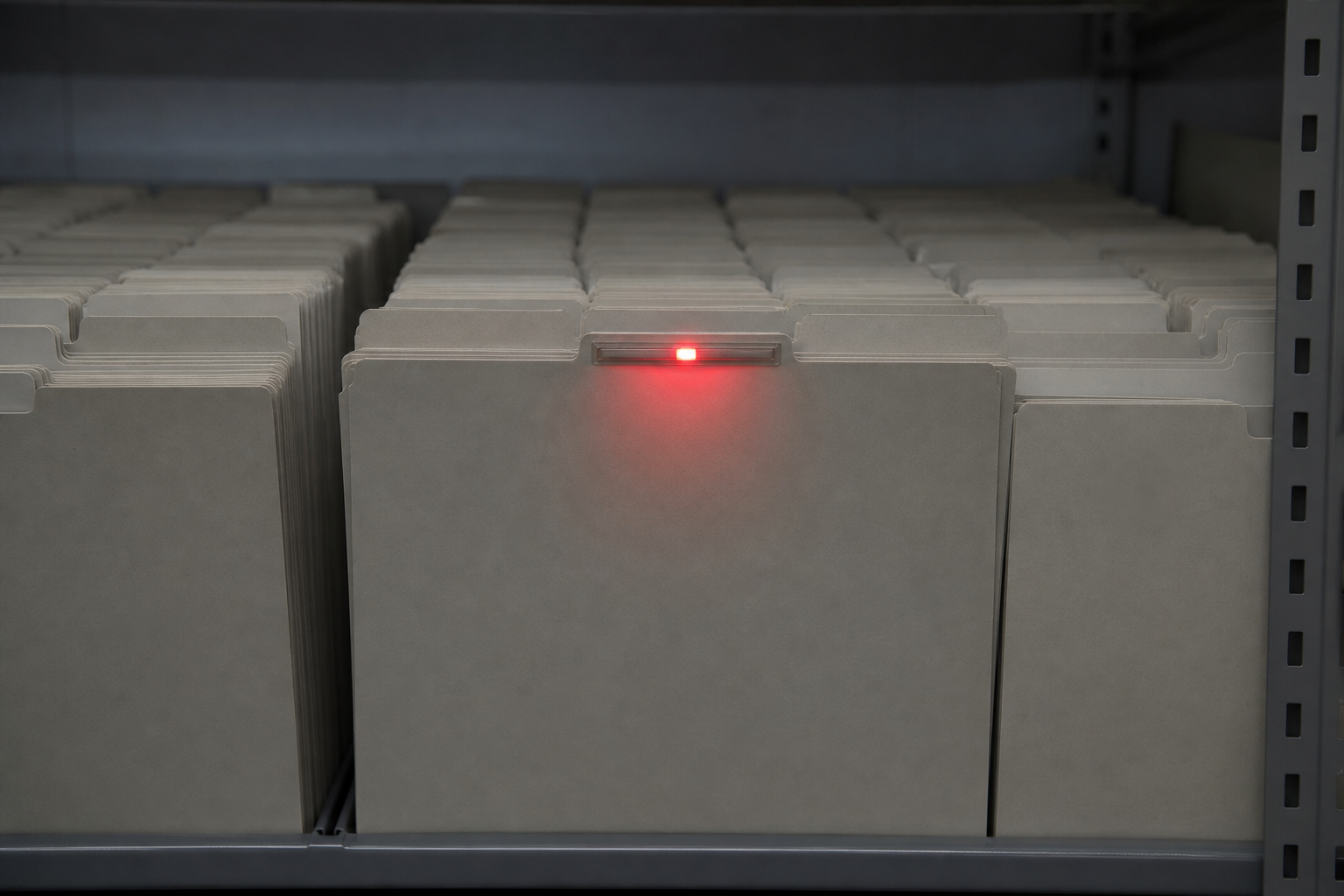
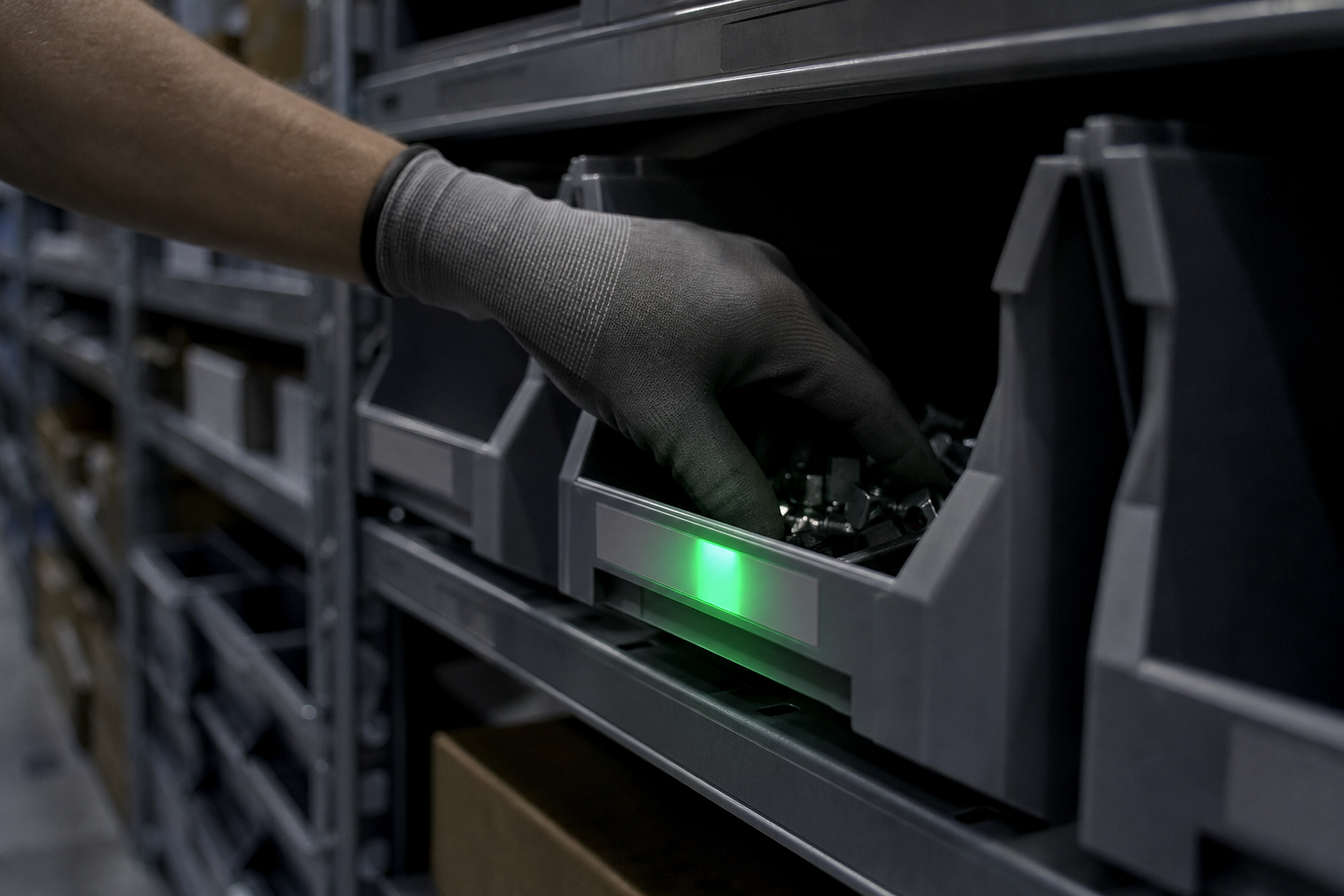
A thin PET inlay with an LED bonded to it. Send the right command and one specific tag lights up, so a person can walk a shelf and find one item among thousands instead of reading a list of coordinates. No battery, no wiring, nothing to recharge. Two things decide whether it works for you, and neither is on the current page: your reader has to speak the command, and the tag has to be mounted where the light can be seen.
Read this first
Those are two different things and they arrive in two different boxes. A dry inlay is a bare PET strip with an etched antenna — no adhesive, no liner, no backing paper. It cannot be stuck to anything until somebody converts it into a label.
You are selling a component. The customer converts it, so they need to know the inlay is stable enough for their process: the antenna geometry, the die attach, and whether the LED survives a label press. Price it like a component, and say what the minimum order is in reels rather than pieces.
You are selling a finished label. Then the page owes the buyer face material, adhesive grade, liner, and — because this product has an LED and a chip under the surface — where on the label it is safe to write, print or stamp without crushing the die.
The deal-breaker
The page says a universal RFID device reads the tag, finds the TID, and remotely triggers the LED. The reading part is universal. The trigger is not. Lighting an LED is not an EPC Gen 2 command — it is a vendor-specific instruction that a reader either knows or does not.
In a filing room you want one file to blink, not the whole shelf. Broadcast lighting is still useful — hand the operator a reader and sweep it along the row, and the right file announces itself as you pass — but it is a different workflow from point-and-select, and it changes how you lay the room out.
Two ranges, not one
The tag has no battery, which means the LED is powered by whatever RF energy reaches the antenna. That energy falls off with distance, and lighting an LED takes far more of it than answering a reader does. So the tag reads much further than it lights — two different numbers, and the page publishes only one.
A related thing worth saying out loud. Because there is no battery, the light is only as bright as the field allows — bright enough to see across a filing room at close range, not a beacon you spot from the end of a warehouse aisle. That is the whole trade: no battery to replace, no maintenance contract, and a light that works when you are near. Operators accept this quickly once it is explained; they do not accept discovering it on site.
Mounting
The page lists books, archives, filing cabinets and cable management. In three of those four, the obvious place to put the tag hides the LED — and the product stops doing the only thing it was bought for.
One more consequence. A tag on a file tab is read through a single sheet of card, which is easy. A tag inside a stack of folders is read through everything in front of it, which is not. If your workflow needs the reader to confirm a file before the folder is pulled out, plan for the tag to sit at the exposed edge — otherwise you are asking UHF to see through paper, and it will do it sometimes.
Specification
| SPECIFICATION AT A GLANCE | Full parameter table below |
| Format | UHF Sticker Tag with an LED bonded to it |
| Air interface | EPCglobal Class 1 Gen 2 (v1.2.0) · ISO/IEC 18000-6C |
| Frequency | 860–960 MHz |
| Operating mode | Passive, battery-free — the LED is powered by the reader field |
| Memory | EPC 160 bit · TID 96 bit |
| Material | PET + Al (aluminium etched antenna) |
| Read distance | 3–13 m |
| LED | Red, green or blue Say whether colour is fixed at manufacture or selectable by command, and whether the light is steady or blinking |
| Operating temperature | −40 to +85 °C |
| Storage temperature | −40 to +125 °C |
| Humidity | 20–80 % RH |
In use
Not inventory. Inventory is the part that already works without a light. The light exists for the moment a person has to find one specific item in a place where a coordinate is not enough — a shelf of identical folders, a wall of bins, a cabinet with forty drawers.
File and archive retrievalA request comes in, the operator sweeps a handheld along the row, and the right file announces itself. No reading of index numbers, no walking to a wrong bay. The gain is not speed at the shelf — it is not having to know the room.
Pick-to-light without the wiringClassic pick-to-light puts a lamp on every bin and a cable to every lamp. This puts a battery-free tag on the bin instead, so a bay can be reconfigured without an electrician. That is the real comparison, and it is a facilities argument rather than a technology one.
Questions we get asked
Only if its firmware and SDK support the LED command for this tag vendor. Reading the tag is standard EPC Gen 2 and works on any reader; switching the LED on is a vendor-specific instruction that sits outside the standard. Send us your reader model and we will confirm before you order, because tags that read perfectly and never light are the most common disappointment with this product.
Both are possible depending on the command the reader issues — a targeted command addresses one TID or EPC, a broadcast lights everything in the field. Ask which modes your reader supports, because the two lead to different workflows: point-and-select versus sweep-the-row.
It stays lit while the field is present, so it goes out when the reader stops or the tag leaves range. Whether it can be latched on, and for how long, depends on the command set — confirm this for your reader before designing a workflow that expects a permanently lit tag.
Where the light can be seen and the die is not creased. On the exposed tab of a file, on the front lip of a bin, or on the edge of a box — not inside a closed book, and not on a face that the next folder will cover. Keep the mounting flat and keep the bend away from the centre of the strip.
Copyright © ©Copyright 2024 Greatest IoT Technology Co., Ltd all rights reserved - Privacy policy