

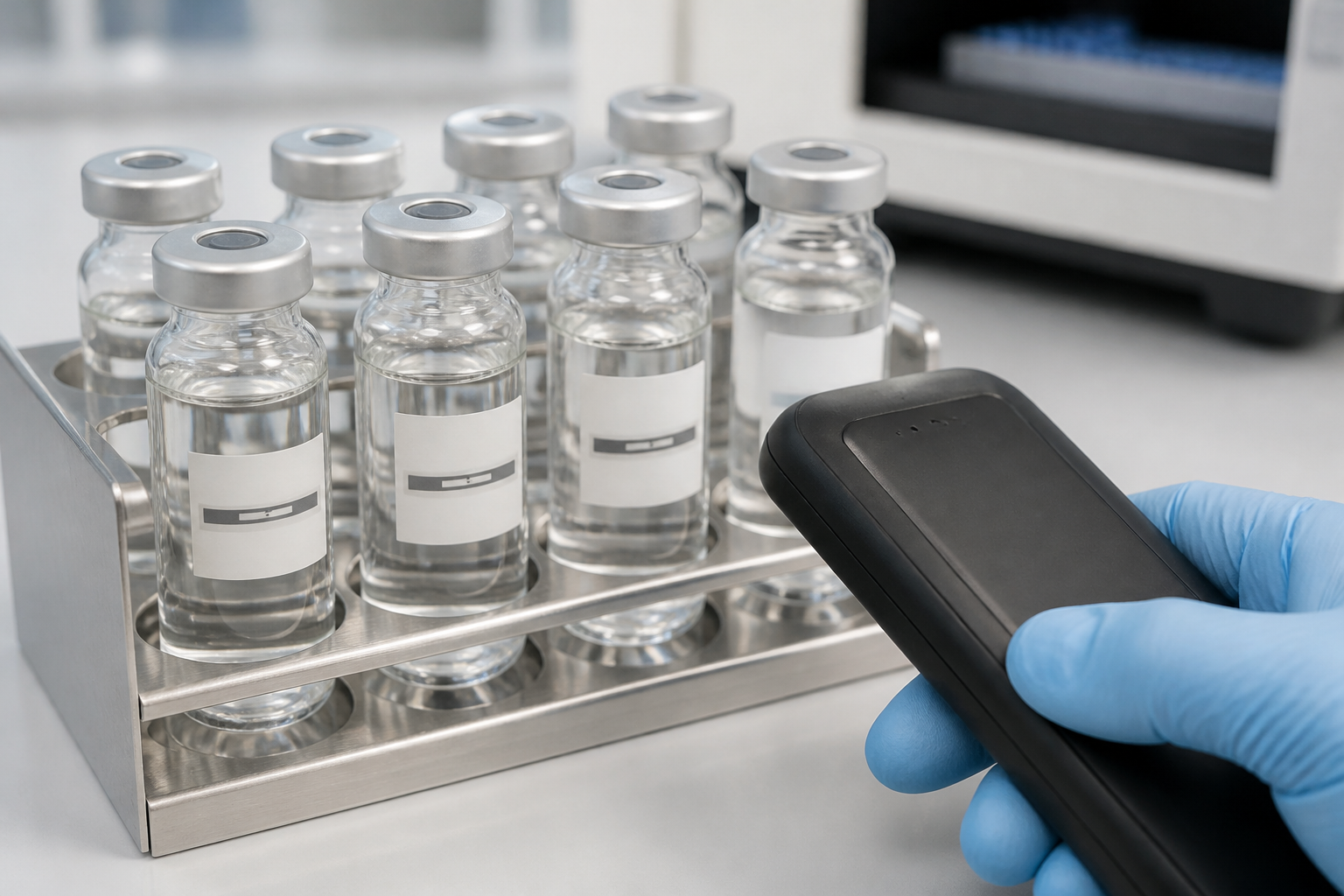
A label that still reads when it is stuck to a full bottle.
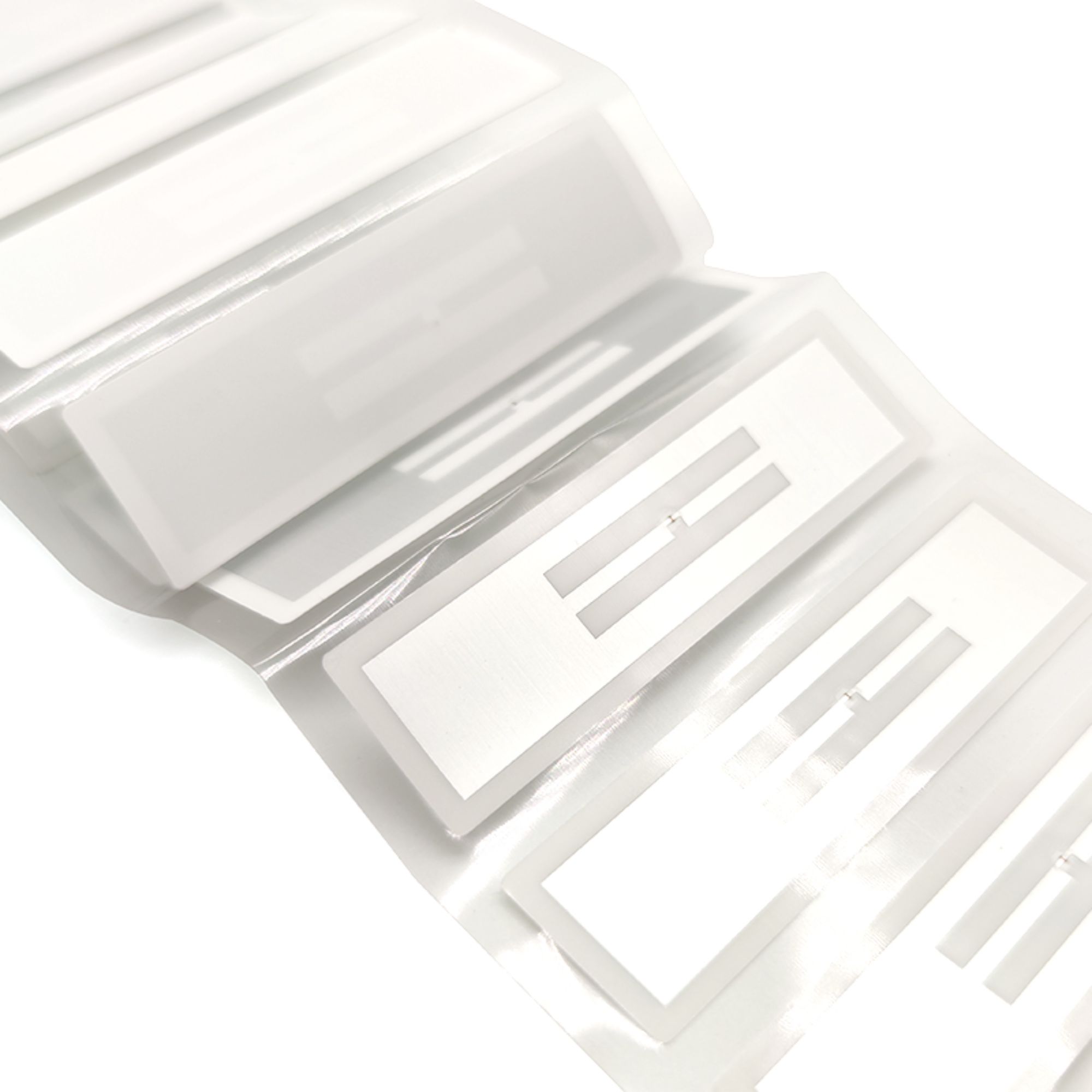
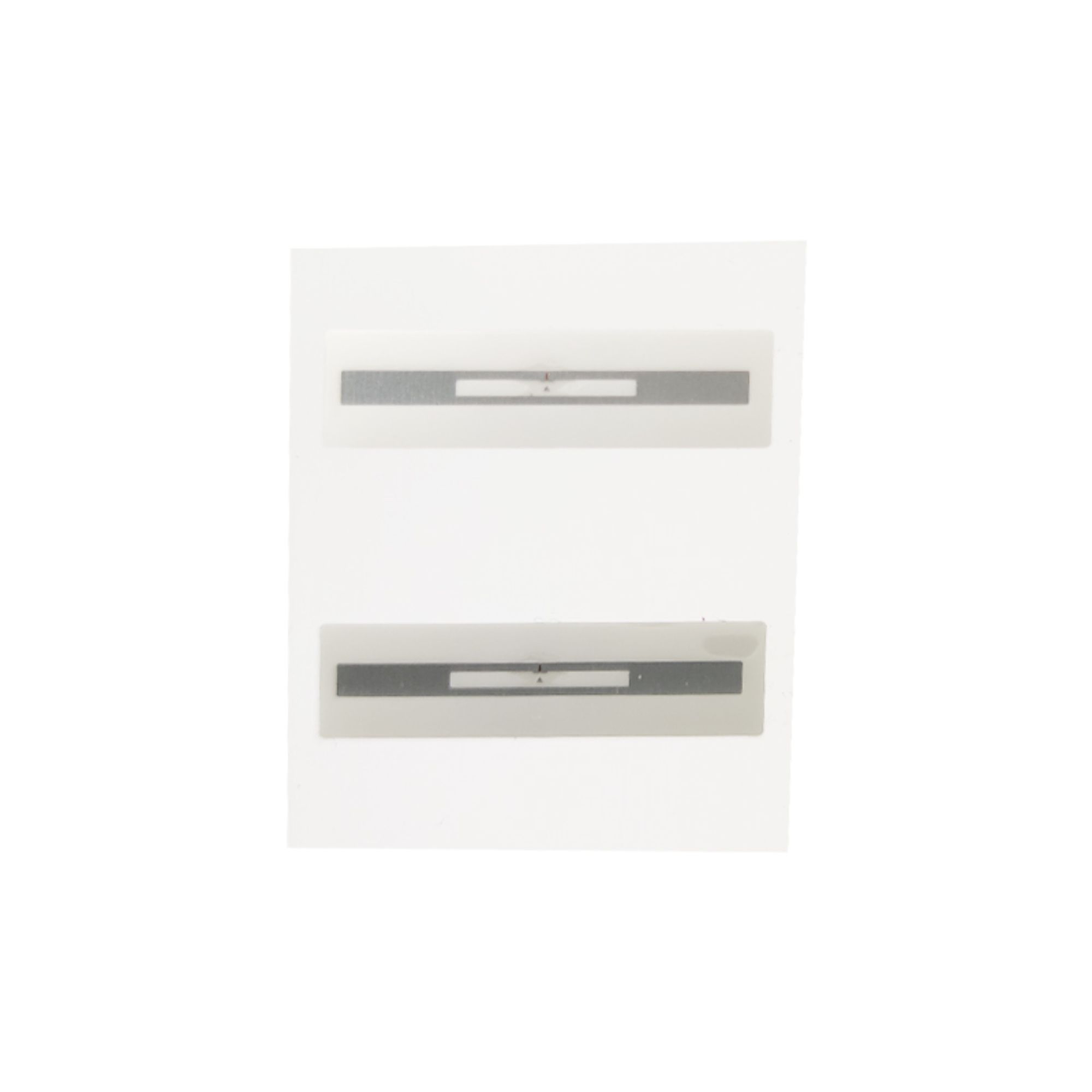
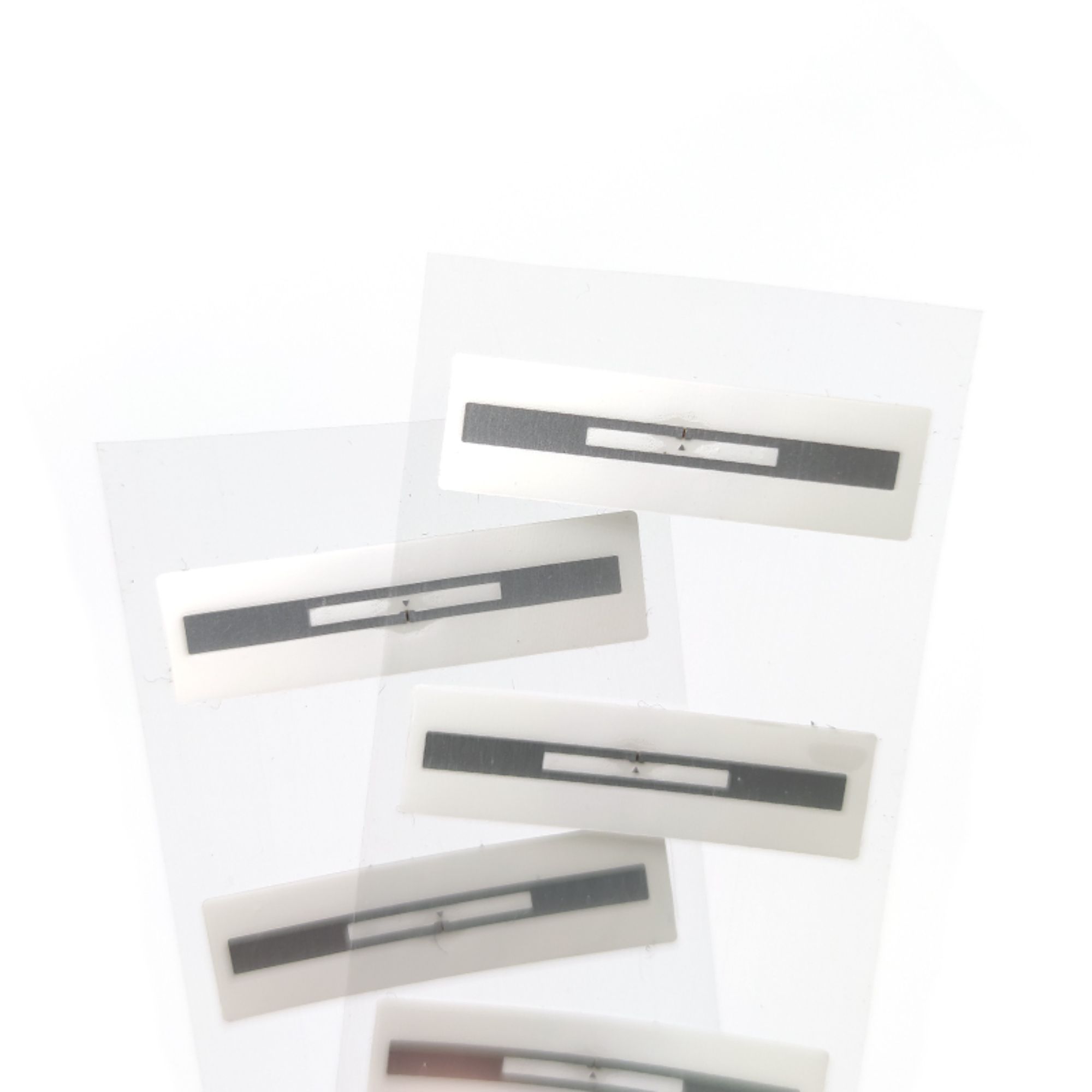
Water is the hardest thing to put a UHF label next to. It detunes the antenna and absorbs the field, which is why a standard label that reads at five metres in the air reads at nothing on a bottle of water. This inlay is built the other way round: a narrow 44 × 12 mm foil antenna on PET that copes with the liquid load instead of collapsing under it.
50 × 30 mm finished label on paper, PET or PVC, NXP UCODE 7 with a 128-bit EPC, passive, supplied on rolls of 1,000 to 5,000. About 1.5 m on a filled bottle, which is the number that matters.
The problem
A UHF label is an antenna tuned to a frequency. Put a litre of water behind it and you have changed the thing the antenna is tuned against: water has a dielectric constant around 80, so the antenna sees a completely different load, shifts off frequency and stops collecting power. The same happens with a hand, a pallet of liquid cartons or a metal shelf — water is just the worst of them.
Schematic of the coupling problem, not a field plot. The trade is the point: less range in air, more range on liquid.
Read range
5 m is free air with the right reader, 1.5 m is on a filled bottle, and 5 cm is the floor when the geometry goes wrong.
Log scale, because the span is a hundred to one. The middle bar is the one an installation should be designed against.
Specification
| PARAMETER | VALUE |
| RADIO | |
| Frequency | Hardware range 860–960 MHz. Legal bands are 865–868 MHz in Europe, 902–928 MHz in North America and 920–925 MHz in China, so state the deployment country |
| Air protocol | ISO/IEC 18000-6C, EPC Class 1 Gen 2 |
| Chip | NXP UCODE 7. |
| Memory | EPC 128 bit, TID 96 bit, user memory 0 bit |
| Read range | 5 cm to 5 m depending on the reader and what is behind the label. About 1.5 m on a filled bottle |
| Write endurance | 100,000 cycles |
| Data retention | 20 years |
| Mode | Passive, no battery |
| PHYSICAL | |
| Inlay antenna | 44 × 12 mm, antenna type 7742 |
| Finished label | 50 × 30 mm wet inlay or label, or custom |
| Construction | PET base with an aluminium foil antenna. Foil rather than chemically etched aluminium, which is the reason it holds its tuning near liquid |
| Face material | Paper, PET or PVC |
| Format | On a roll, 1,000 to 5,000 labels per roll, 4 rolls per carton |
| ENVIRONMENT | |
| Operating temperature | 0 to +35 °C |
| Operating humidity | 20% to 60% RH, non-condensing |
Where it goes
The published application list was already specific and sensible: unmanned vending racks, medicine cabinets, the side of a bottle, reagents and test tubes. All four are jobs where a small label on a wet object has to be counted by a machine.
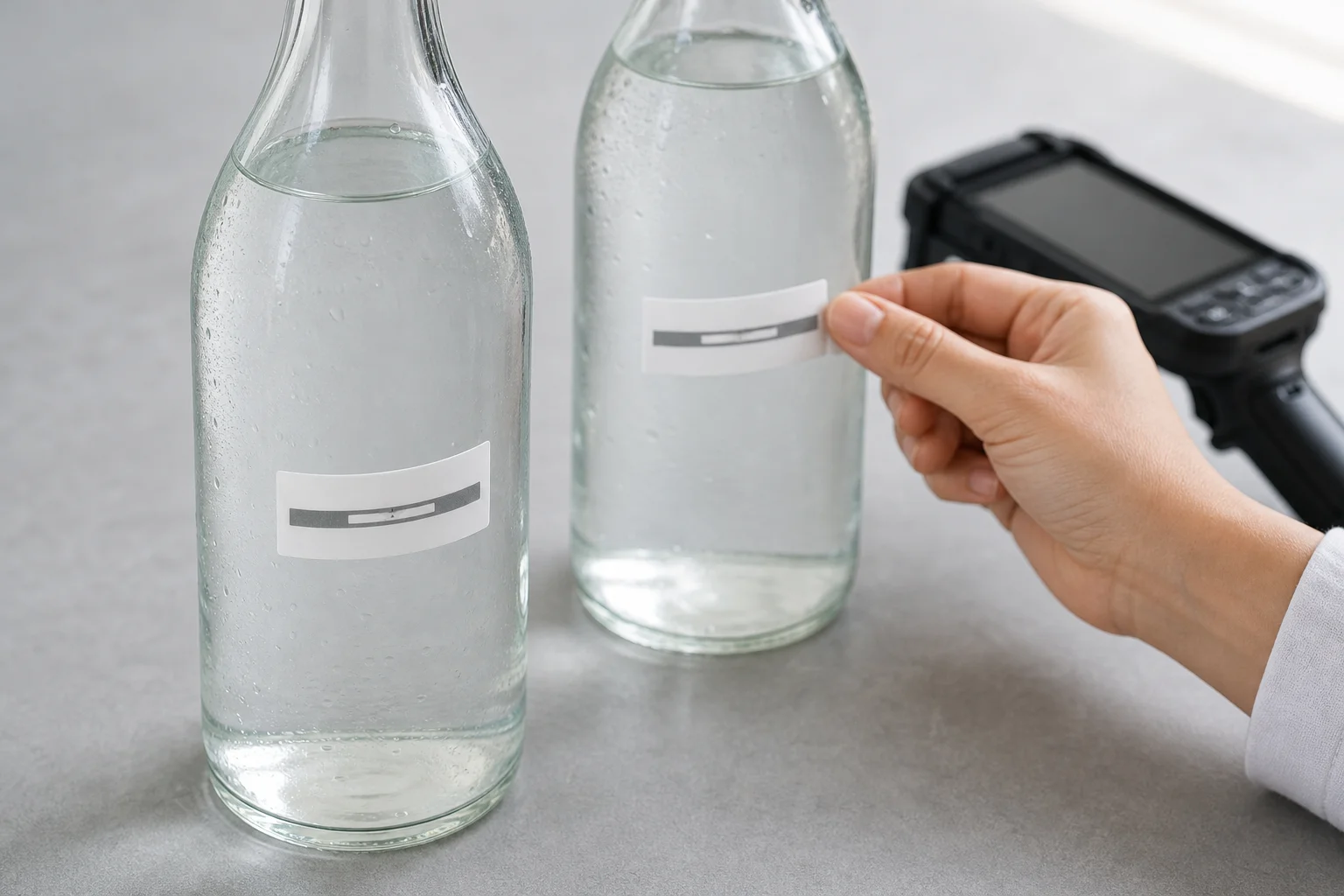
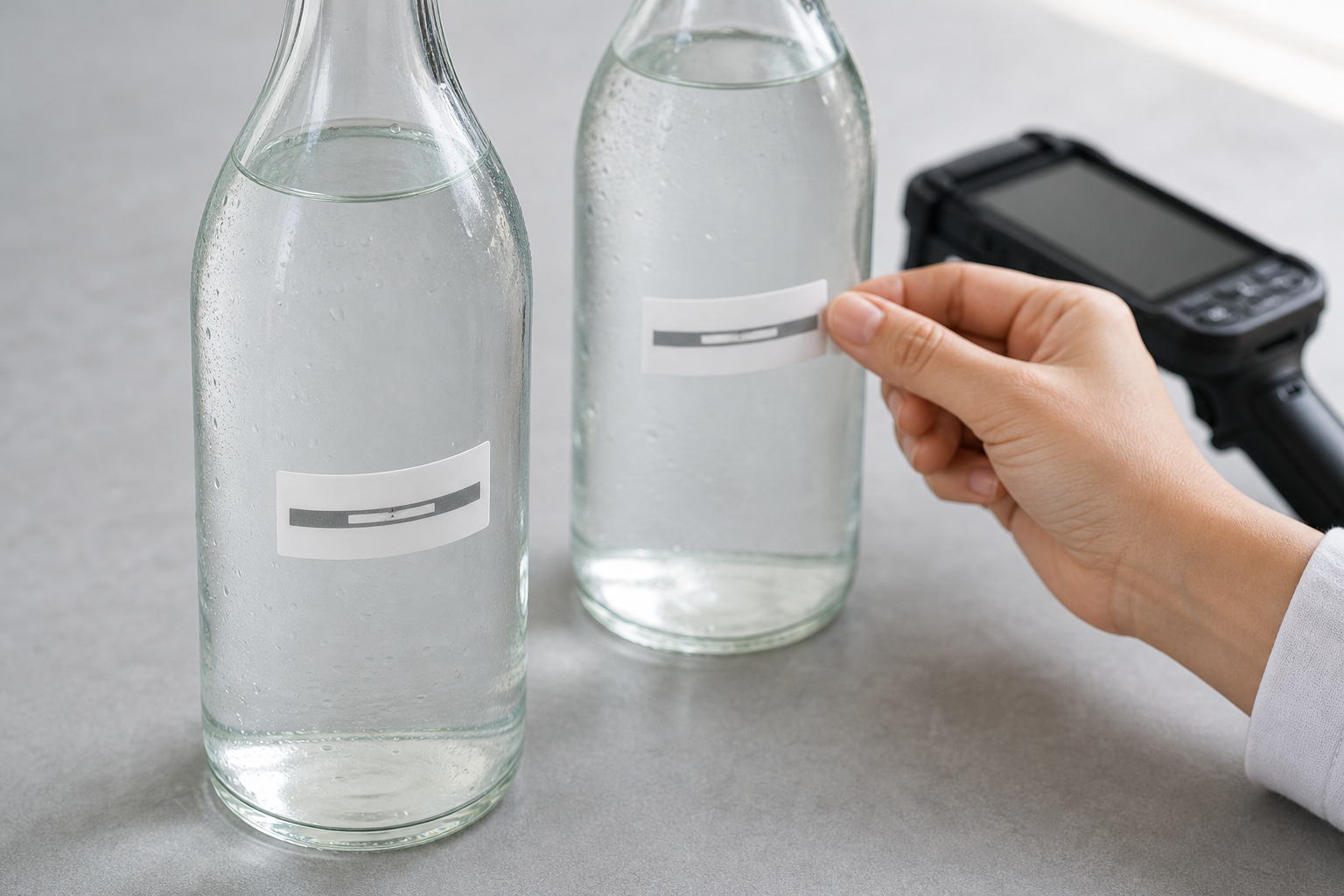
Applied to a filled bottle. The label follows the curve without creasing, which is the difference between 1.5 m and 5 cm on this kind of container.
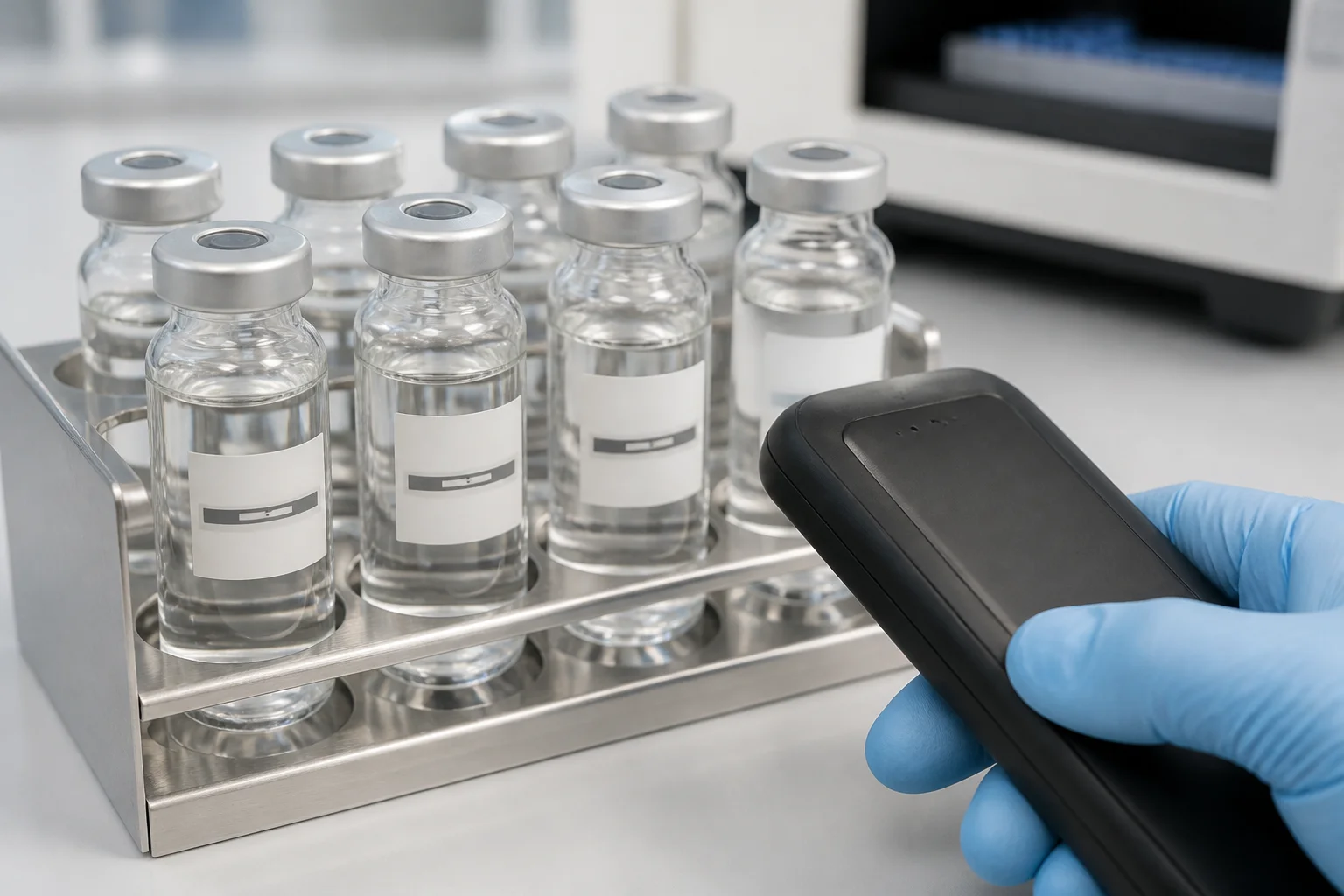
Reagent vials in a lab rack. Narrow containers are the harder case: there is less flat area, so the label wraps further round the curve.
| APPLICATION | WHY THIS LABEL | WHAT TO TEST FIRST |
| Bottled drinks and wine | A narrow antenna keeps its tuning against a full bottle, so a shelf or a crate can be counted in one pass | The real bottle, full, at the real reader distance. A dry brown bottle and a clear one are not the same |
| Reagents and test tubes | Small enough for a narrow vial, and short-range reading is normal in a lab | Whether the label wraps without a crease, and whether the rack blocks the reader |
| Medicine cabinets and vending racks | Counts what is on the shelf instead of trusting a planogram | The cabinet's metal content. A steel cabinet is a harder environment than an open shelf |
| Cosmetics and perfumes | Works on alcohol-based liquid where a plain label loses most of its range | Alcohol content and the container finish. Both change the tuning |

Questions we are asked
A label. It is a 50 by 30 mm self-adhesive wet inlay on a paper, PET or PVC face with a 44 by 12 mm antenna inside. It has no moulded housing, no resin and no IP rating, so it is not the product for a washdown area or a solvent line. If you need a sealed housing, ask us for that separately.
About 1.5 m on a filled bottle. The specification quotes 5 cm to 5 m, and the 5 m end is free air with nothing behind the label. Design the installation around 1.5 m and treat 5 m as the dry-goods figure.
Water has a dielectric constant around 80, so a litre of it behind the antenna changes the load the antenna is tuned against. It shifts off frequency and stops collecting power. A short, narrow antenna is less sensitive to what is behind it, which is why this inlay is only 44 by 12 mm.
860 to 960 MHz is the hardware range; the legal band depends on where you deploy. Europe is 865 to 868, North America 902 to 928, China 920 to 925. The label is passive so it transmits nothing, but the reader you set up has to be on the right band, and that is where the compliance check lands.
The container and a sample of it, whether it is glass, PET or HDPE, how full it is, the reader you intend to use, the read distance you need, and the label count per roll you can handle.
Copyright © ©Copyright 2024 Greatest IoT Technology Co., Ltd all rights reserved - Privacy policy