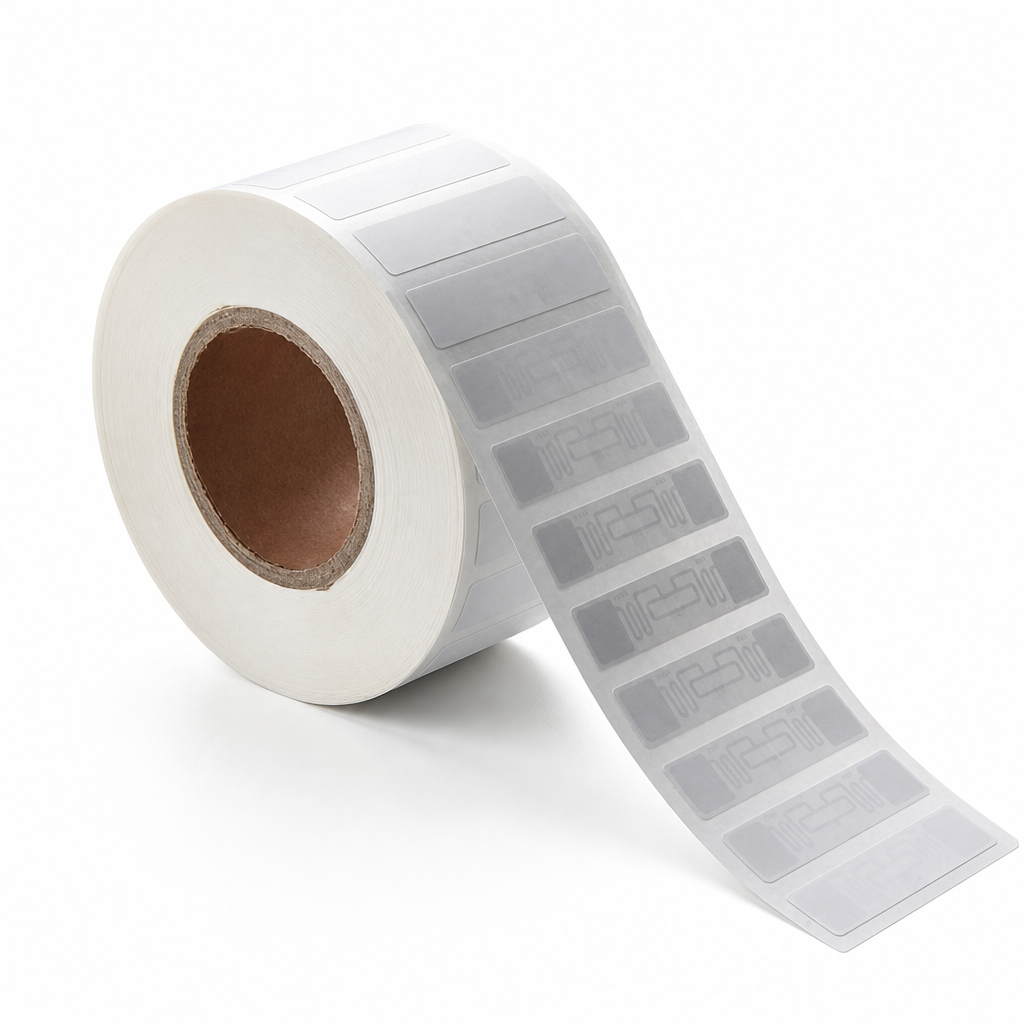
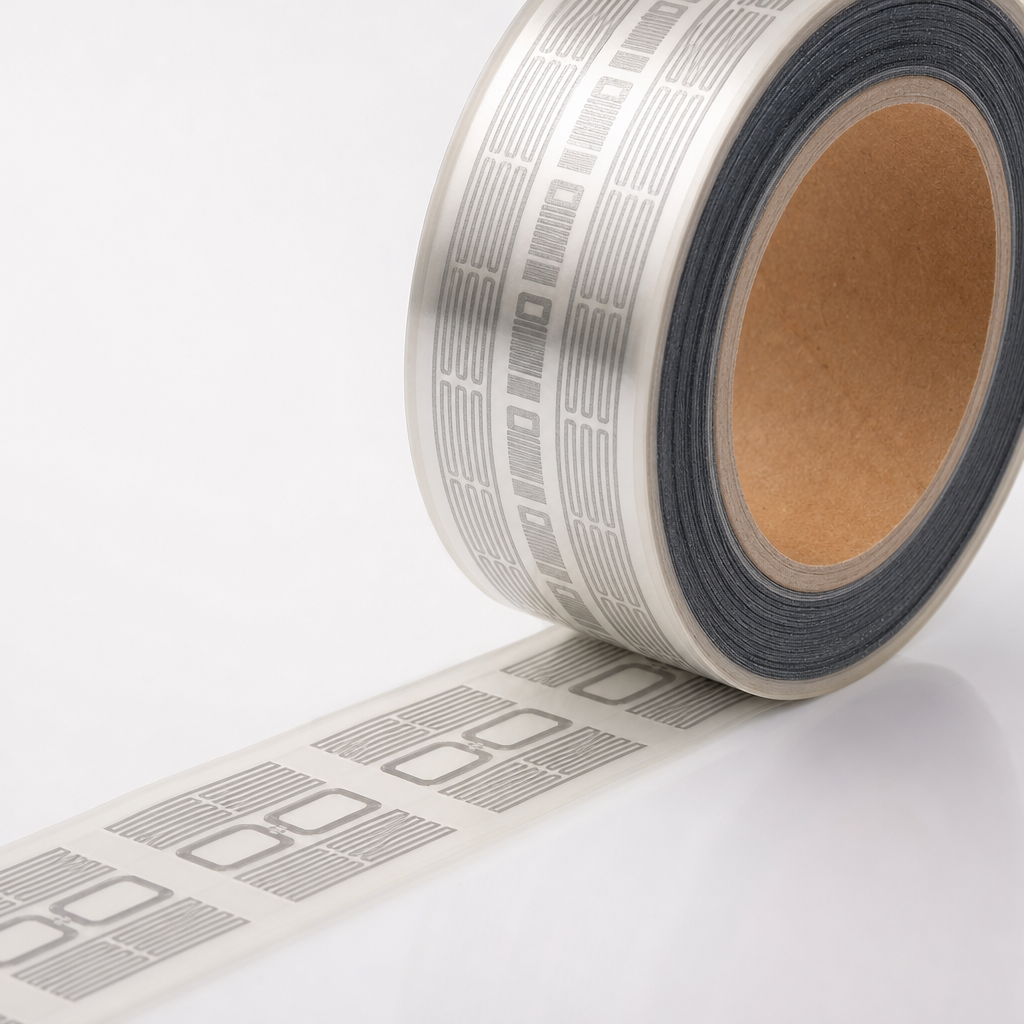
Stage 1
Dry inlay
Chip, antenna and PET carrier only. No adhesive, no liner, no face stock.
You add adhesive and face stock yourself


Home > Products > RFID TAG > RFID Wet Inlay
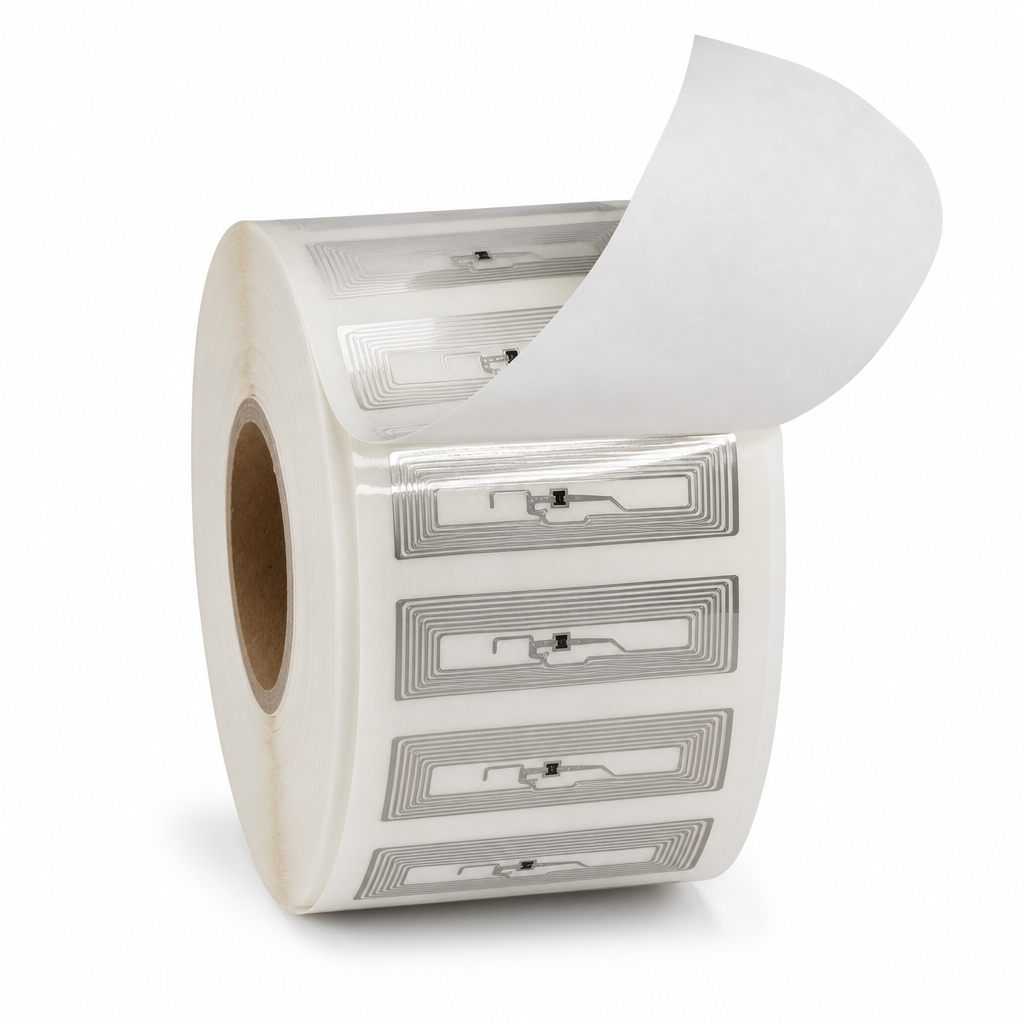
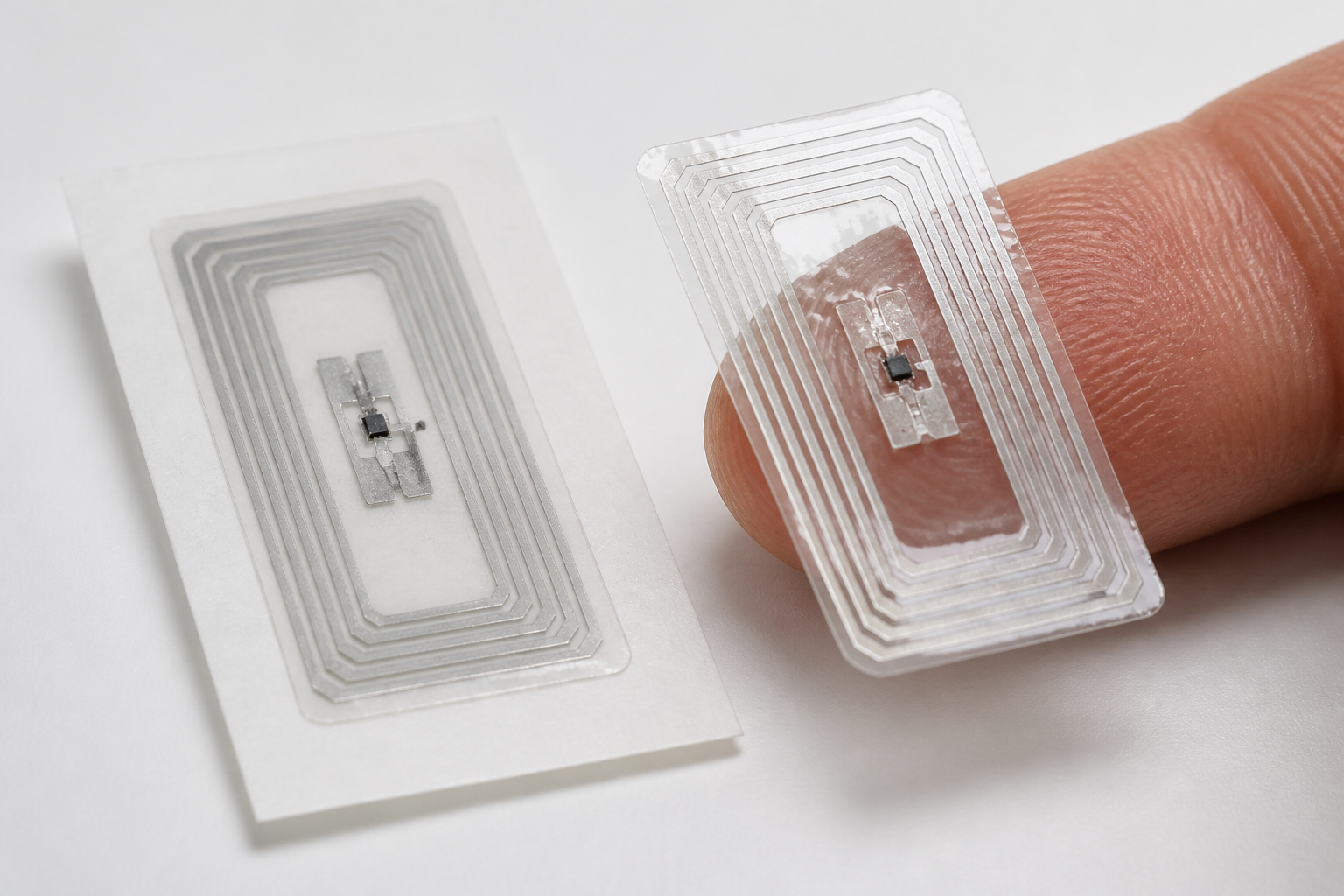

RFID wet inlays are UHF transponder inlays supplied with a pressure-sensitive adhesive layer and a release liner. The word "wet" refers only to the adhesive: peel the liner off and the inlay bonds to a surface as it is, with no lamination step.
A dry inlay is the same chip-and-antenna construction on a PET carrier, without adhesive and without a liner. It is sold to converters who laminate their own face stock and adhesive before the inlay can be applied.
Specification at a glance | |||
| Construction | Inlay + pressure-sensitive adhesive + release liner | Protocol | EPCglobal Class 1 Gen 2 · ISO/IEC 18000-6C (now numbered 18000-63) |
| Frequency | 860–960 MHz — band fixed per market | Liner | Glassine release liner, white |
| Adhesive | Permanent · removable · freezer grade |
|
Roll, multi-up (core size agreed at order) |
|
Apply directly, or convert into printed labels | Samples | Free on request |
Where this sits
The same transponder is sold at three levels of finishing. Buyers lose money by ordering one level and then paying someone else to reach the next.
The usual question
Five things actually change the answer — and cost is only one of them.
Where they are used
Working with us
Free samples cut to the inlay you are specifying, so you can measure them on your own reader and surface before committing to a volume.
EPC written to your data list, locked where required, and verified before packing. Send the scheme — SGTIN-96 or your own — with the order.
We can ship the wet inlay alone or convert it into a printed label in the same order, so you are not moving material between two suppliers.
Technical parameters
Construction and protocol are fixed for the wet inlay format. Inlay size, chip and read performance are set by the specific inlay you order, and are confirmed on the datasheet before production.
Questions buyers ask
Copyright © ©Copyright 2024 Greatest IoT Technology Co., Ltd all rights reserved - Privacy policy