

Home > Products > RFID TAG > RFID Temperature Sensor Sticker
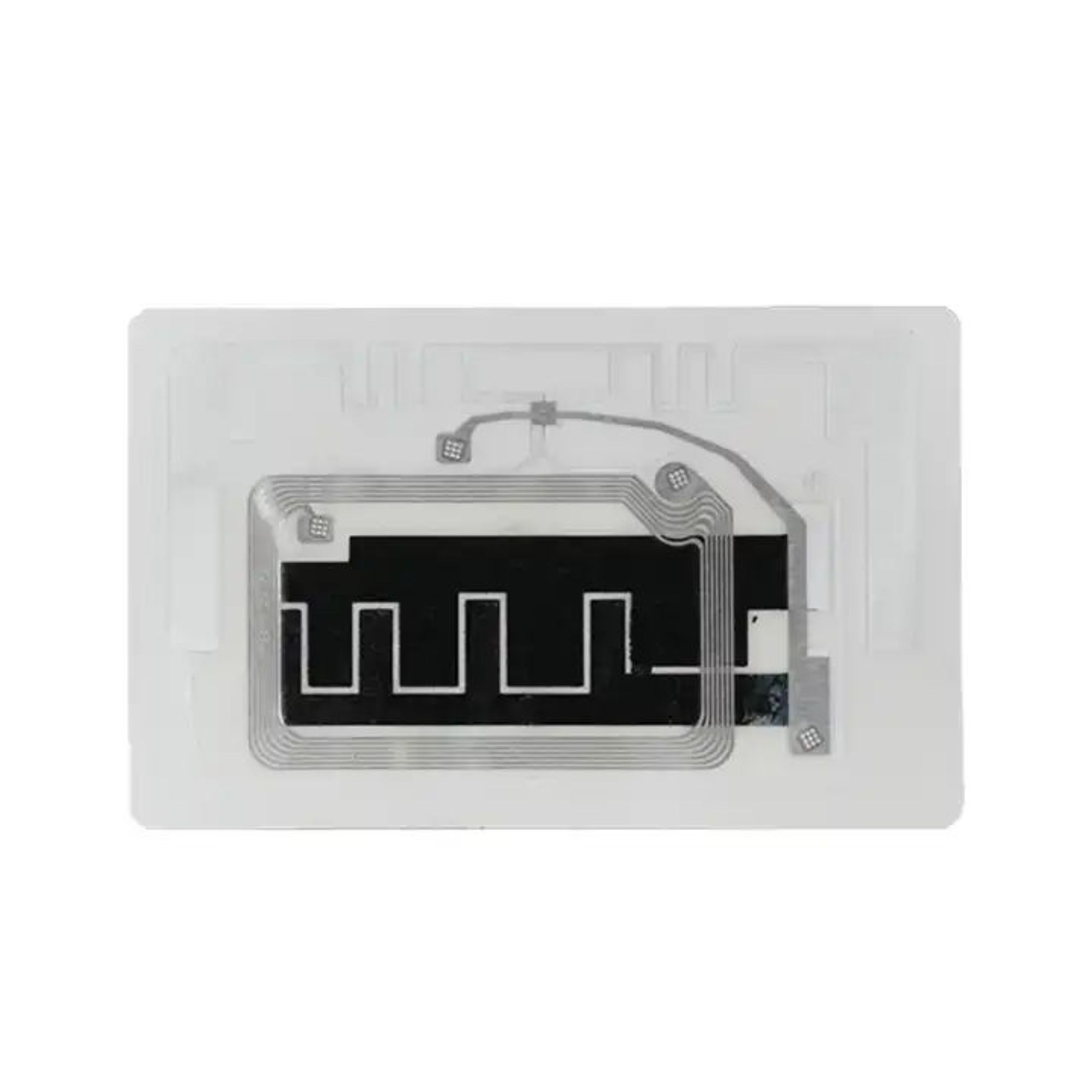
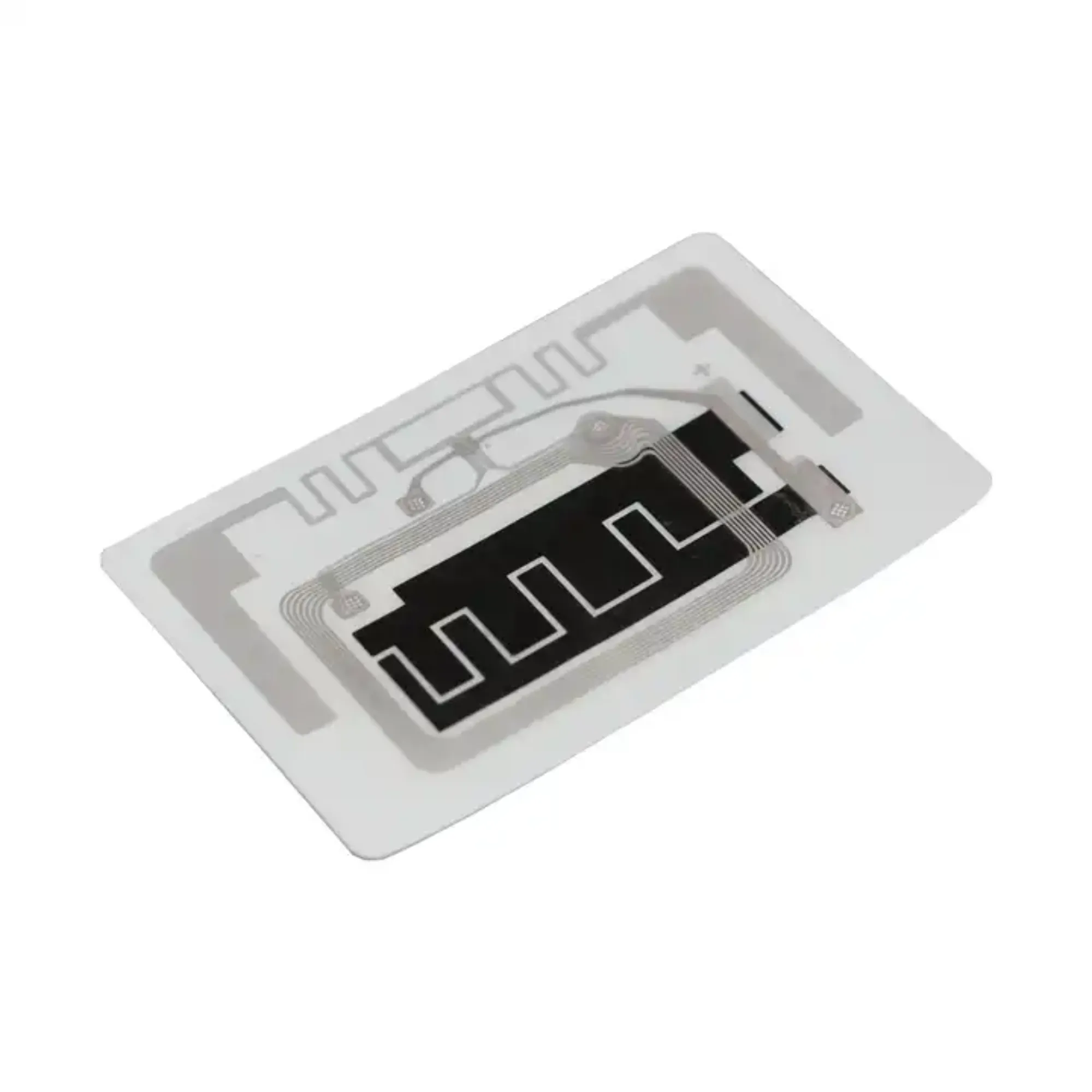
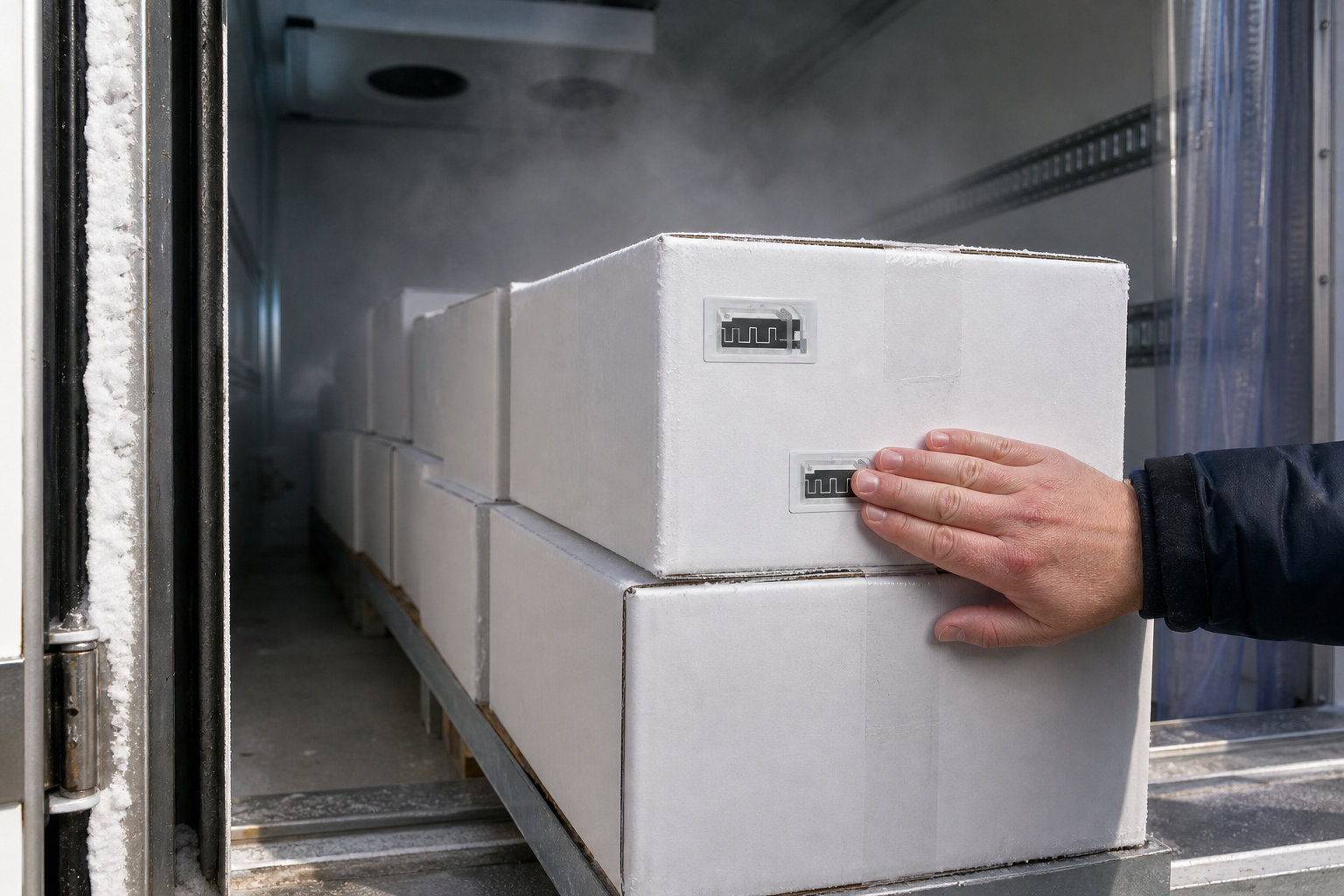
A sticker that reports temperature, not just an ID.
Most UHF labels tell you which box this is. This one also tells you how warm it has been. It is a passive sensor tag on a 98 × 24 mm self-adhesive label with no battery: the reader’s field powers it, and the temperature comes back in the same read that returns the EPC.
Measures −40 to +85 °C to about ±0.5 °C, or ±0.1 °C with item-level calibration. EPC Gen2v2 with the AES-128 crypto suite of ISO/IEC 29167-10, 512-bit of user memory, a frangible anti-tamper face, and a read range of about 3 m measured on a ThingMagic module.
Read this before you order
A passive sensor tag reports temperature by changing the way it reflects the reader’s signal. The reader has to know how to measure that change. A standard UHF reader will read the EPC perfectly and tell you nothing about temperature — and nothing about the label is broken when that happens.
Same label, same field. Only one of these readers is asking for a temperature.
The numbers
The tag measures from −40 to +85 °C. The tag must be stored between 0 and 25 °C before use, because that is the band over which its calibration holds. A carton in a frozen aisle is fine. A box of tags left in an unheated warehouse over winter is not.
| PUBLISHED | WHAT IT MEANS | |
| Measuring range | −40 to +85 °C | Covers frozen, chilled, ambient and most industrial processes. It does not cover an oven or a cryogenic freezer |
| Accuracy | ±0.5 °C typical, or ±0.1 °C with item-level calibration | The 0.1 figure is a per-item calibration, not a batch claim. Ask what the calibration costs, who does it and whether the certificate is traceable |
| Storage | 0 to 25 °C | The label shelf condition. Keep the box out of a cold store and out of a hot cab |
| Humidity | 10% to 95%, non-condensing | Read range falls as humidity rises, because water detunes the antenna. It is a genuine limit, and it is why a wet carton reads shorter than a dry one |
| Read range | About 3 m on a ThingMagic module | Measured, and the reader is named. Your distance will differ with a different module and a different mounting surface |
Why the face tears
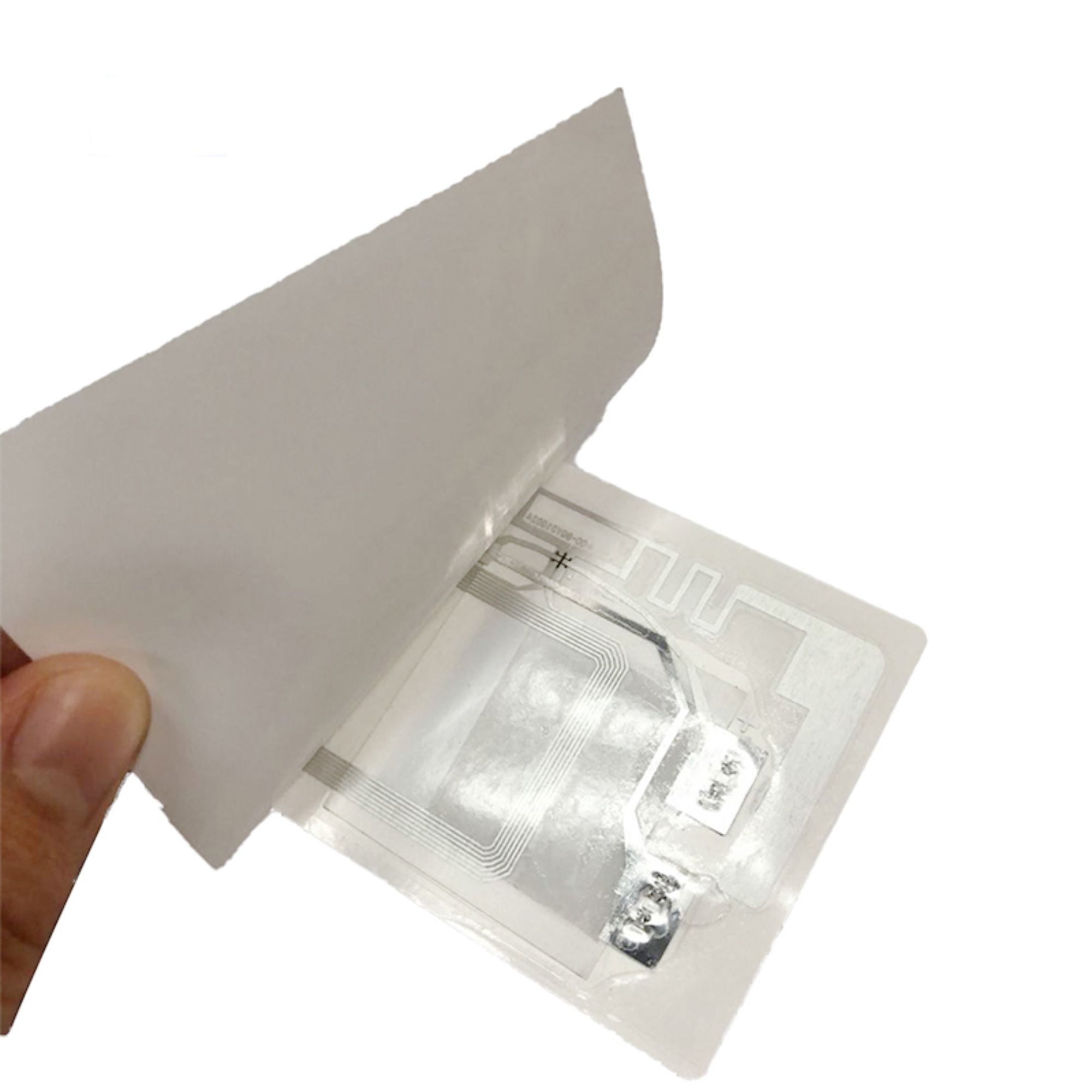
The face material is a frangible paper: it tears and delaminates rather than peeling off cleanly. That is not a manufacturing weakness, it is the point. A temperature record is only worth something if the tag that produced it stayed on the same carton for the whole journey.
Liner off, adhesive exposed. Once this goes onto a carton it is meant to stay there — a lifted label comes off in pieces, which is exactly what an auditor wants to see.
Specification
| PARAMETER | VALUE |
| RFID | |
| Frequency | 860–960 MHz, UHF |
| Air protocol | EPC Class 1 Gen 2v2 |
| Security | ISO/IEC 29167-10 crypto suite, AES-128 authentication |
| Chip | NMV2D CAB0 |
| Memory | TID 112-bit, EPC 192-bit, User 512-bit in File_0, Reserve 112-bit, plus a secure segment of 512-bit and 256-bit with AES-128 authentication |
| Function | Read and write |
| Operating mode | Inventory read, or write |
| Read and write cycles | 100,000 |
| Data retention | 10 years |
| Read range | About 3 m, measured on a ThingMagic module. Your figure depends on the module and on what the label is stuck to |
| Personalisation | Multiple data structures with inside and outside combinatorial encoding, synchronous and offline encoding, and a personalised key code |
| SENSING | |
| Measuring range | −40 to +85 °C |
| Accuracy | ±0.5 °C typical; ±0.1 °C with item-level calibration |
| Storage range | 0 to 25 °C. This is the shelf condition of the label, not its measuring range |
| Humidity | 10% to 95%, non-condensing. Read range falls as humidity rises because water detunes the antenna |
| PHYSICAL | |
| Label size | 98 × 24 mm, ±0.5 mm |
| Antenna size | 93 × 19 mm, ±0.2 mm |
| Carrier width | 106 ±1.0 mm as published. This is the web the labels sit on, and it decides which applicator or printer can handle them — confirm the format you need |
| Material | Polyester film (PET), etched aluminium antenna, frangible waterproof paper face |
| Mounting | Self-adhesive. The face is designed to tear rather than lift, so the label cannot be moved between cartons intact |
Where it goes
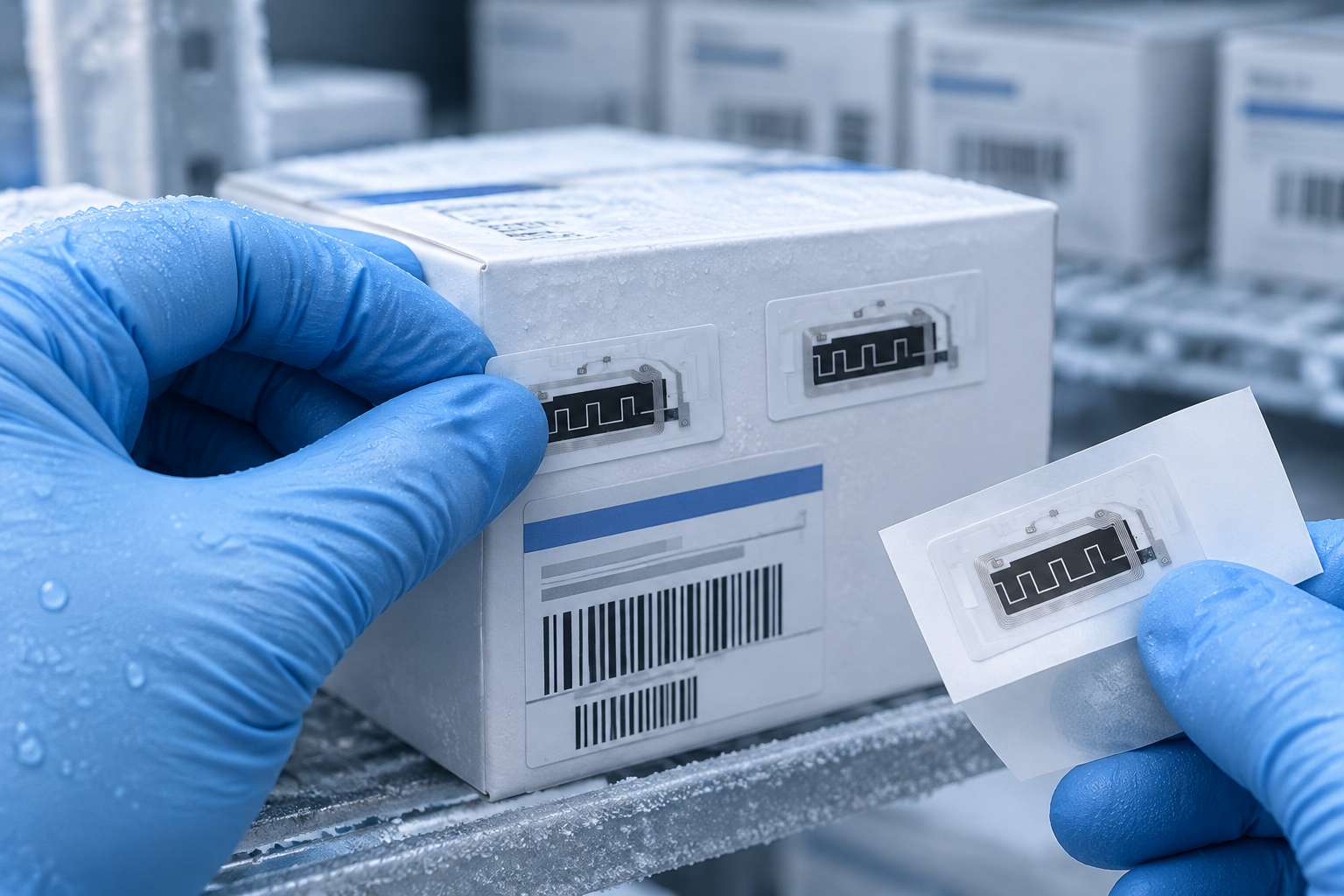
The label is applied where the goods are packed and read where the goods arrive, which is the whole point of a passive sensor: nothing to charge, nothing to collect, nothing to download.
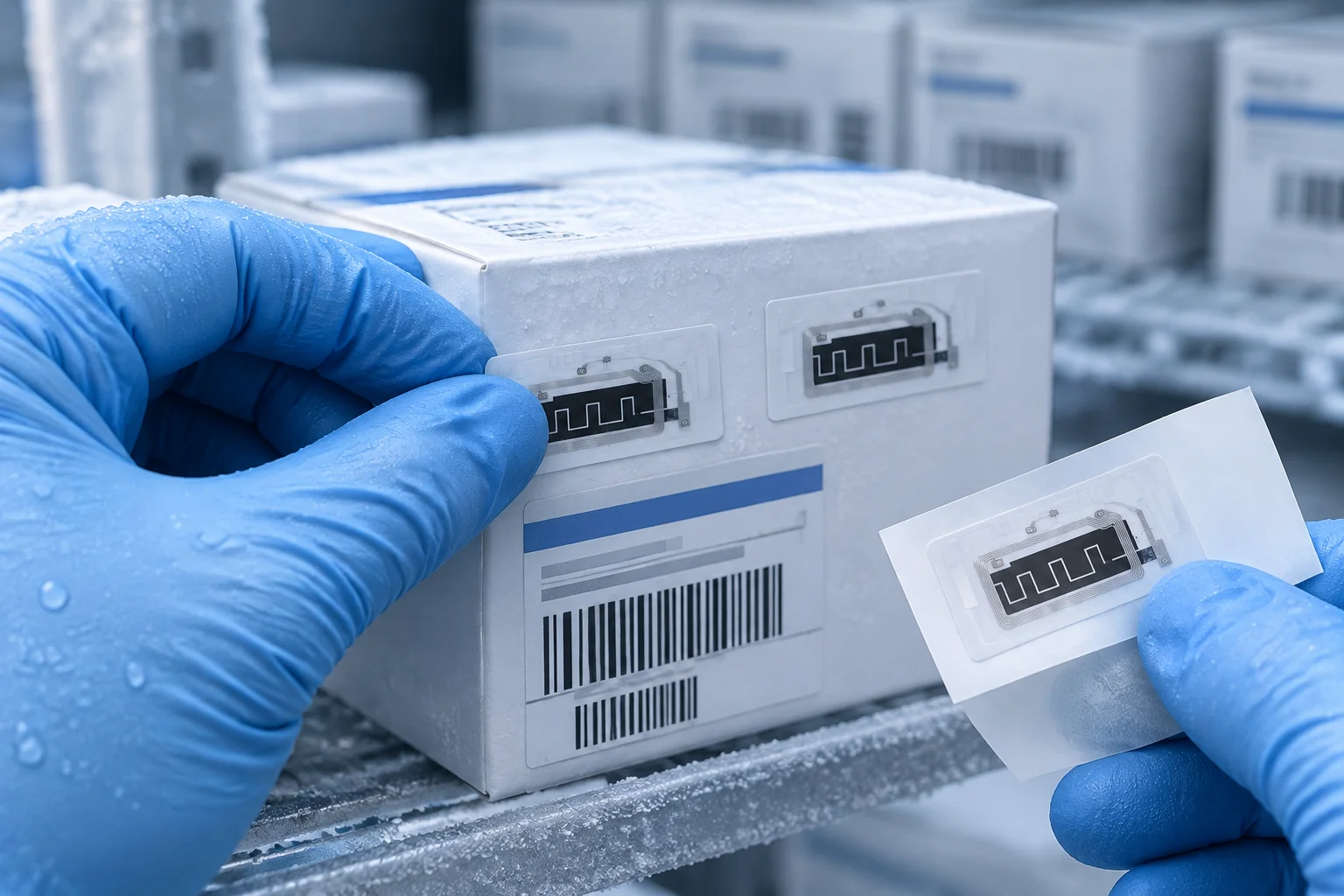
Applied at the packing bench. Two labels on one carton is normal practice: one for the reader, one spare in case the first is damaged in transit.
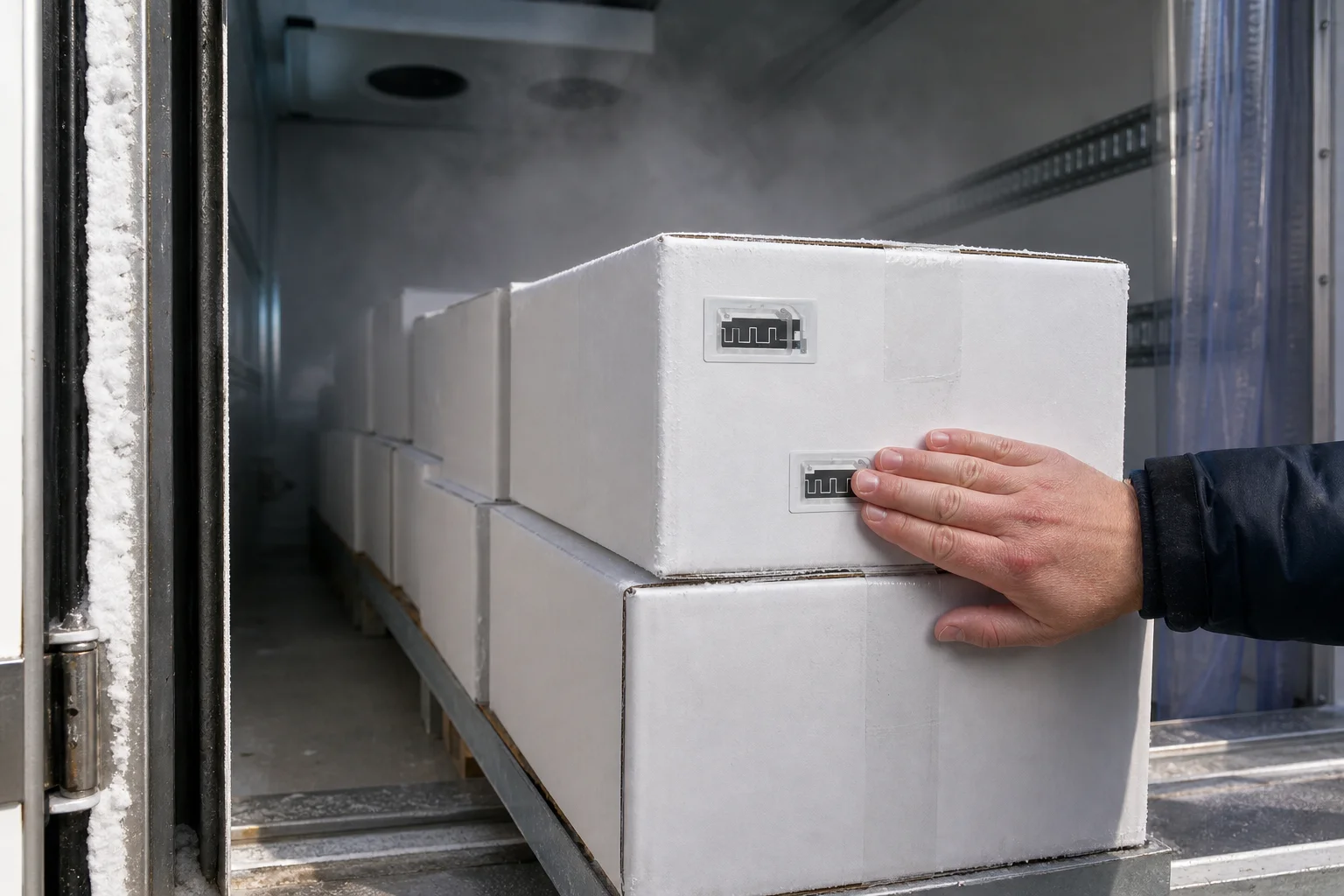
Read at the other end. A 3 m range means a stack can be swept from the doorway rather than unloaded to find a logger.
Questions we are asked
It depends entirely on the reader, and this is the question to settle first. These tags report temperature through the backscattered signal, and the reader has to support the sensor function to decode it. A standard UHF reader will return the EPC and nothing else.
The measuring range is what the sensor can read. The storage range is the band over which its calibration is valid before use. Storing the labels outside 0 to 25 °C does not destroy them, but it moves the calibration, so the first reading may be offset. Keep the box out of a freezer and out of a hot cab.
±0.5 °C typical, or ±0.1 °C with item-level calibration.
It is the distance at which this label was read on a ThingMagic module. Naming the module is good practice and we have kept it, because a range figure without the reader behind it is not comparable. Your distance will differ: a wet carton, a metal shelf or a label wrapped around a corner all reduce it.
No, and that is deliberate. The face is a frangible paper that tears when lifted, so a tag cannot be moved from one carton to another without visible damage. That is what makes the record worth something in an audit: a logger can be reassigned, this cannot.
Yes. The published note is that read range falls as humidity rises, because water detunes the antenna. In practice a label on a wet or frozen carton reads shorter than the same label on a dry one, so leave margin in your read distance if you are working in a washdown or thaw area.
It lets a read be authenticated. The tag supports the ISO/IEC 29167-10 crypto suite, so a reader can verify that the temperature it reports came from this tag and has not been rewritten. For a regulated cold chain that turns a number into evidence, and it also stops anyone cloning a tag and spoofing a good temperature history.
The reader you intend to use, the temperature range you need to record, the surface the label goes on, how many per carton or pallet, whether you need item-level calibration, and the roll format your applicator takes. Send the last two and we can quote something you can actually run.
Copyright © ©Copyright 2024 Greatest IoT Technology Co., Ltd all rights reserved - Privacy policy