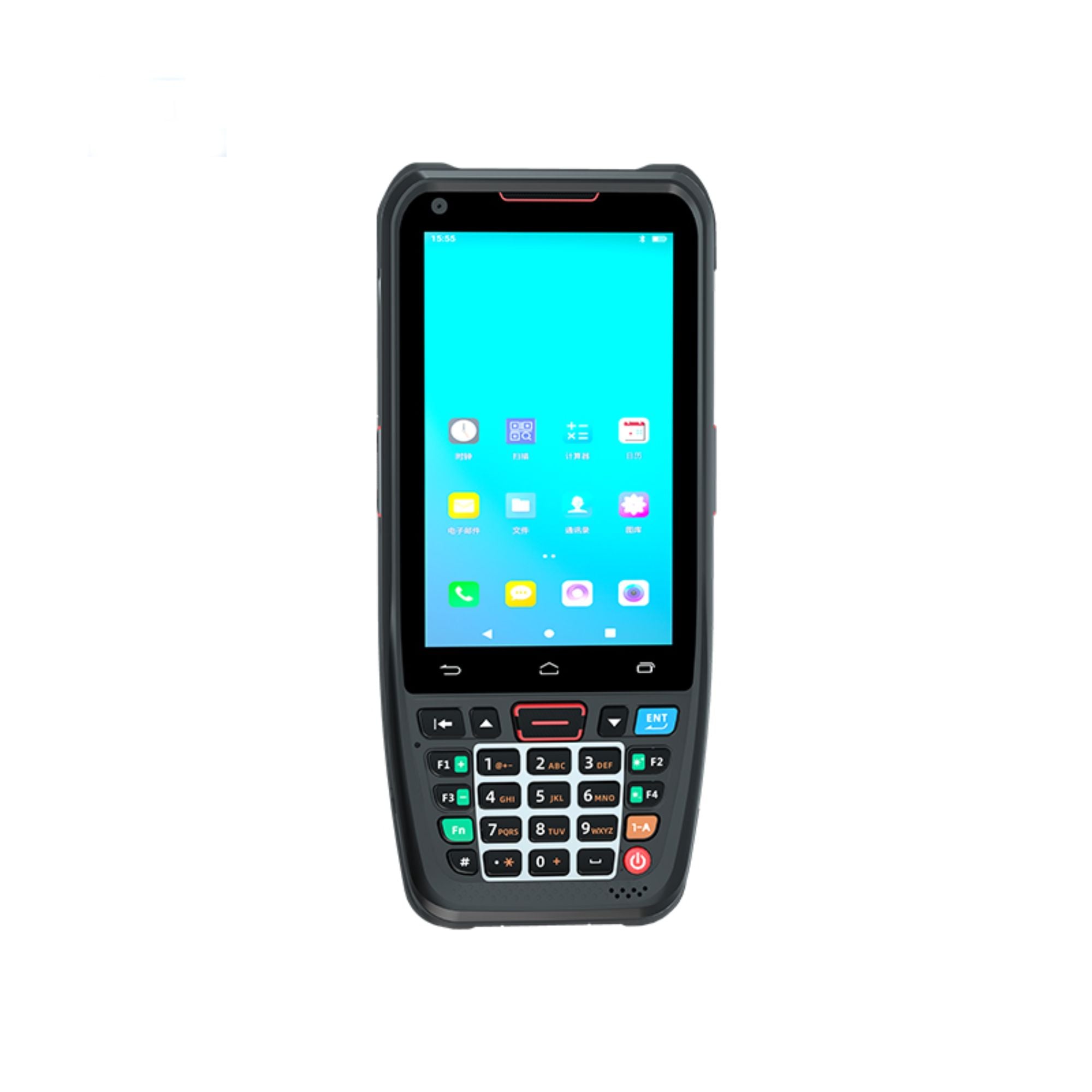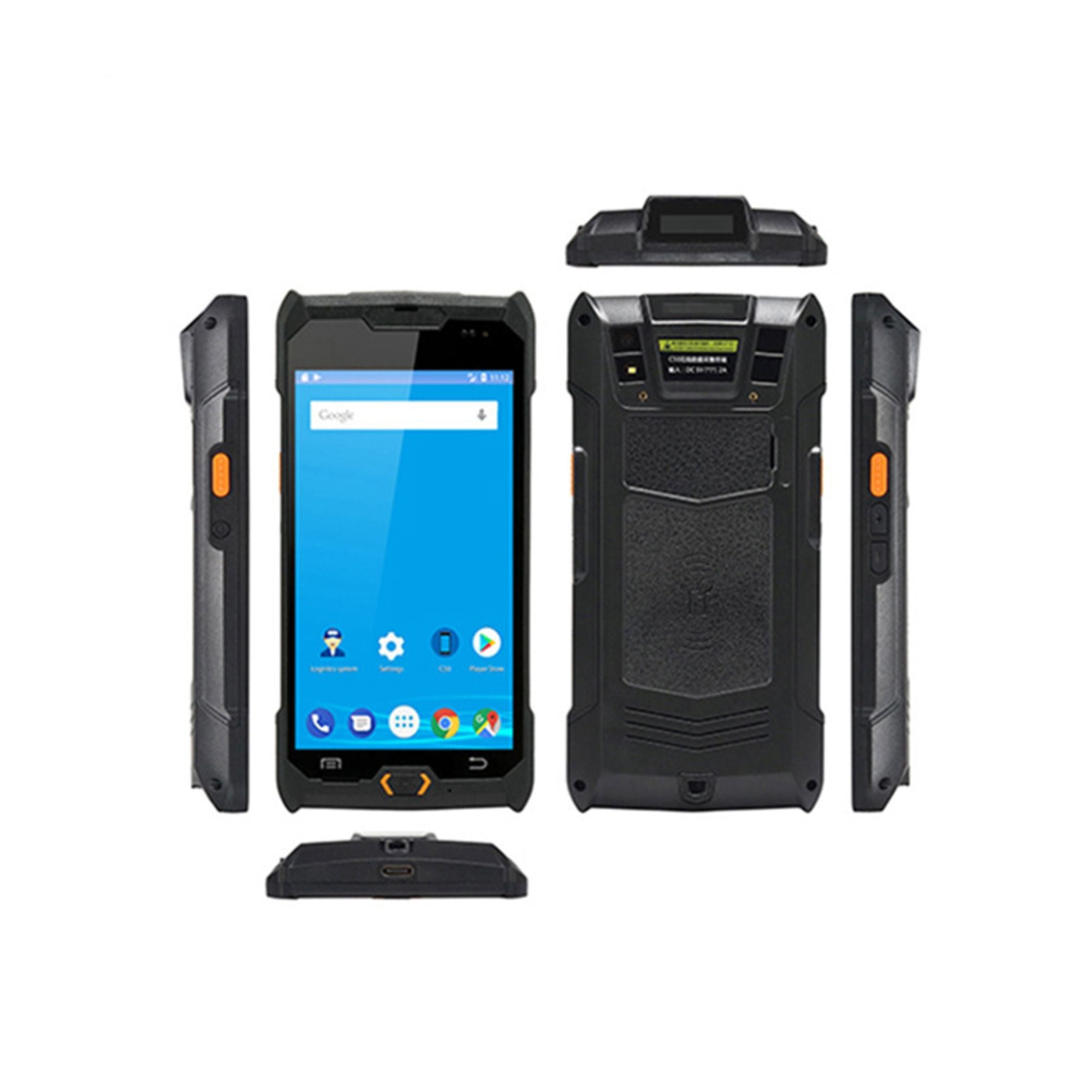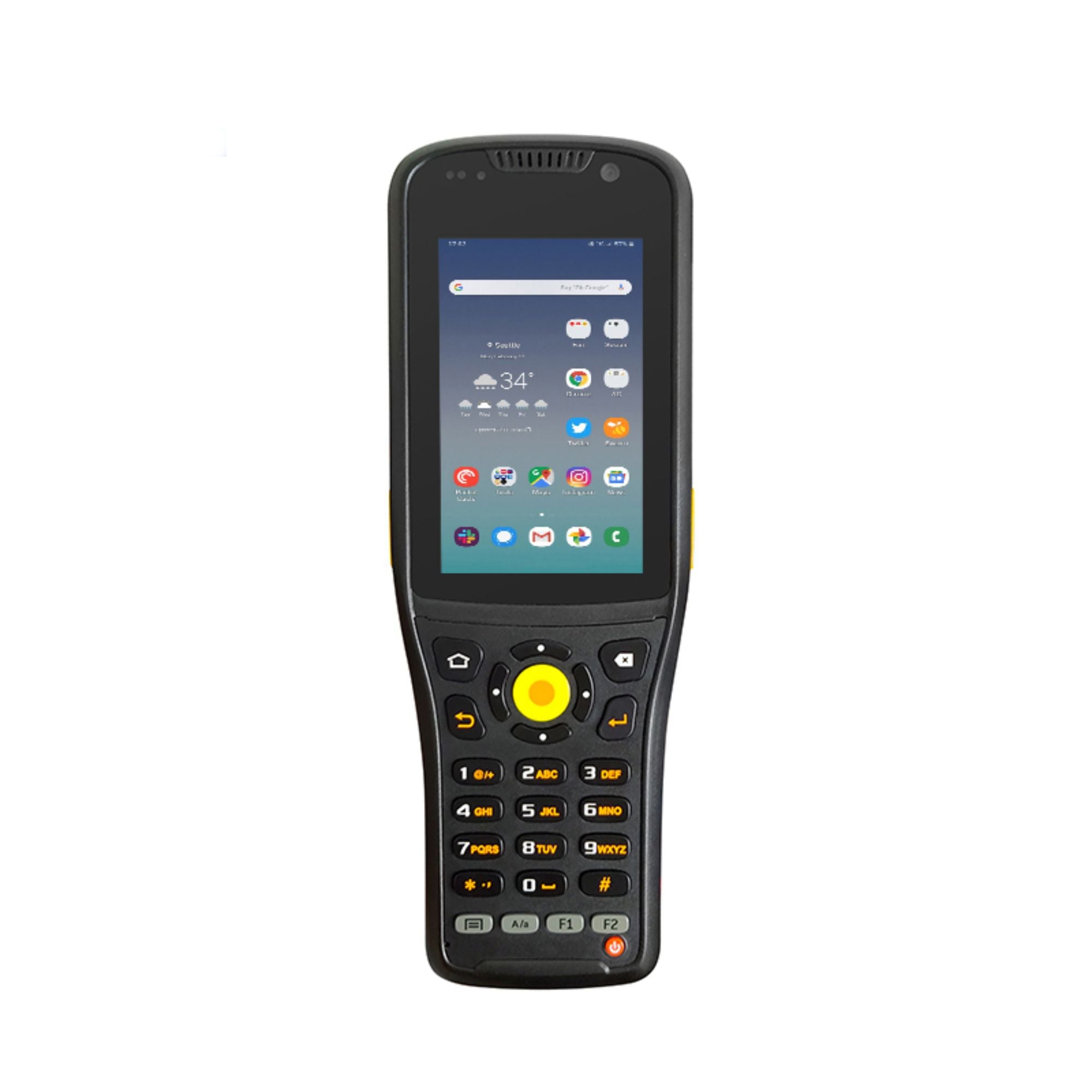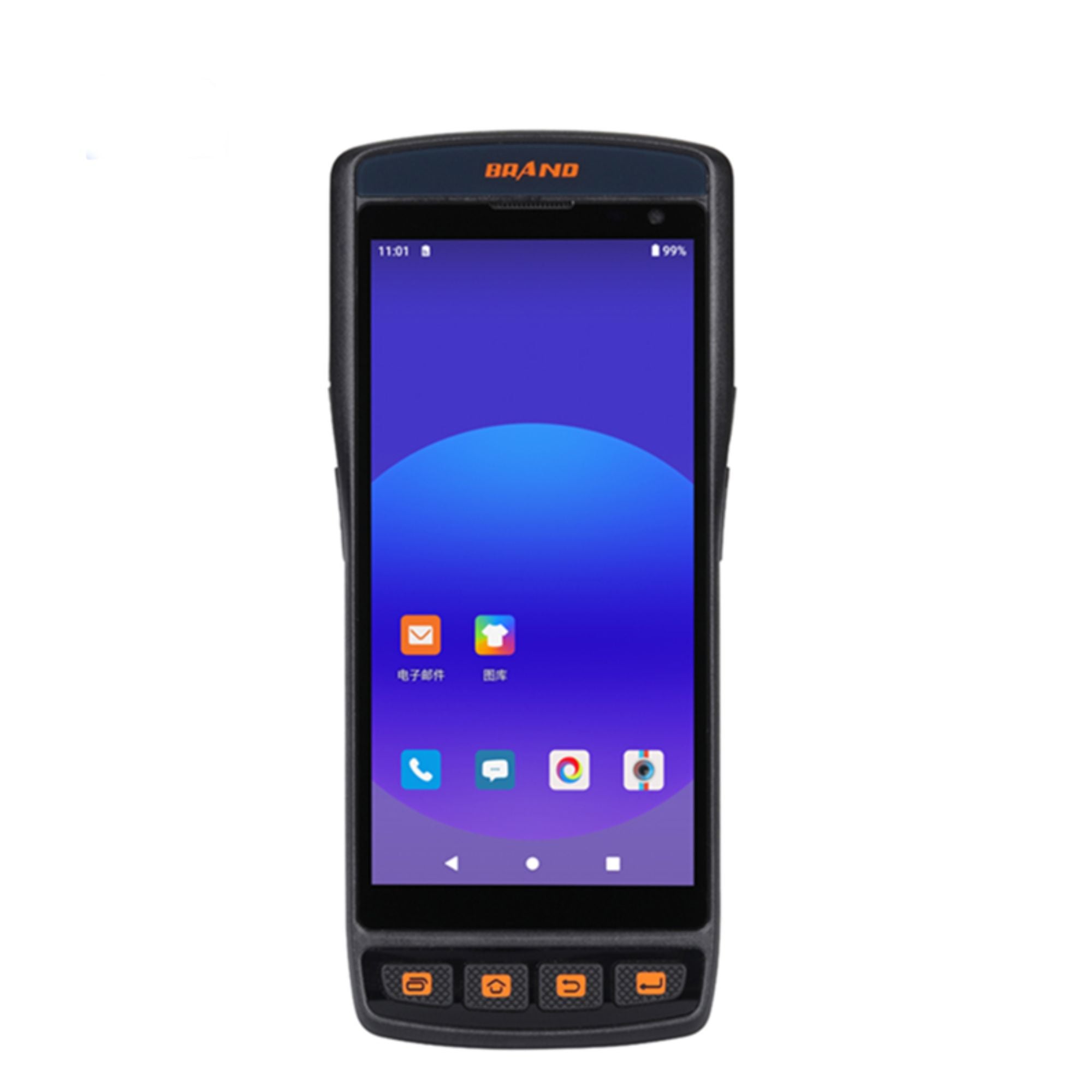

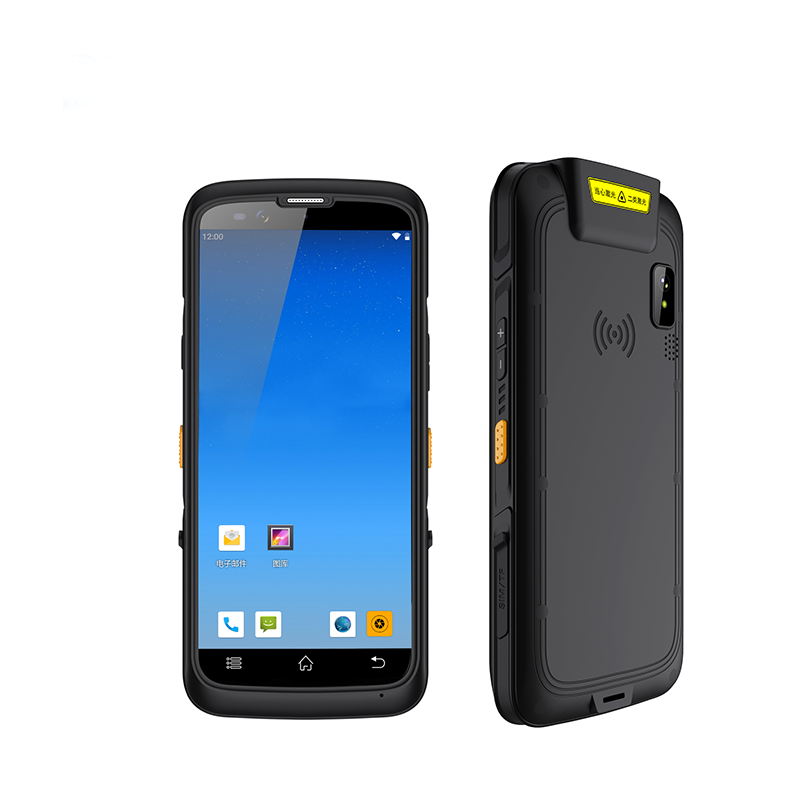
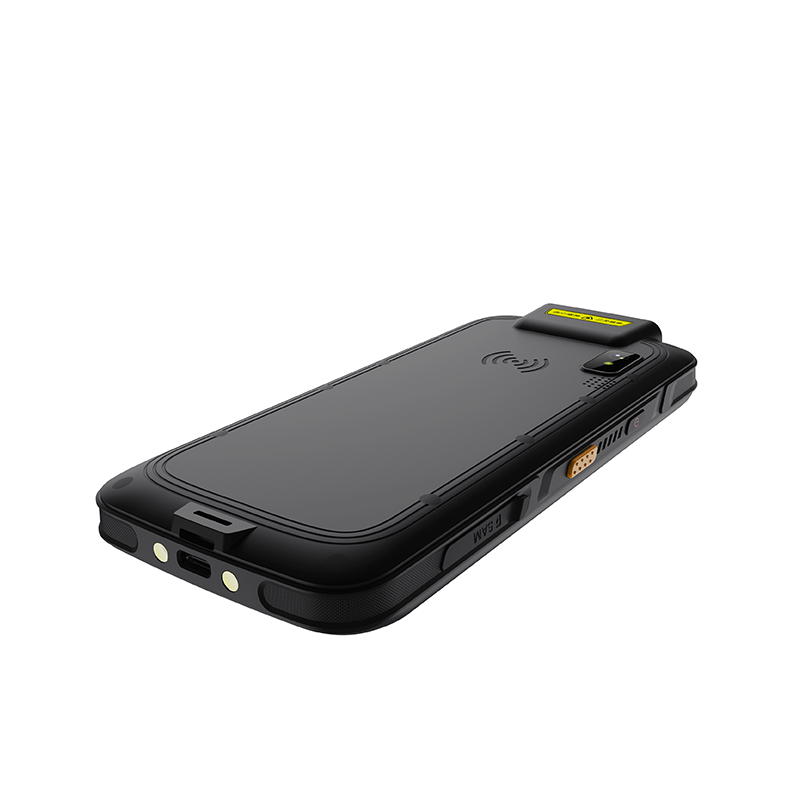
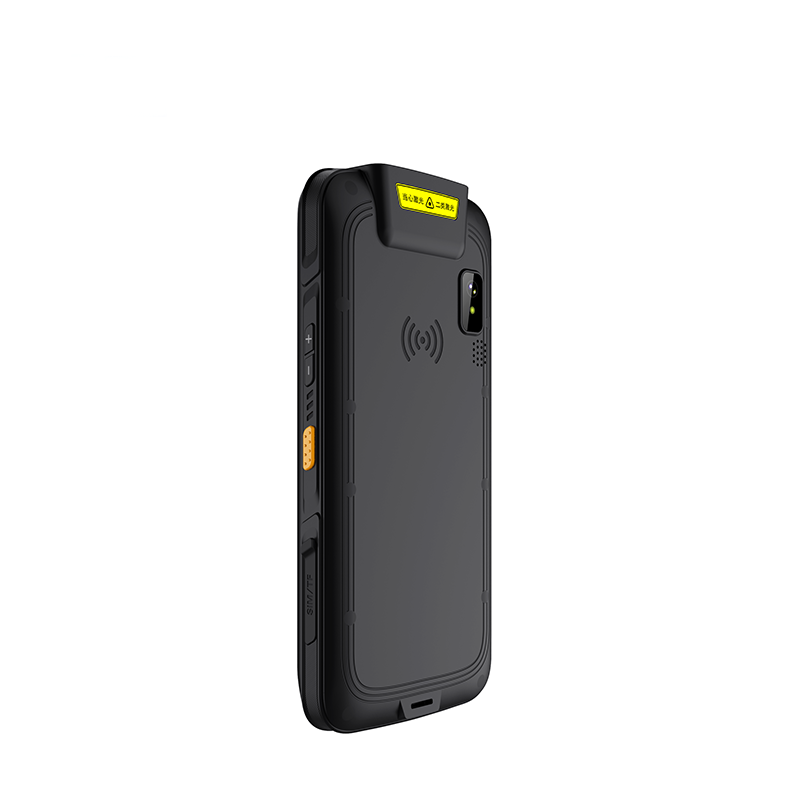
A 5.7-inch industrial handheld on an MTK6762 octa-core with Android 12, an 8-core 2.0 GHz CPU, 3 GB + 32 GB of memory and a removable 4300 mAh battery rated for about eight hours of work. Data capture is modular: barcode scanning, NFC, LF and HF RFID, fingerprint, ID-card reading, face recognition and contactless temperature are all options on the same body, so one spare battery and one charging cradle cover a fleet.
Before you specify
Two things trip up buyers on this range: the model name, and the assumption that every rugged PDA reads UHF.
Configuration
The previous datasheet marked the barcode engine “Optional” in the table while the body copy said the device “comes with barcode scanning”. One of those is wrong. This table is the version to confirm against your quotation.
| MODULE | STANDARD OR OPTIONAL |
| Base device | 5.7-inch screen, Android 12, 3+32 GB, 4300 mAh, Wi-Fi, Bluetooth 5.0, LTE, GPS |
| Barcode engine | NLS-N1 as the baseline engine Honeywell 6603, Zebra SE4710 and CM60 quoted on request · [confirm whether any configuration ships with the scanner as standard] |
| NFC | ISO/IEC 14443A, 3–5 cm |
| LF RFID | 125 kHz and 134.2 kHz, 3–5 cm |
| HF RFID | 13.56 MHz, ISO/IEC 14443A/B and 15693, 3–5 cm |
| Fingerprint | Optional · capacitive module, 508 dpi, FBI PIV FAP10 Single-frame capture in 0.25 s or less |
| Face recognition | Optional · algorithm on the device |
| Temperature module | Optional · infrared, 1–3 cm, 32–42.9 °C, ±0.2 °C Skin-temperature screening only — not a clinical thermometer |
| Memory upgrade | 2+16 GB or 4+64 GB in place of 3+32 GB |
Specification
| PHYSICAL | |
| Dimensions | 178 × 83 × 17 mm |
| Weight | 350 g |
| Colour | Black |
| Drop rating | 1.5 m, powered on |
| Operating temperature | −20 to +50 °C |
| Storage temperature | −20 to +60 °C |
| Humidity | 95% RH, non-condensing |
| DISPLAY, INPUT AND AUDIO | |
| Screen | 5.7 inch, 1440 × 720 |
| Touch panel | Multi-touch, Corning Gorilla Glass 3 The datasheet says “Corning grade 3 glass toughened screen” |
| Speaker | 8 Ω / 0.8 W, sealed |
| Microphone | Sensitivity −42 dB, output impedance 2.2 kΩ |
| PERFORMANCE | |
| CPU | MTK 6762, octa-core, 2.0 GHz |
| Memory | 3 GB RAM + 32 GB storage 2+16 GB or 4+64 GB on request |
| Operating system | Android 12 |
| BATTERY | |
| Battery | 3.7 V / 4300 mAh, removable polymer lithium-ion |
| Runtime | About 8 hours in use · over 300 hours standby |
| Charging | Quick charge supported |
| WIRELESS | |
| Wi-Fi | 802.11 a/b/g/n/ac, 2.4 + 5 GHz |
| Bluetooth | 5.0 with BLE |
| Cellular | LTE bands 1/3/5/7/8/20/38/39/40/41 · WCDMA 1/2/5/8 · GSM 2/3/5/8 Band set fixed at order — check it against your carrier before you buy |
| Positioning | BeiDou, GPS, GLONASS |
| DATA CAPTURE | |
| Barcode scanning | 5 mil optical resolution · 50 scans per second 1D: UPC/EAN, Code 128, Code 39, Code 93, Code 11, ITF, Codabar, MSI, RSS · 2D: PDF417, Data Matrix, QR, Aztec, MaxiCode, Han Xin |
| NFC | ISO/IEC 14443A · 3–5 cm |
| LF RFID | 125 kHz and 134.2 kHz · 3–5 cm |
| HF RFID | 13.56 MHz · ISO/IEC 14443A/B and 15693 · 3–5 cm |
| Cameras | Rear 13 MP autofocus with flash · front 5 MP optional |
How to read the specification
About eight hours of use on a 4300 mAh pack, over 300 hours on standby. The number that matters is not eight — it is removable: a shift that runs long is covered by a second battery in a pocket, not by a charger and a wall socket. Buy one spare per device, not one per site.
This is a flat handheld, not a pistol-grip gun. That is right for form-filling, checking a delivery against a manifest and tapping NFC badges, and wrong for scanning two hundred cartons an hour at arm's length. If your day is mostly trigger pulls, say so — a grip-style reader will be less tiring.
Dust-tight and resistant to water jets, rated for a 1.5 m drop while running. That covers dust, rain, washdown spray and a fall from chest height — everything that normally ends a handheld. It is not an immersion rating. See the exact reading below.
Data capture
Every short-range radio on this device works at contact distance. That is normal for 13.56 MHz and for 125 kHz, but it changes what the device is for: identification and verification, not bulk counting.
Choosing the barcode engine. The baseline is NLS-N1. Honeywell 6603 and Zebra SE4710 are the two worth upgrading to if your labels are damaged, curved, glossy or printed at low contrast — they decode faster on poor symbols. CM60 is the wide-angle option for close work. Send us a sample of your worst label and we will test it rather than guess.
Optional modules
FINGERPRINT
Capacitive module with FBI PIV FAP10 certification and single-frame capture in 0.25 s or less. Relevant where an identity has to be bound to a transaction — guard patrol, controlled dispensing, attendance.
ID-CARD READER
Reads the second-generation resident identity card of China. If you are deploying outside China this module has no use — do not pay for it, and do not let it appear in a quotation for an export order.
FACE RECOGNITION
Runs locally rather than in the cloud, which matters where the network is unreliable or where biometric data must not leave the device. Check your local rules on storing face templates before you enable it.
INFRARED TEMPERATURE
Non-contact at 1–3 cm over 32–42.9 °C, reading in under a second. It is a screening tool, not a clinical thermometer — if you need certified medical measurement, this is the wrong module.
In use
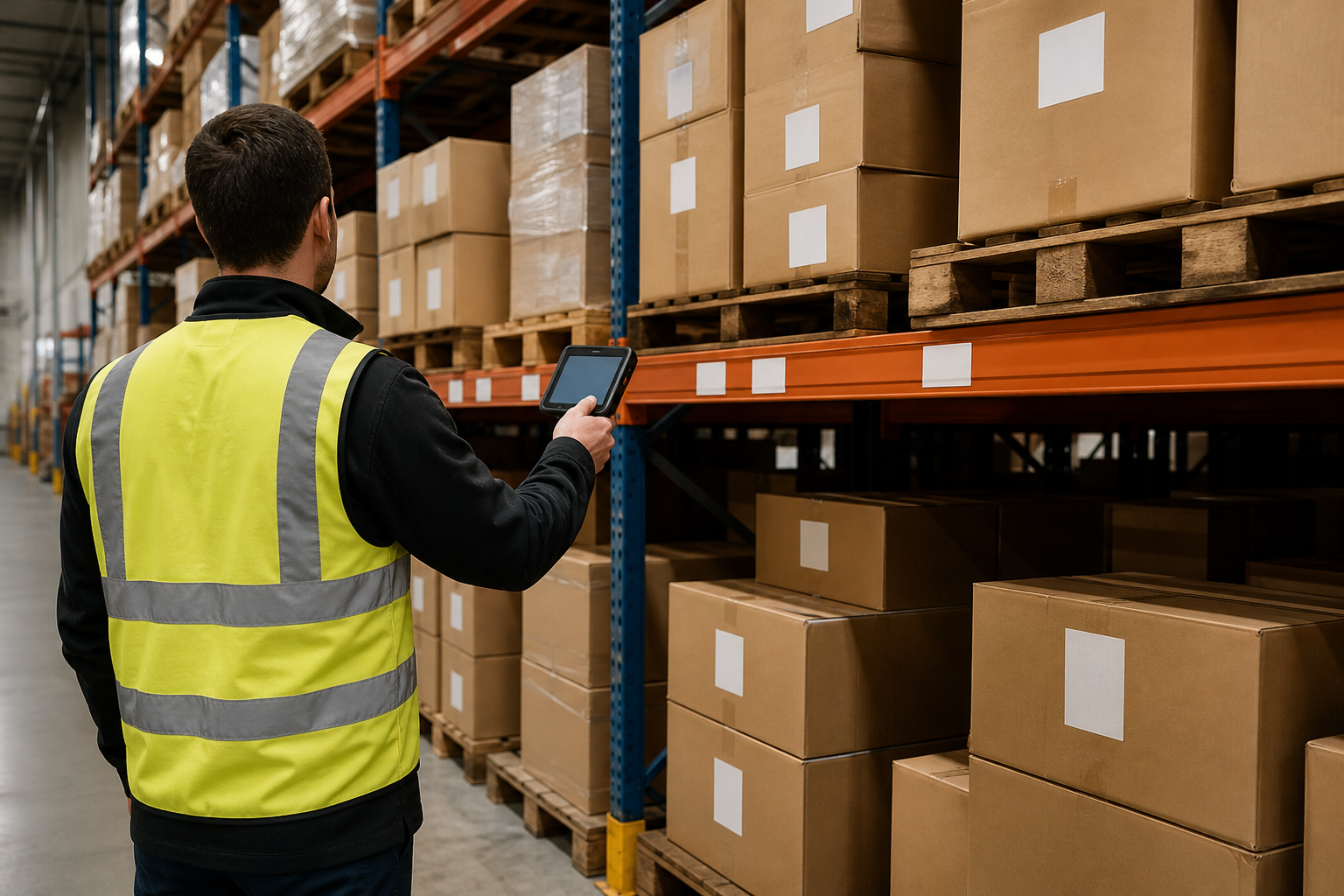
Warehouse and logisticsReceiving, put-away and stock checks: scan the carton, confirm against the manifest on a 5.7-inch screen, tap an NFC location badge to record where it went. The flat body sits in a chest pocket between tasks.
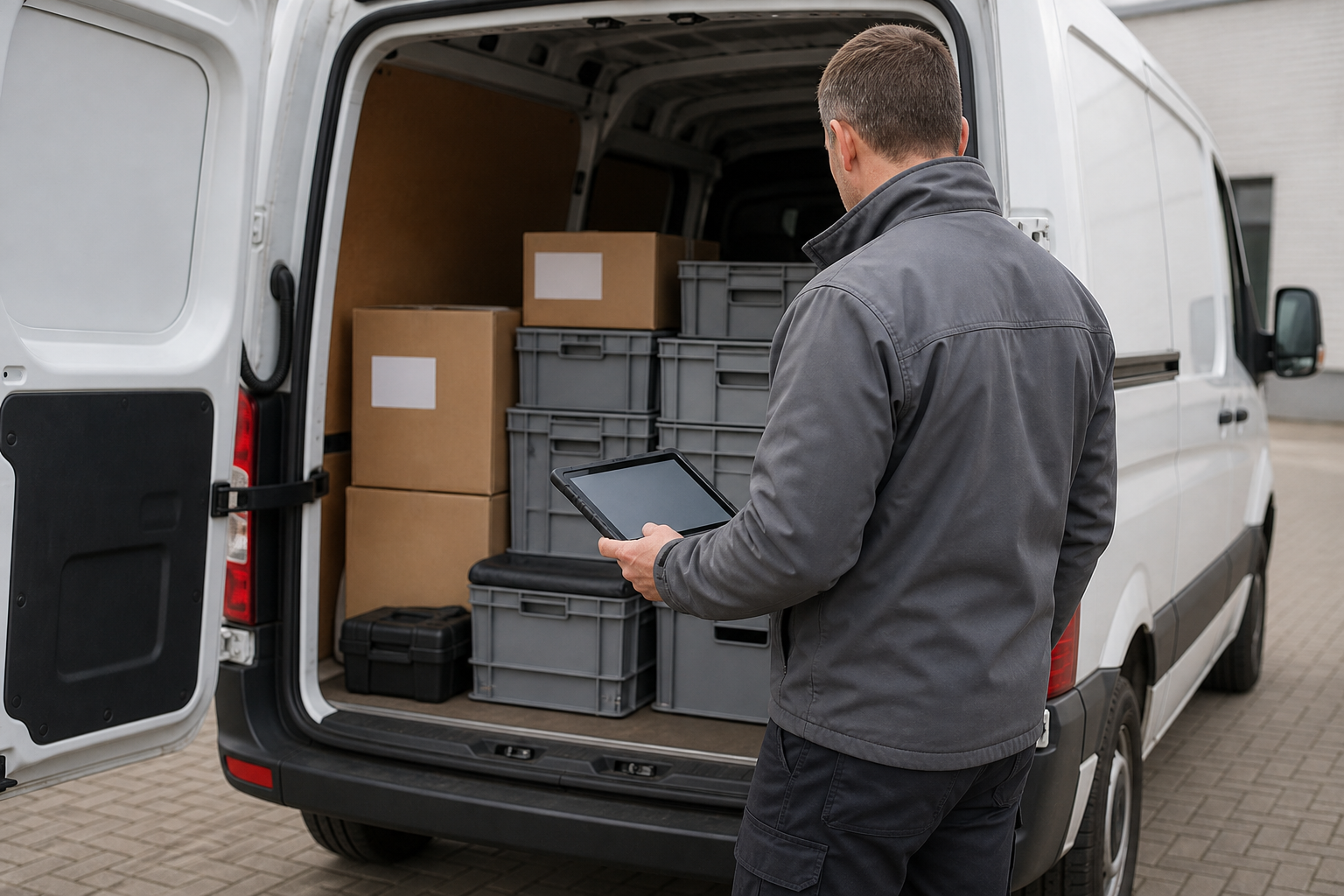
Field service and van stockParts reconciliation at the back of the van, then a signature on the glass. The optional fingerprint module binds the sign-off to a person where a typed name is not enough.
Questions we get asked
No. This configuration carries barcode, NFC and LF/HF RFID — 125 kHz, 134.2 kHz and 13.56 MHz. There is no 860–960 MHz module. If you need to read pallet, carton or apparel UHF tags, tell us the tag type and read distance and we will quote the UHF handheld instead of this one.
The previous datasheet contradicted itself: the specification table marked the scan engine optional while the body copy said the device “comes with barcode scanning”. We are confirming which configurations ship with the scanner fitted. Ask for the answer in writing on the quotation — a scanner-less unit is not obvious until it arrives.
The datasheet gives a 1.5 m drop rating and a −20 to +50 °C range but no ingress protection figure. We will not invent one. Ask us for the IP rating, and if it is not formally tested, treat “rugged” as meaning drop-resistant rather than waterproof.
About eight hours of use, over 300 hours standby, on a 4300 mAh pack. Because it is removable, the practical answer is yes — carry a charged spare. We recommend one spare battery per device rather than one per site.
Yes, on the HF module: 13.56 MHz covering ISO/IEC 14443A/B and 15693, at 3–5 cm. Note that 15693 is a vicinity standard, so the close range is a property of the radio, not a limitation of this device.
No. It reads the second-generation resident identity card of China and nothing else. For export orders, leave the module off the configuration.
NLS-N1 is the baseline and handles clean retail labels. Move to Honeywell 6603 or Zebra SE4710 if your labels are curved, glossy, damaged or low-contrast — they decode poor symbols faster. Send a sample of your worst label and we will test all three.
It is the shipping OS. For a five-year fleet standardisation, ask for the upgrade path in writing before you commit. We will tell you what is fixed in firmware and what is not, rather than promise an OS version we do not control.
Copyright © ©Copyright 2024 Greatest IoT Technology Co., Ltd all rights reserved - Privacy policy