

Home > Products > RFID TAG > RFID Tyre tag
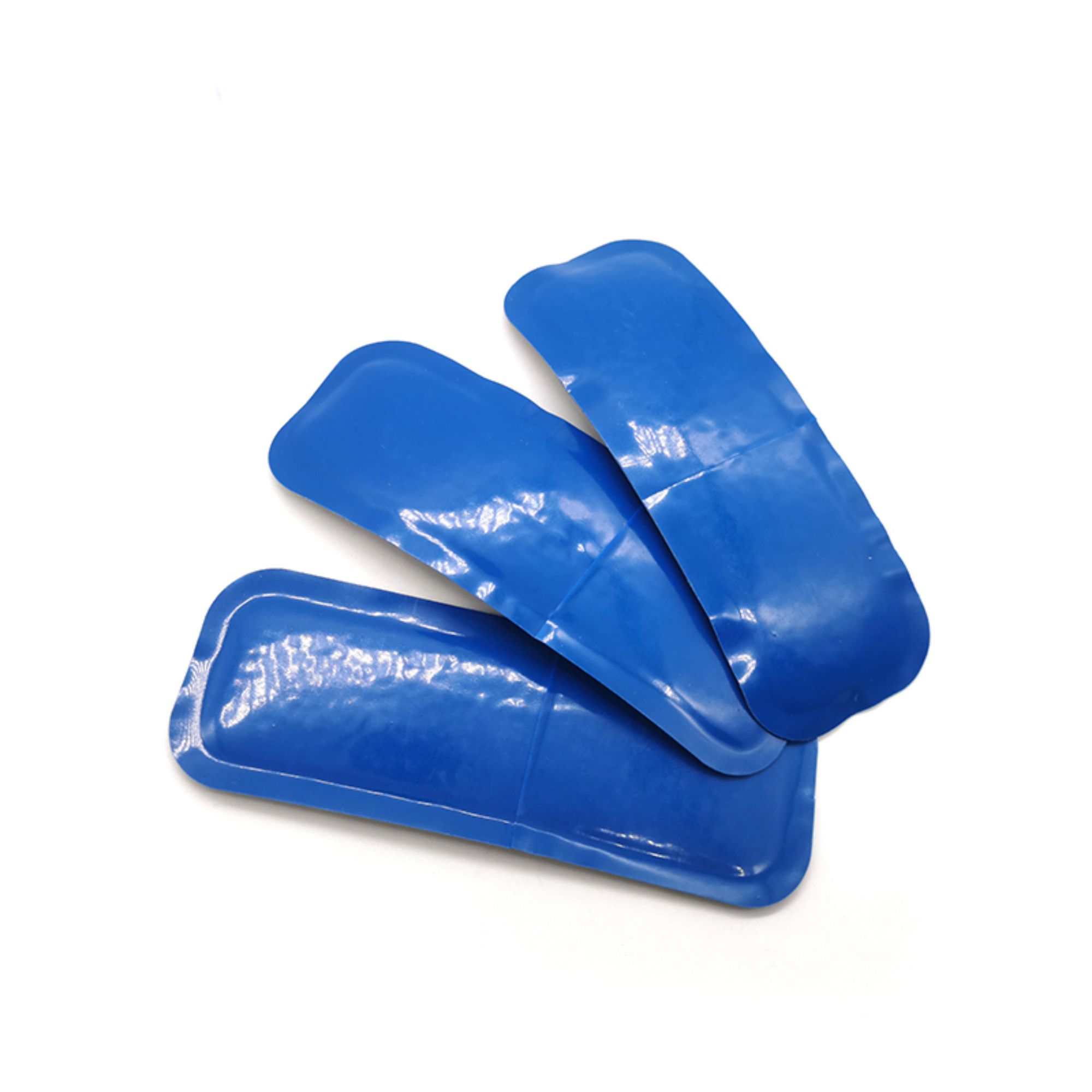
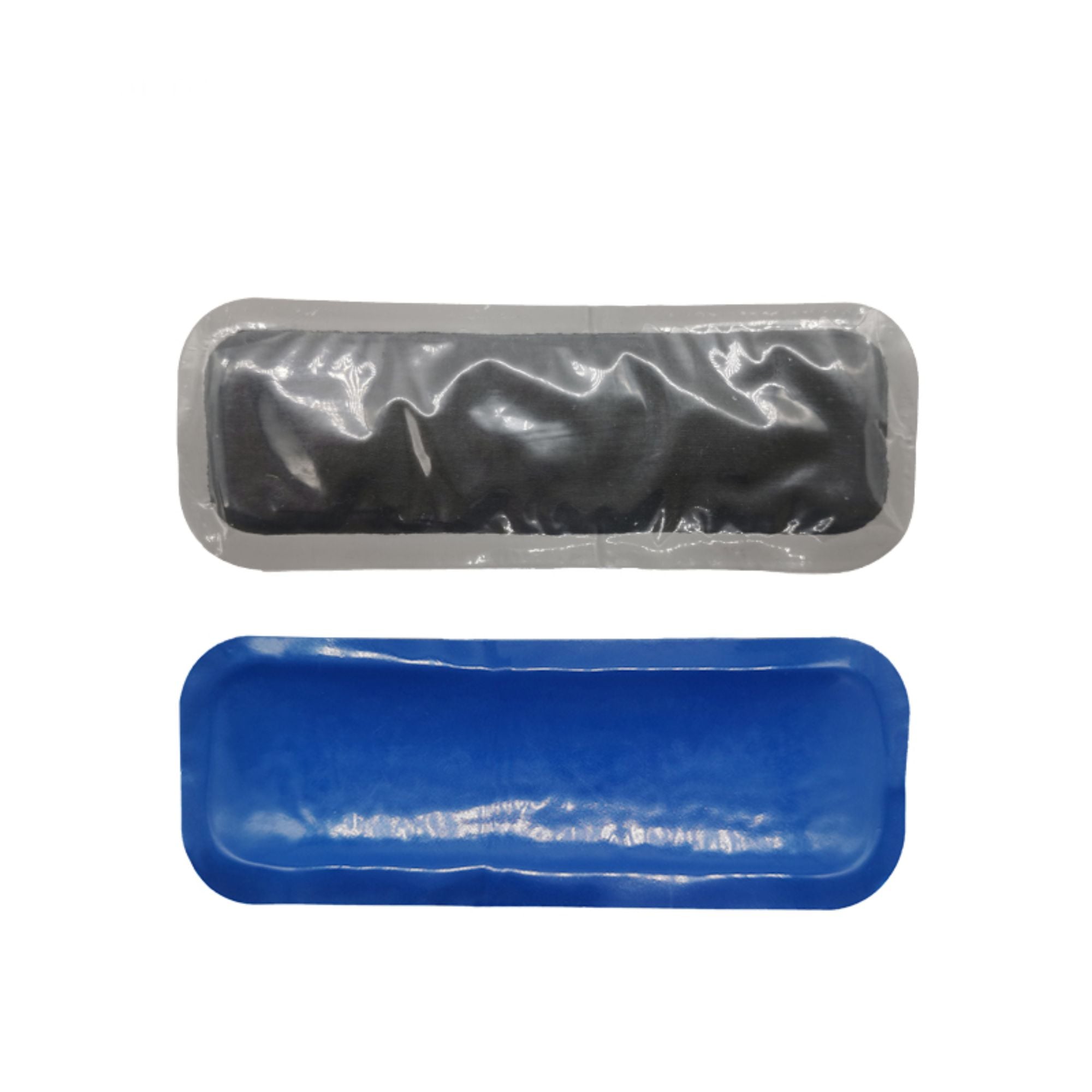
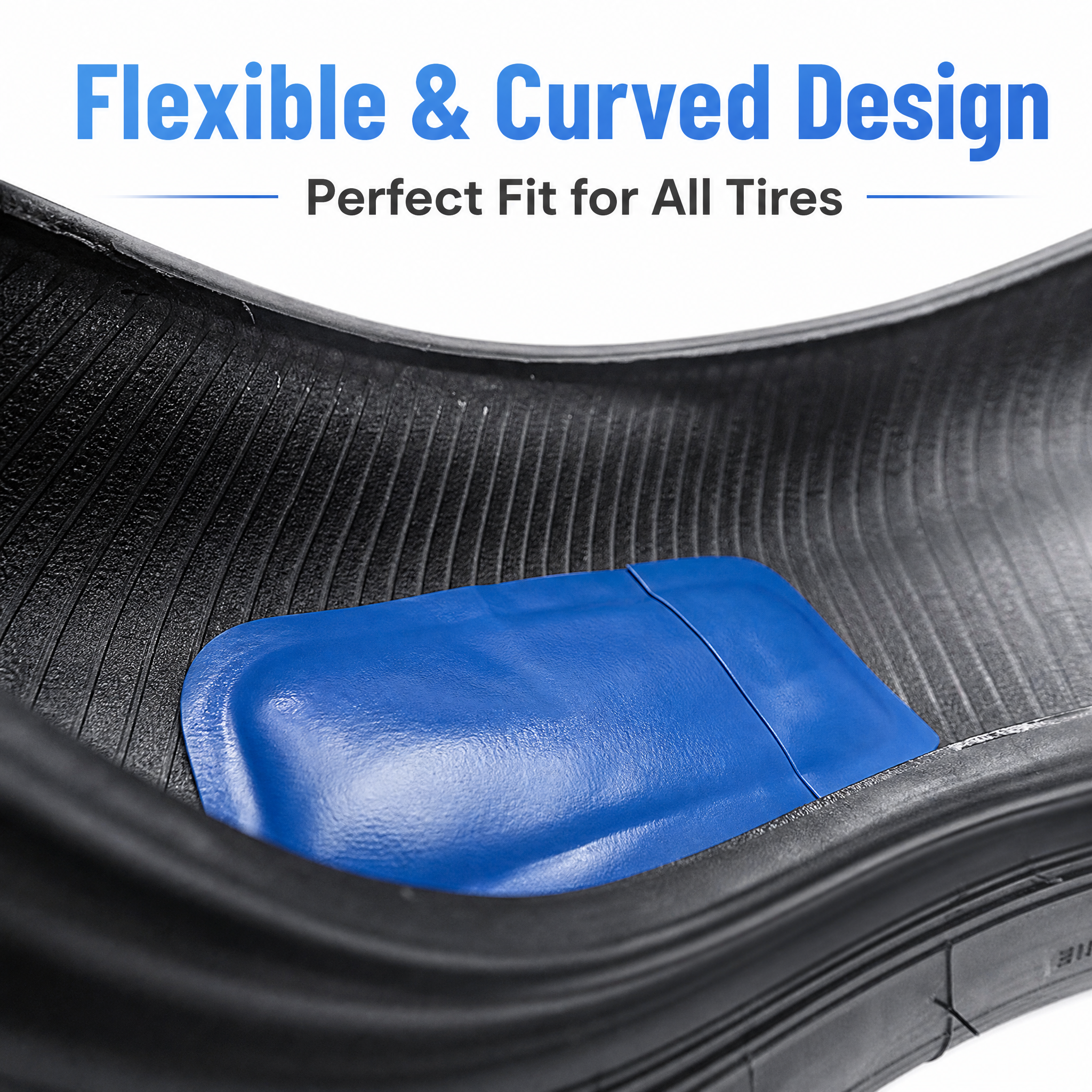

A blue rubber patch with an EPC Class 1 Gen 2 inlay sealed inside. It is bonded to the inner liner of a finished tyre — after curing, not before — and read through the rubber with a handheld or a lane reader. It carries the tyre identity for the life of the casing: production date, plant, retread history, fleet assignment.
Read this first
A tyre tag is not one product. The same-looking patch can be built to go into a green tyre before curing, or onto the inner liner afterwards. Those two are not interchangeable, and the difference is a press cycle at 150–170 °C.
| WHERE IT GOES | WHAT IT MUST SURVIVE | CONSTRUCTION NEEDED | THIS TAG? |
| Green tyre embedded before curing |
Roughly 150–170 °C at 15–25 bar for 15–30 minutes, plus the mechanical squeeze of the bladder | Uncured-rubber patch that bonds into the carcass, with a chip rated for the cure | No |
| Inner liner after curing |
Service heat at the bead, constant flexing, moisture, and the adhesive never letting go | Sealed rubber patch with a permanent adhesive, applied by hand and rolled down | Yes — this is it |
| Sidewall outside the tyre |
Weather, abrasion, kerb strikes, and anything the driver does to it | Thick external label or a moulded patch | Ask — depends on the surface |
Specification
| SPECIFICATION AT A GLANCE | Full parameter table below |
| Product type | Passive UHF tyre patch tag, inner-liner mount |
| Size | 110 × 55 × 3 mm Rounded corners and a raised rim; the rim is what protects the antenna edge in service |
| Frequency | 860–960 MHz |
| Air interface | EPCglobal Class 1 Gen 2 · ISO/IEC 18000-63 |
| Chip | M4QT,MR6 |
| Read range | 1-3m |
| Operating temperature | −40 to +85 °C Service temperature of the finished tyre — not a cure rating |
| Adhesive | Permanent pressure-sensitive, applied to the inner liner |
| Colour | Blue Useful in the plant: a blue patch is visible against black rubber during inspection |
| Encoding | EPC written at production to your numbering scheme |
Reading it
Every tyre tag enquiry starts with the same question, and the honest answer is a range rather than a number. These are the four things that move it.
A steel-belted carcass reflects UHF rather than passing it. Read from the side the tag faces — the inner liner — and keep the antenna out of the belt's shadow. A tag read through the tread will disappoint; the same tag read from inside the tyre will not.
Water absorbs UHF energy. A tyre washed before inspection, or a fleet reading in rain, reads shorter than the same tyre dry. If your process washes casings, measure the range after the wash, not before.
The patch is 110 mm long and flat against a curved wall. Off-axis by 30° and the read rate drops sharply. Training the operator to aim at the patch beats buying a stronger reader.
Construction
A patch this thin survives because the antenna is sealed rather than laminated.
A patch that is flat all the way to the edge has an antenna sitting 40 µm from the outside world. The raised rim puts a wall of rubber around it, so a scuff on the inner liner damages the rim before it reaches the inlay. It is also why the patch is pressed, not cut, from the sheet.
Not heat — the inner liner runs cooler than the tread. The real load is constant flexing and the pressure of the inflation gas. A patch applied to a dirty or talc-contaminated liner will lift at one corner, and once air creeps under it, no amount of rolling saves it.
Fitting
The failure we see most often is not a bad tag — it is a good tag stuck to a dusty liner. Surface preparation is the whole job.
In use
 Fleet and depot checks
Walk the yard, read each casing, and match it to the service record without crawling under the vehicle. Tyre age, position and retread count come back from your own database — the tag only carries the identity.
 Plant and retread traceability
One identity from build to retread: which press, which shift, which casing came back. Because the patch is bonded, the record follows the tyre rather than a p aper label that falls off in the first wash.
Questions we get asked
No. Its operating range is −40 to +85 °C and curing runs roughly 150–170 °C at 15–25 bar for 15–30 minutes. A tag built for the press is a different construction — uncured rubber that bonds into the carcass, with a chip rated for the cycle. Tell us if that is what you need and we will quote the right part instead of this one.
Service temperature of the finished tyre — the heat at the bead and the inner liner in normal running. It is not a cure rating, and the two should never be presented as one range.
Ask before you assume. A retread involves another cure cycle, and whether the patch survives depends on whether it is buffed away, left in place, or removed and re-applied. Tell us your retread process and we will say what the patch can take.
It does not block it, but it reflects it. Read from the inner-liner side, which is the side the patch faces, and the belt is behind the tag rather than between tag and reader. Reading through the tread from outside is the case that disappoints.
No. The adhesive is permanent and the patch is designed to stay with the casing. That is a feature for traceability: an identity that can be swapped between tyres is not a traceability system.
Yes — the EPC is written at production. Send the layout: company prefix, item reference, serial and whether you follow a standard scheme such as SGTIN-96. We will confirm the bit allocation before the run, not after.
Why us
GIOT is one of the larger RFID inlay and label manufacturers in China, with capacity around one billion inlays a year.
Inlay assembly runs on Mühlbauer lines, which keeps antenna placement consistent enough for a sealed patch process.
We buy from the main IC brands as a strategic partner rather than a spot buyer, and can offer equivalent alternatives when a part is on allocation.
Copyright © ©Copyright 2024 Greatest IoT Technology Co., Ltd all rights reserved - Privacy policy

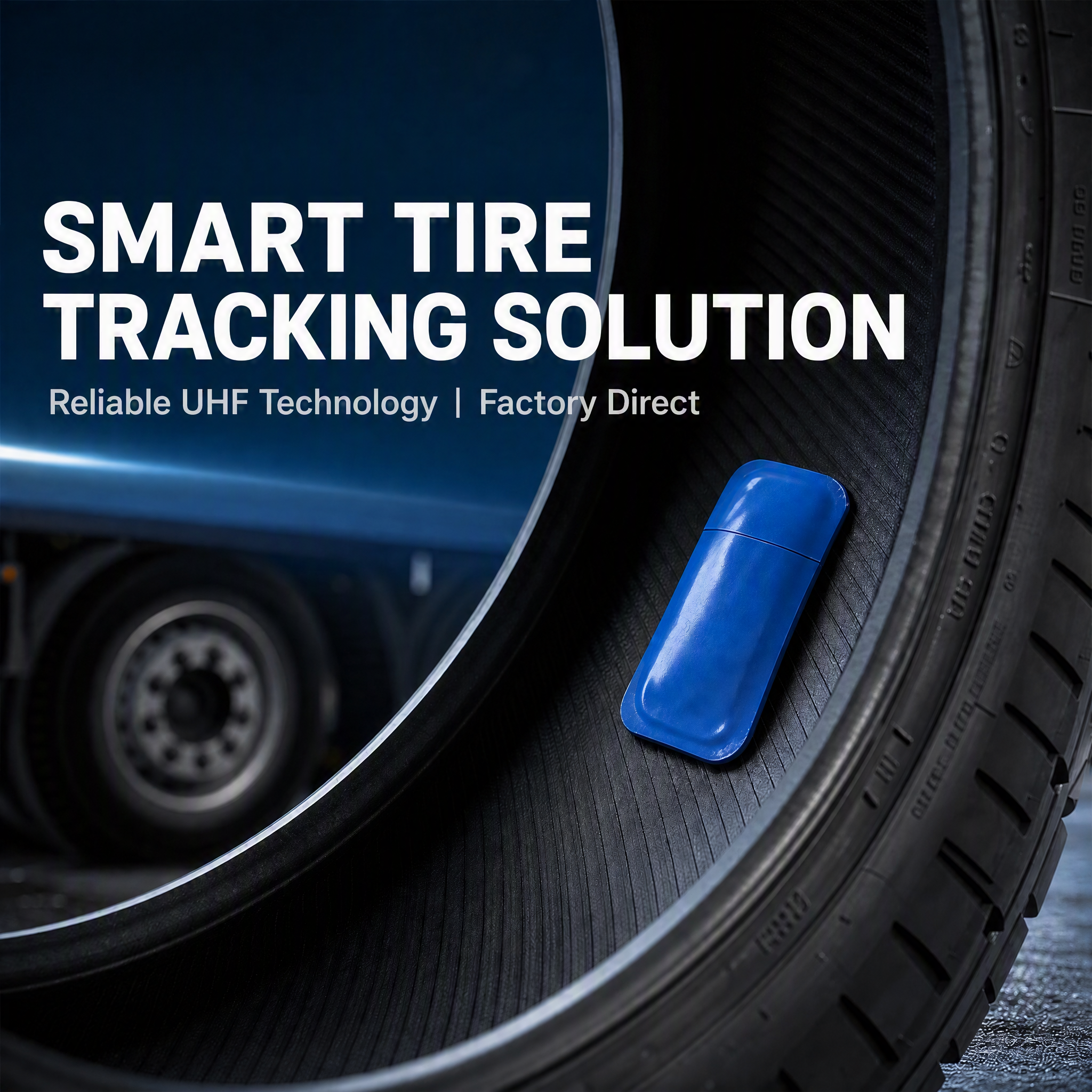 Inner liner, patch rolled from the centre out · a roller is not optional