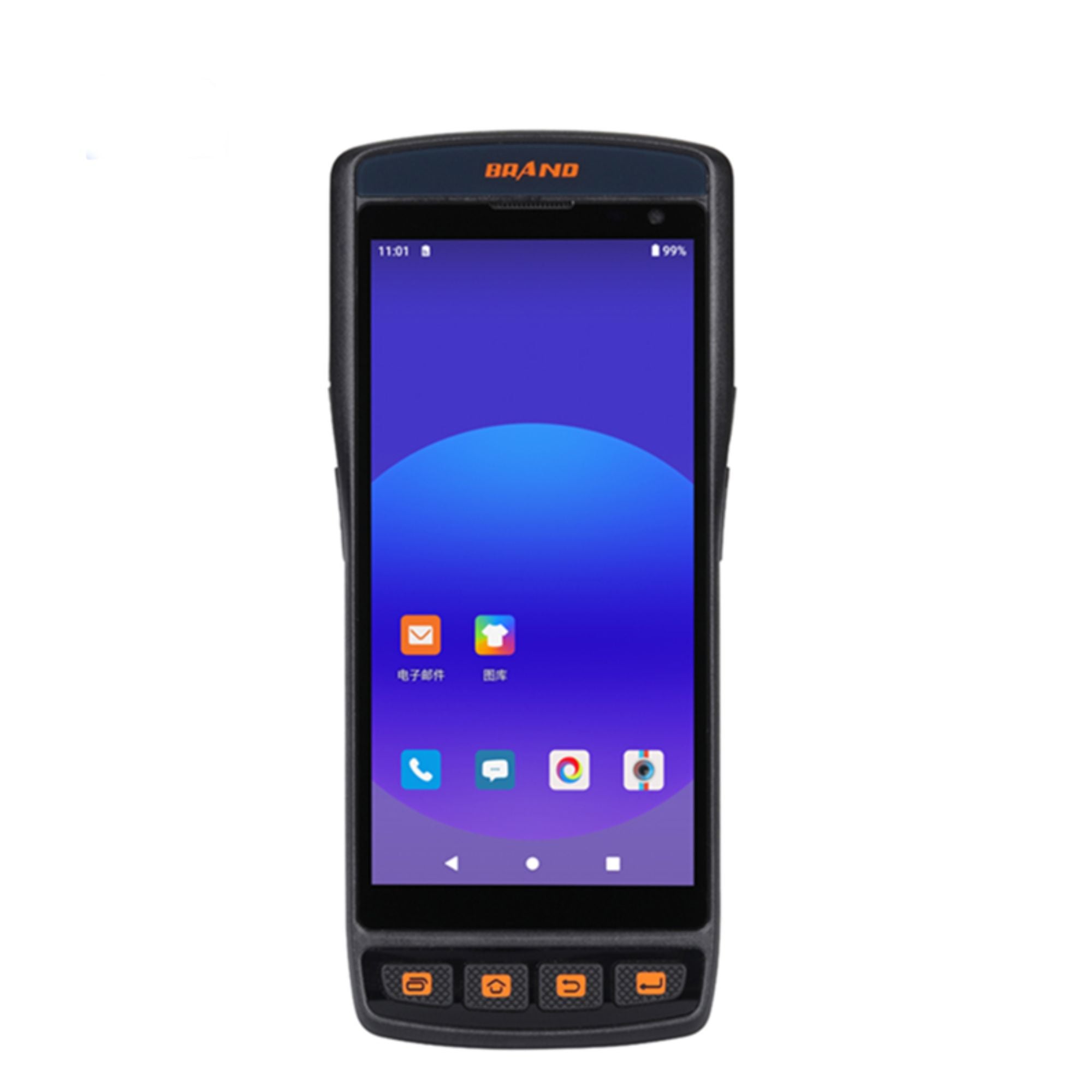

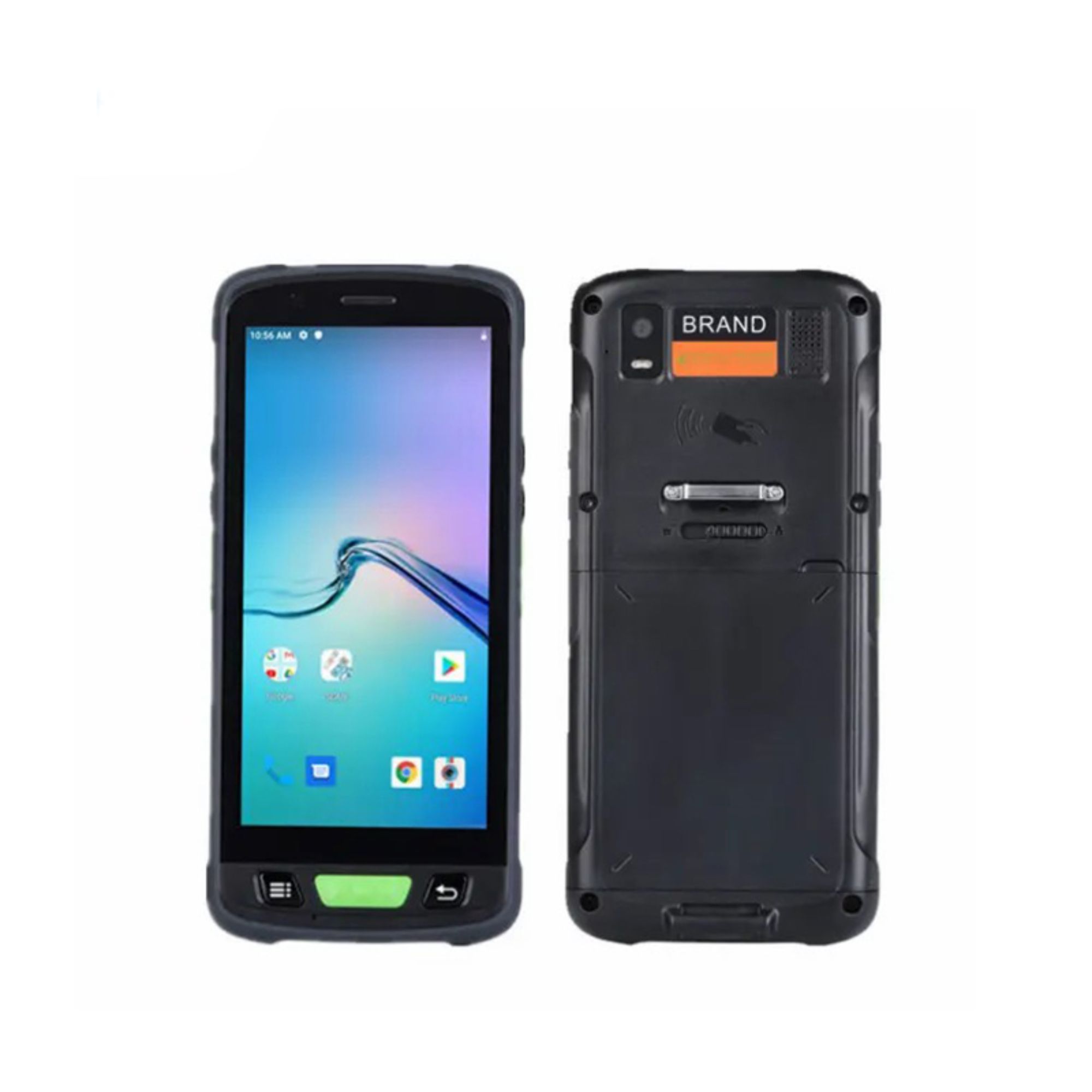
A 5.5-inch phone-format terminal for people who scan all day: Android 11, IP67, a 1.5 m drop rating, a 4,600 mAh battery and a choice of 2D imager, NFC or 125 kHz LF on the same body.
The body is fixed. What changes between orders is the capture module, and that is the decision that should be made first, because it decides whether this device fits your workflow at all. The matrix below starts there. Everything after it is the hardware you get either way.
| 5.5 in1440 × 720 IPS, 18:9 | IP67plus 1.5 m drop, 6 faces | 4,600 mAh17.0 Wh, USB-C charging |
Decide this first
The V9000 is sold in configurations. The screen, battery, radio and housing are the same in every one; what sits behind the front window changes, and so does the price. Choose by what you actually read.
| Module | Status | What it reads | What it rules out |
| 2D imager | Option, and the one most orders take | 1D and 2D barcodes from paper, labels, screens and curved surfaces. The module most buyers take for logistics, retail and asset work. | Nothing, at normal distances. It is line of sight, so a label inside a sealed carton still has to be opened. |
| NFC 13.56 MHz | Option | ISO/IEC 14443A/B cards and badges, ISO/IEC 15693 labels, and phone-to-device pairing. Read range 2 to 5 cm. | Nothing physically, but it is a deliberate tap: one tag at a time, no bulk reading of a pallet. |
| LF 125 / 134.2 kHz | Option | ISO 11784/11785 FDX-B animal chips, EM4100/4200, TK4100, T5577, HITAG 2, EM4305. Range 2 to 5 cm. | It is not a UHF reader. Livestock and pet chips only, one at a time, and the chip must be presented close. |
| UHF 860–960 MHz | Quoted separately — ask for the module, the band and the measured range | Pallet and carton labels at distance, if the module is fitted. This page does not publish a UHF specification because the reader is not the same across configurations. | Bulk reading is only possible with a UHF module. If your project depends on reading a trolley of items at once, this decision comes before anything else on the page. |
Reading the datasheet
| Figure | What it certifies |
| IP67 | Sealed against dust, and against 1 m of fresh water for 30 minutes, to IEC 60529. |
| 1.5 m drop | Six faces, dropped onto concrete, inside the operating temperature range. |
| −20 to +50 °C | The device runs and reads across that range. |
| 4,600 mAh | 17.0 Wh at 3.7 V nominal — a real, usable capacity in a 300 g device. |
Power
The battery is a 4,600 mAh lithium-polymer pack. Its nominal voltage is 3.7 V; 4.35 V is the charge cut-off, the point the charger stops at, not the voltage the pack sits at.
Charging. USB-C, and the port also carries USB 3.0 data and OTG. Charging stops below 0 °C, which is a property of the cell chemistry rather than a limitation of this device. In a cold-store deployment, plan for a charging bench outside the freezer and one spare battery per device per shift.
Specification
| STRUCTURE | |
| Dimensions | 170 mm × 79 mm × 17.4 mm |
| Weight | Under 300 g including the battery |
| Housing | Rugged thermoplastic body with a sealed battery door; IP67 |
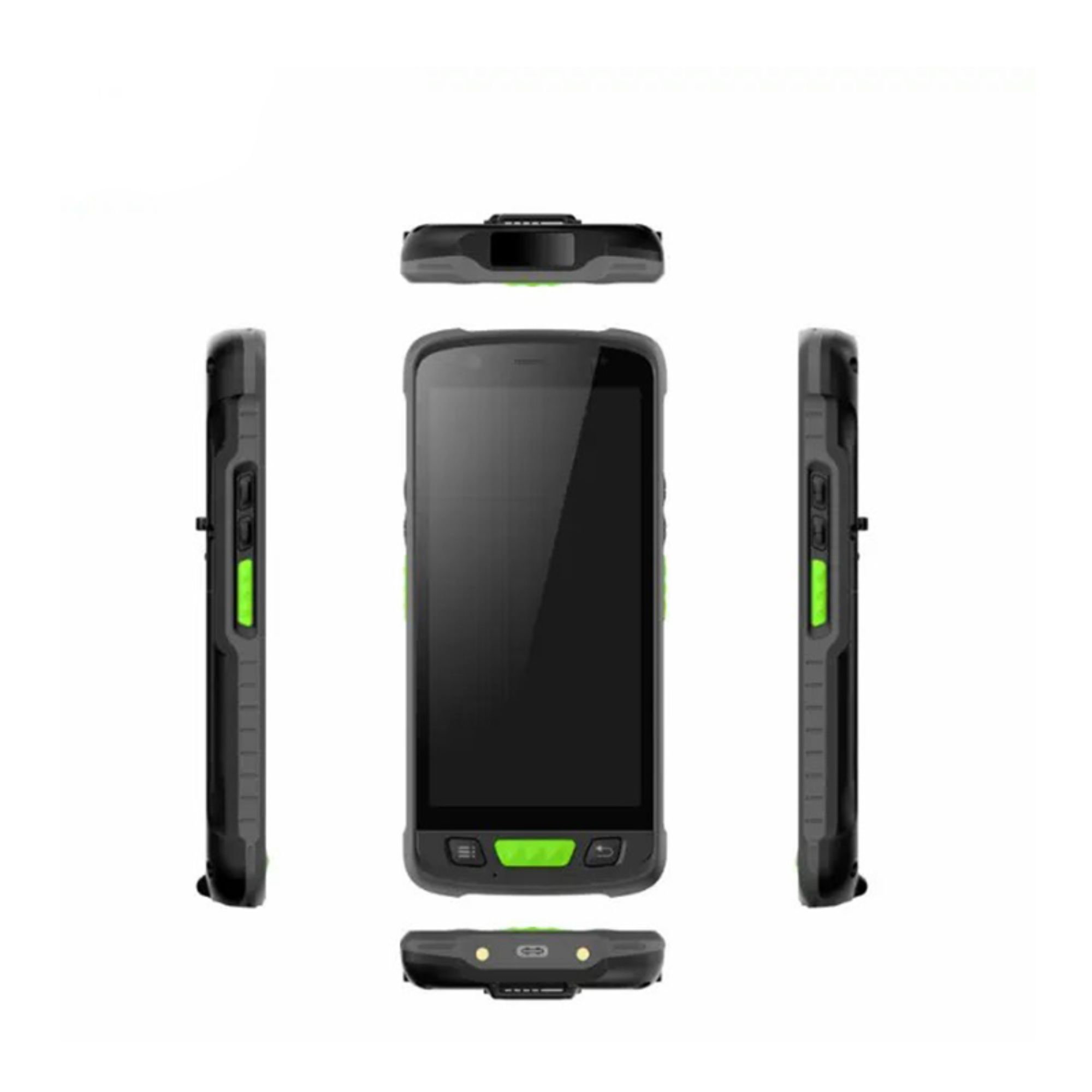
| Keys | 1 power, 3 scan, 2 volume, 1 PTT, 1 menu, 1 back — nine physical keys, usable with gloves |
| Card slots | 2 × Nano-SIM, 1 × microSD (TF) up to 128 GB |
| Ports | USB-C (USB 3.0 device, OTG); expansion connector on the base |
| DISPLAY | |
| Screen | 5.5 in IPS LTPS, 1440 × 720, 18:9, capacitive multi-touch |
| Input | On-screen keyboard, handwriting, or the nine physical keys |
| PERFORMANCE | |
| Operating system | Android 11 |
| Processor | 2.0 GHz octa-core Arm Cortex-A53 |
| Memory | 3 GB RAM + 32 GB storage, or 4 GB + 64 GB as an option |
| Expansion | microSD up to 128 GB |
| RADIO | |
| Wi-Fi | 802.11 a/b/g/n/ac/d/e/h/i/k/r/v, 2.4 GHz and 5 GHz, IPv4 and IPv6 |
| Bluetooth | 5.0 |
| Cellular | 2G GSM 850/900/1800/1900 · 3G WCDMA 850/900/1900/2100 and CDMA EVDO BC0 · 4G FDD B1/B3/B5/B7/B8/B20, TDD B38/B39/B40/B41 |
| GNSS | GPS, AGPS, GLONASS, BeiDou and Galileo, internal antenna |
| DATA CAPTURE | |
| 2D imager | Mindeo 5600, Honeywell N5703 or Zebra SE4710 |
| 1D symbologies | UPC/EAN, Code 128, Code 39, Code 93, Code 11, Interleaved 2 of 5, Discrete 2 of 5, Codabar, MSI, RSS |
| 2D symbologies | PDF417, MicroPDF417, Composite, DataMatrix, QR, Micro QR, Aztec, MaxiCode, and the common postal codes |
| NFC (option) | 13.56 MHz; ISO/IEC 14443A/B, ISO/IEC 15693, NFCIP-1 and NFCIP-2; 2 to 5 cm |
| LF (option) | 125 / 134.2 kHz; ISO 11784/11785 FDX-B and ISO 18000-2; EM4100, EM4200, TK4100, T5577, HITAG 2, EM4305; 2 to 5 cm |
| UHF (option) | Quoted as a separate configuration. The module, the legal band for your country and the measured range are confirmed per order |
| CAMERA | |
| Rear | 16 MP autofocus with flash. |
| Front | 8 MP, option |
| ENVIRONMENT | |
| Operating temperature | −20 °C to +50 °C |
| Storage temperature | −40 °C to +70 °C |
| Humidity | 5% to 95% RH, non-condensing |
| Drop | 1.5 m onto concrete, six faces, within the operating temperature range |
| Tumble | 1,000 cycles at 0.5 m, all six faces |
| Sealing | IP67 to IEC 60529 — 1 m of fresh water for 30 minutes |
| SOFTWARE AND SUPPORT | |
| SDK | Free SDK for secondary development. |
Where it fits
This is a general-purpose terminal, so the useful question is not what it can do but what fails first in your environment. That is what the third column is for.
| Job | What the device does there | Test this before you buy |
| Warehouse and stock control | Cycle counts, put-away, location moves, picking against a screen that is readable on a moving forklift. | Wi-Fi roaming. Walk the aisles with the device and watch it hand over between access points; the scanner will keep up long after the network stops doing so. |
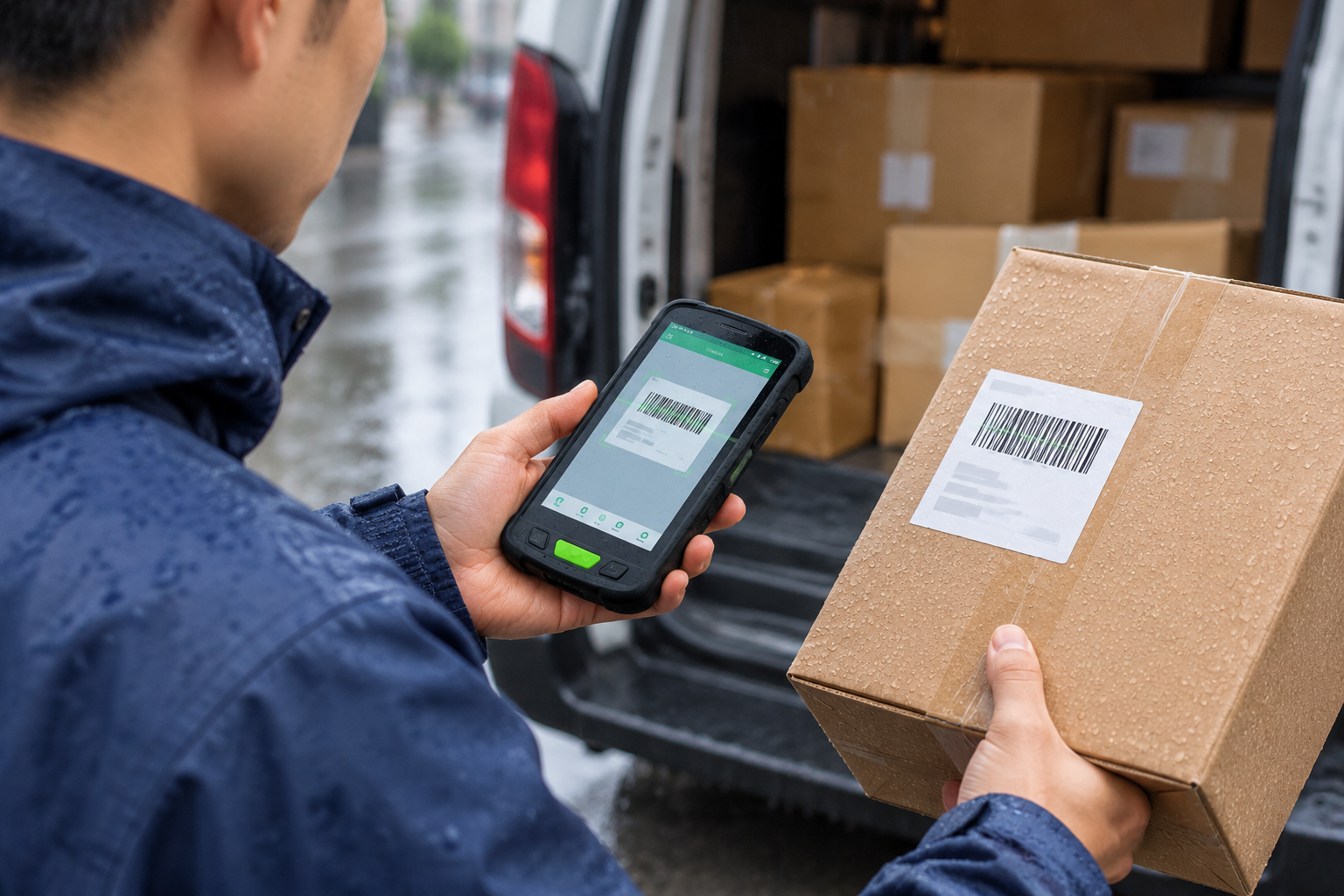
| Transport and parcel | Pickup scans, sortation, proof of delivery with the 13 or 16 MP camera as evidence. | The battery door gasket, not the drop rating. Drops are proven; a gasket opened twice a day for two years is the part that eventually lets water in. |
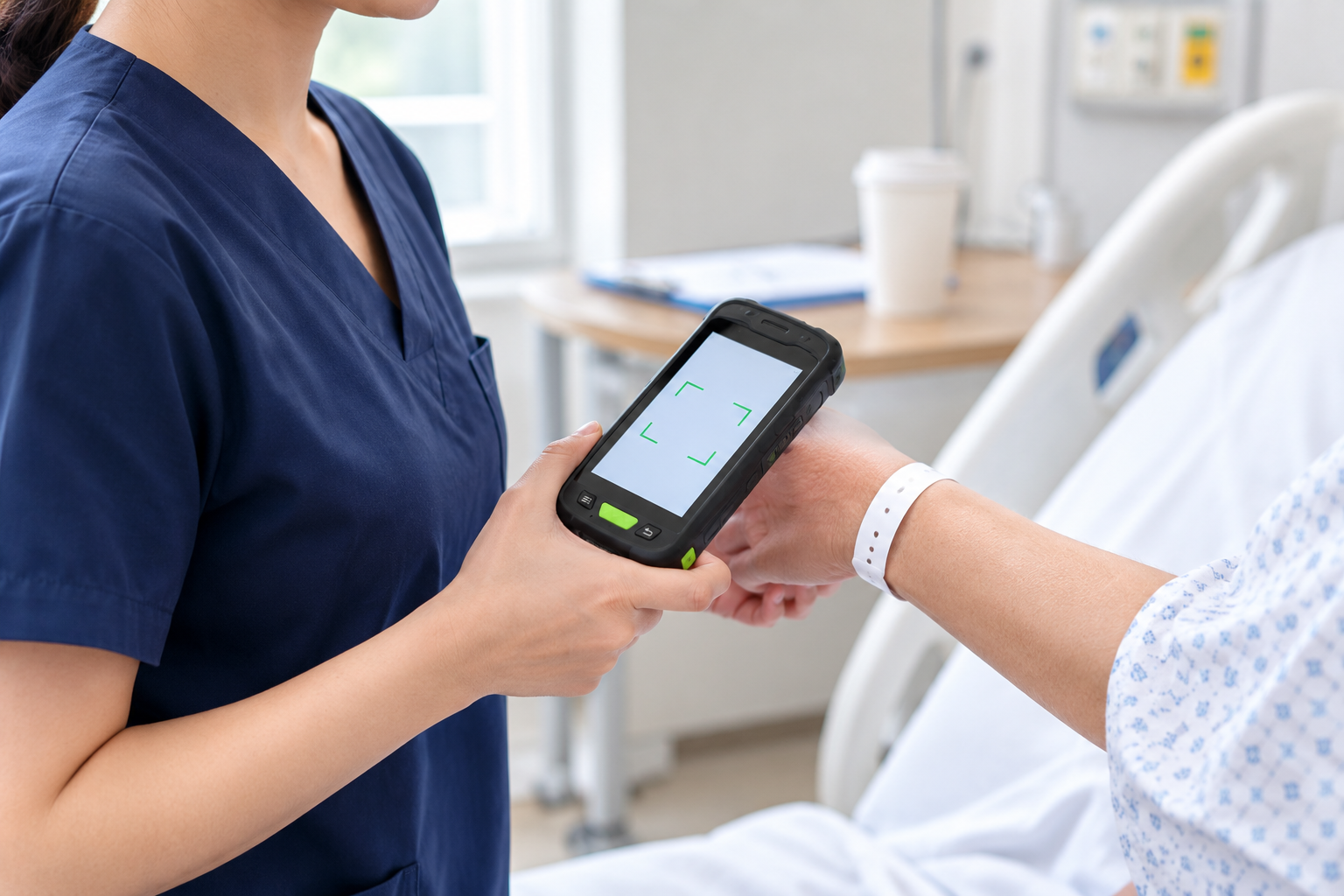
| Hospital ward rounds | Patient and medicine checks by wristband, with the NFC or LF module fitted. | Your own wristband inlay, at the bedside, with a nurse wearing gloves. 2 to 5 cm is a deliberate tap and needs one hand free — time it against your current process. |
| Chain retail | Shelf replenishment, price checks, stocktakes, click-and-collect handover. | The screen in direct sunlight, and 1D codes at an angle on your own labels. Both are what a shop floor does that a showroom does not. |
| Field service and government | Asset audits, meter reads, inspections, with photographic evidence attached to the record. | A full shift outdoors at around −5 °C. Capacity drops in the cold, and the −20 °C operating rating says nothing about how long the pack lasts there. |
In use
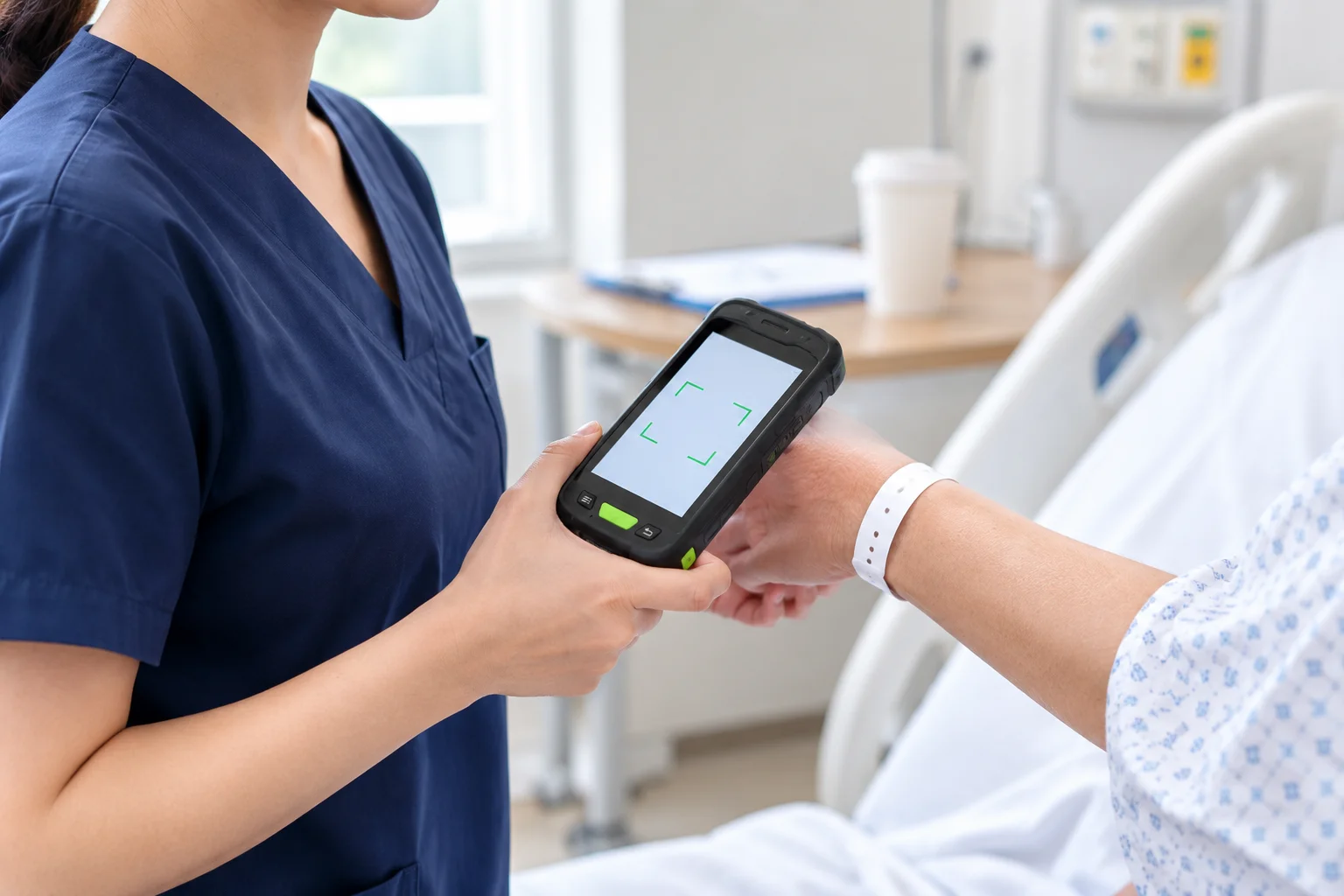
Ward round, wristband check. Note the presentation: the NFC and LF antennas sit in the back of the housing, so the tag goes to the rear of the device, not to the screen. That is a habit worth training before the pilot, not after it.
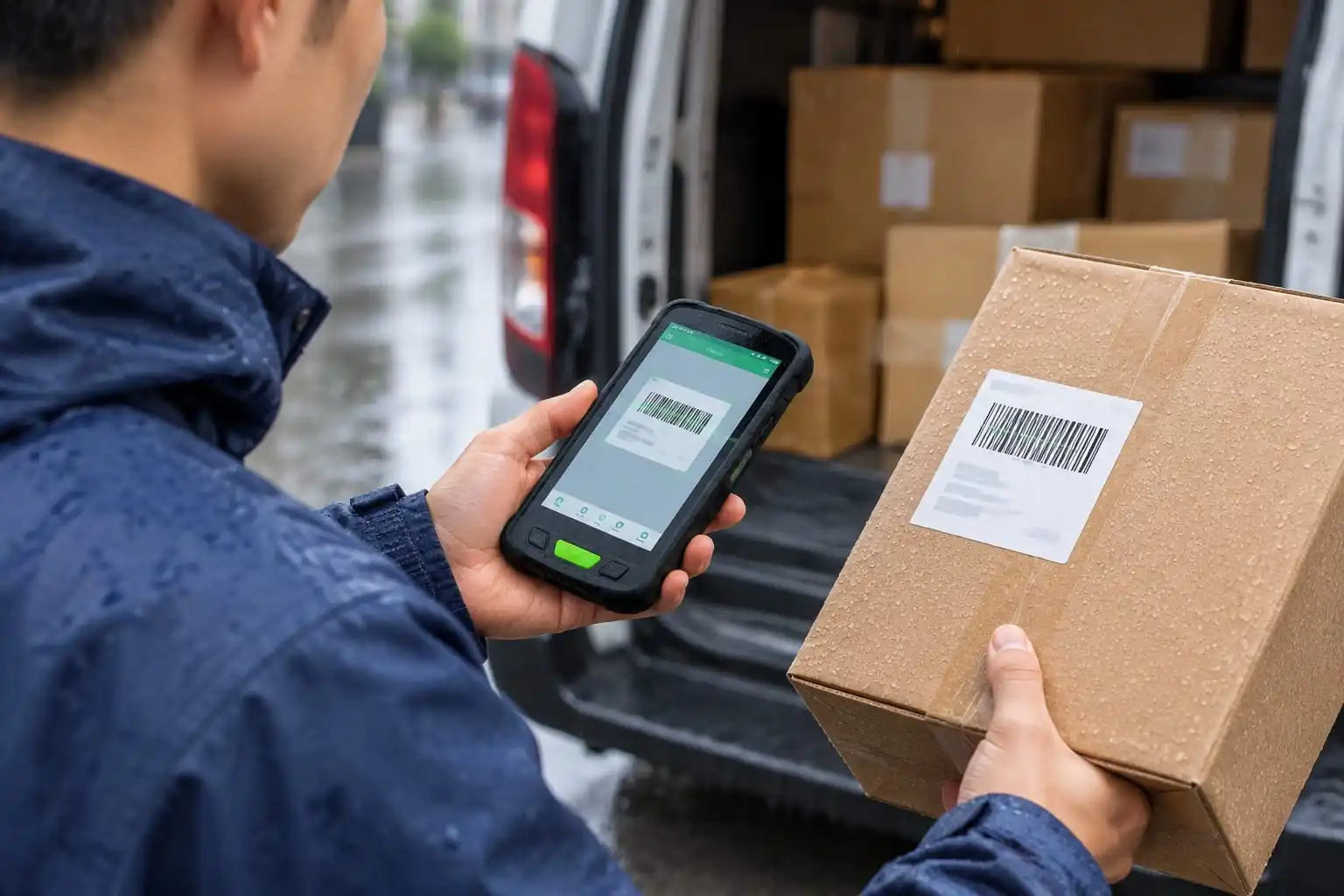
Parcel handover in the rain. IP67 covers the device; it does not cover a wet label. A soaked barcode reads poorly on any imager, which is why the case for this device is the gasket and the glove-sized keys, not the drop number.
The hardware
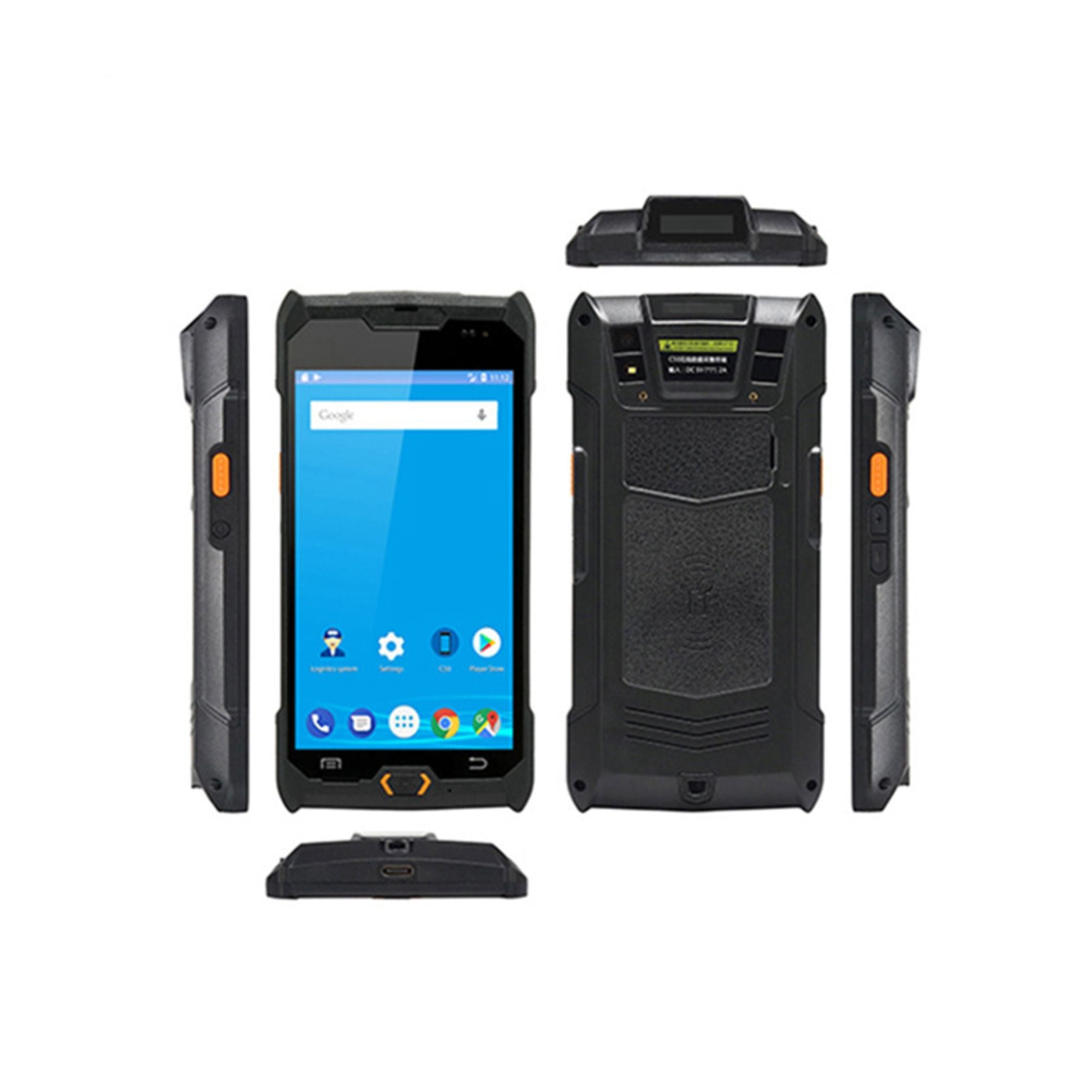
Four views. 17.4 mm thick, 79 mm wide: it fits a shirt pocket and still takes a charging cradle or the expansion connector on the base.
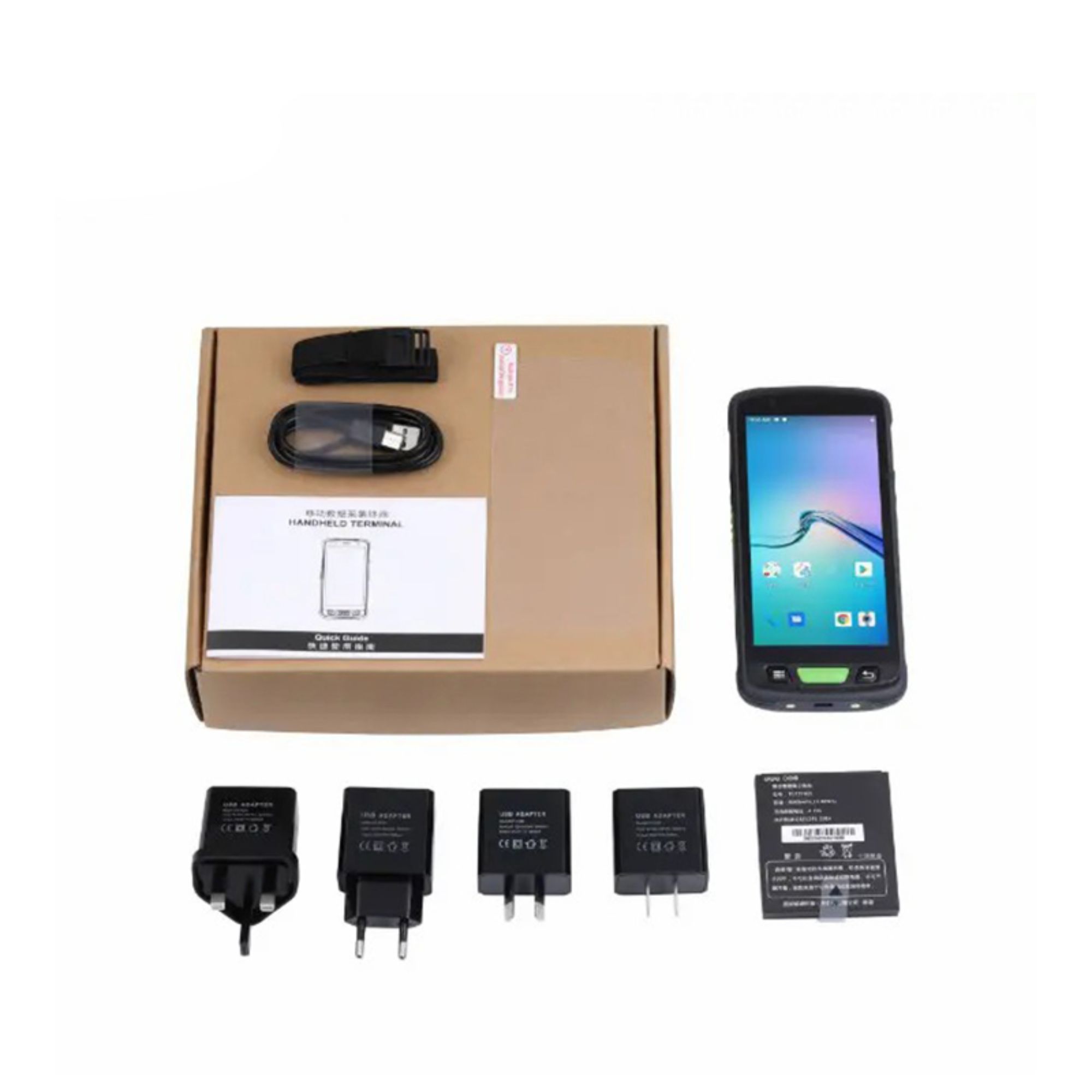
Carton contents: terminal, battery, USB-C cable, hand strap, quick guide and four plug adapters. The charger body is not shown, so ask whether a power supply is included or whether the adapters are for a supply you already have.
Questions we are asked
| Question | Answer |
| Can I use it in a freezer? | The device runs from −20 °C, so yes for reading. Charging is the limit: a lithium cell must not be charged below 0 °C. Plan a charging bench outside the freezer and one spare battery per device per shift. |
| NFC or LF — which do I need? | NFC (13.56 MHz) for staff badges, access cards, ISO/IEC 15693 labels and phone pairing. LF (125 or 134.2 kHz) for animal chips to ISO 11784/11785, EM4100/4200 and T5577. Both read at 2 to 5 cm, one tag at a time. If you need a trolley read at once, neither is the right module and the answer is UHF. |
| What do we get for development? | A free SDK for secondary development. |
| What is in the box, and what is not? | Terminal, battery, USB-C cable, hand strap, quick guide and four plug adapters. |
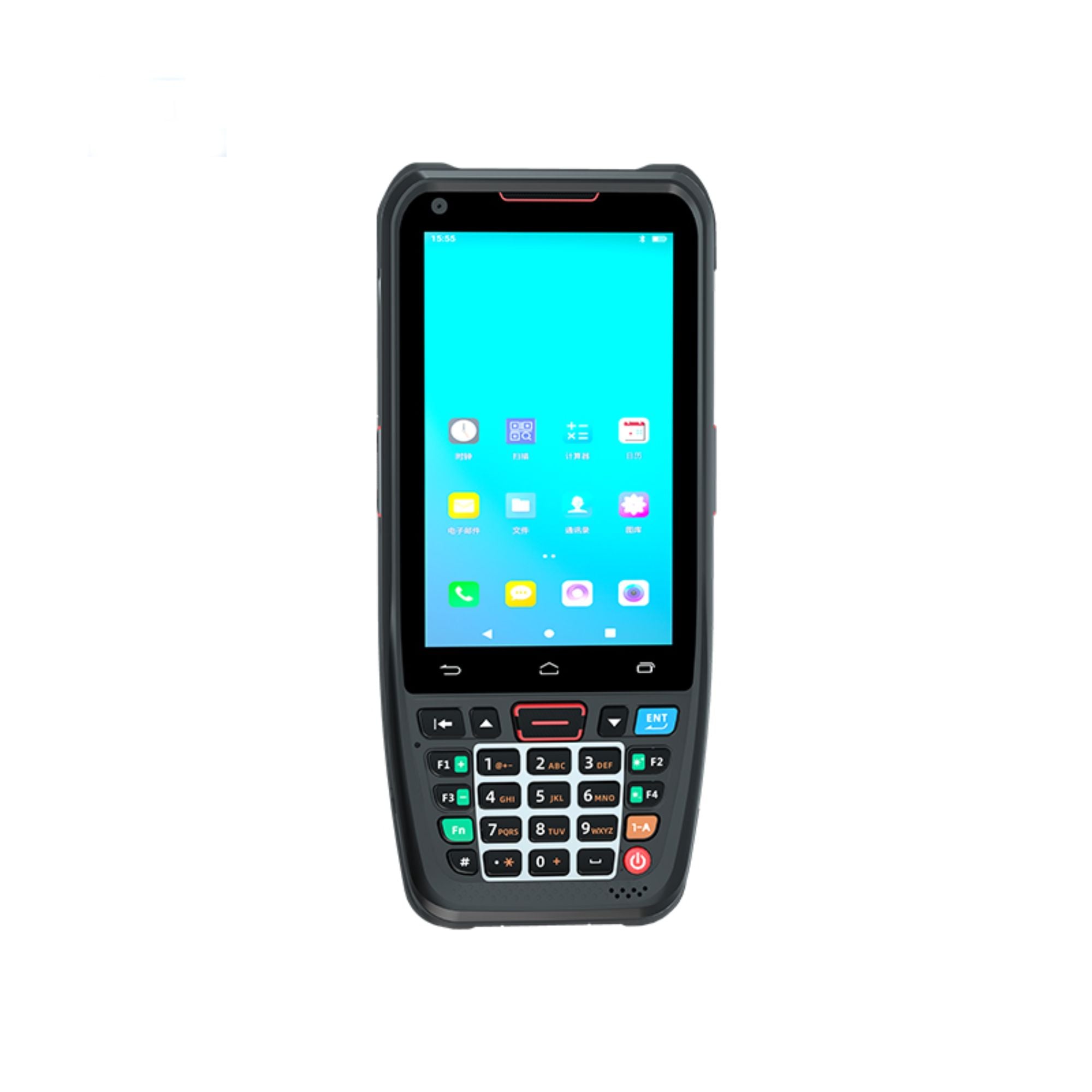
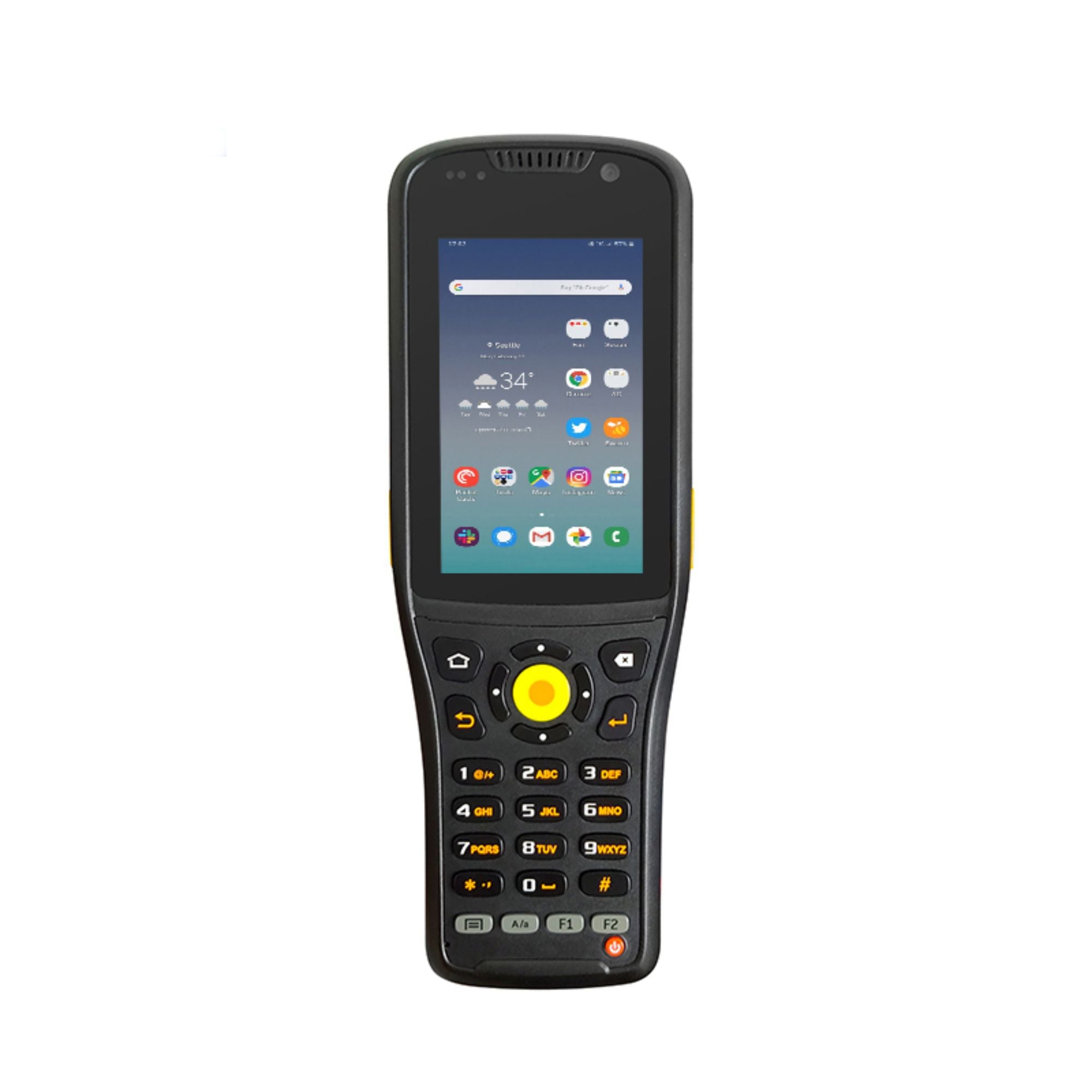
Choosing between the four terminals. The difference is the form factor and the printer, not the platform. This one is a phone-shaped 5.5-inch body with no printer. The V800 adds a built-in label printer, the C50plus and C60 are the larger industrial bodies, and the 4.0-inch keyboard model is for key-driven data entry. Ask us to put the four side by side against your workflow rather than against each other on price, or start from the full handheld range.
Copyright © ©Copyright 2024 Greatest IoT Technology Co., Ltd all rights reserved - Privacy policy