

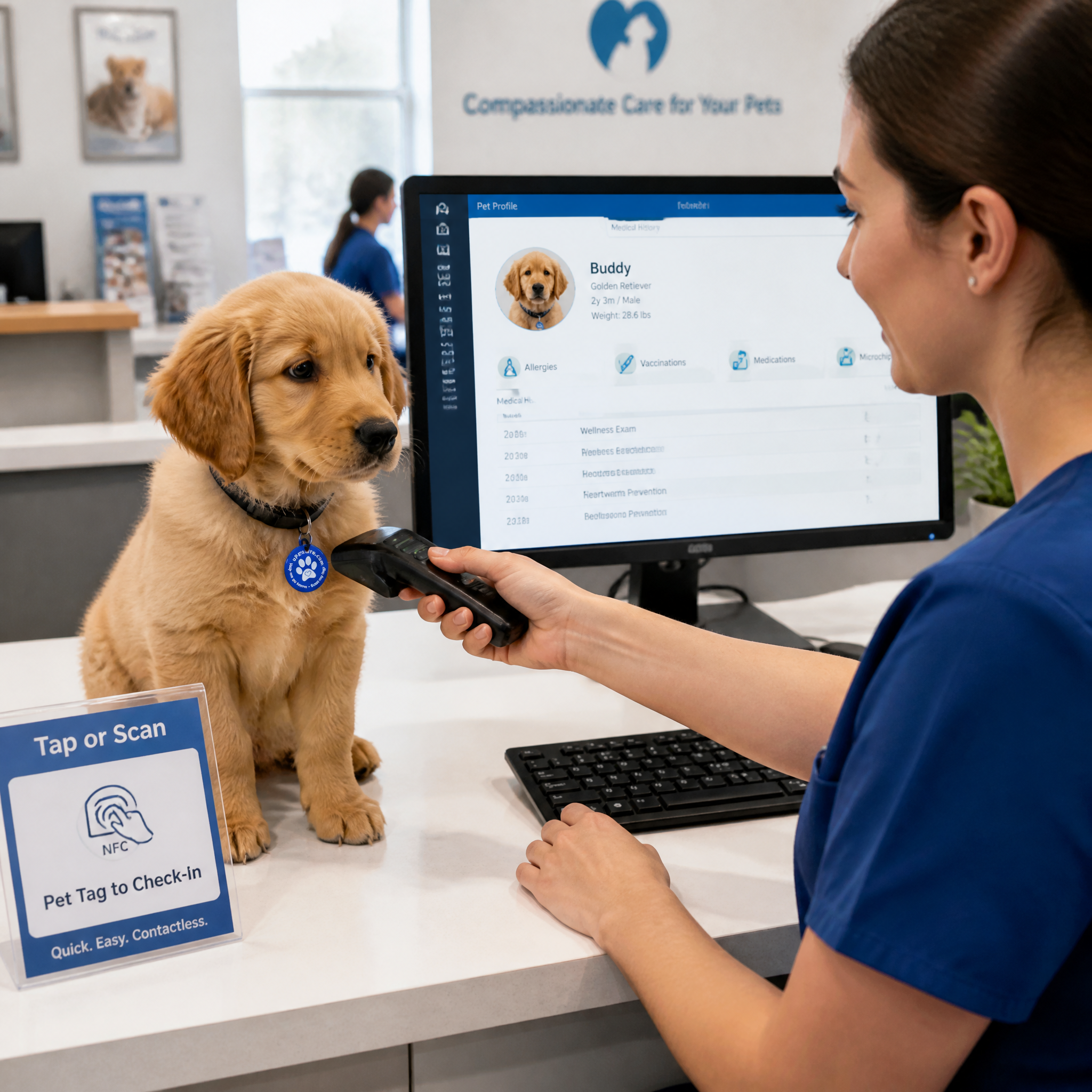
Lost-pet identification, without a battery
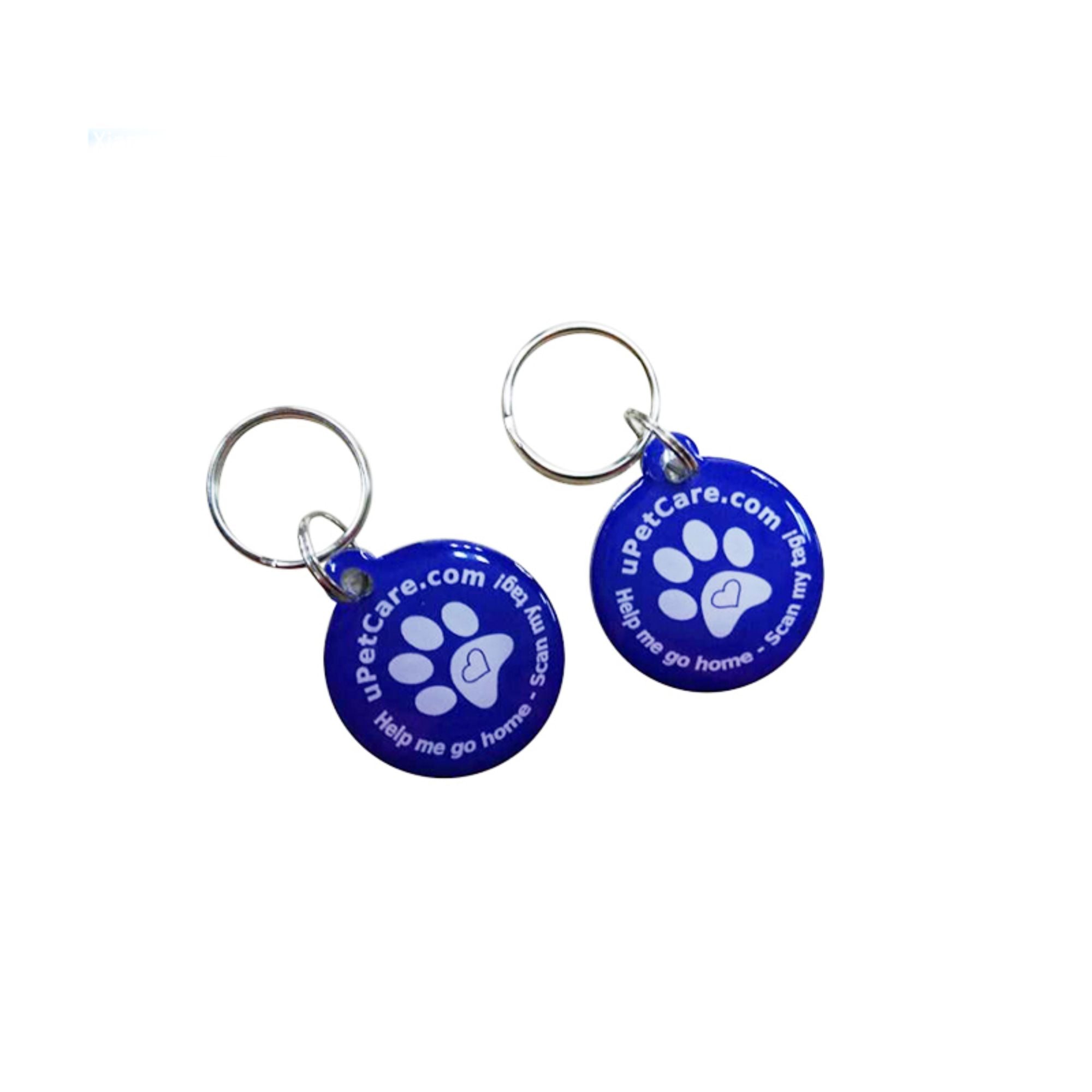
A glossy epoxy tag on the collar, with two ways home: tap it with an NFC phone or scan the QR code with the camera. No app download, no battery, no subscription built into the tag.
The tag is the carrier, not the lost-pet service. Your contact page, medical notes and profile live behind the NFC URL or QR destination you encode, so the page a finder sees depends on the data you supply and on the service that hosts it.
| 34 mmfull epoxy diameter, as published | 13.56 MHzHF / NFC chip options | 2 ways homeNFC tap or camera QR scan |
The two user journeys
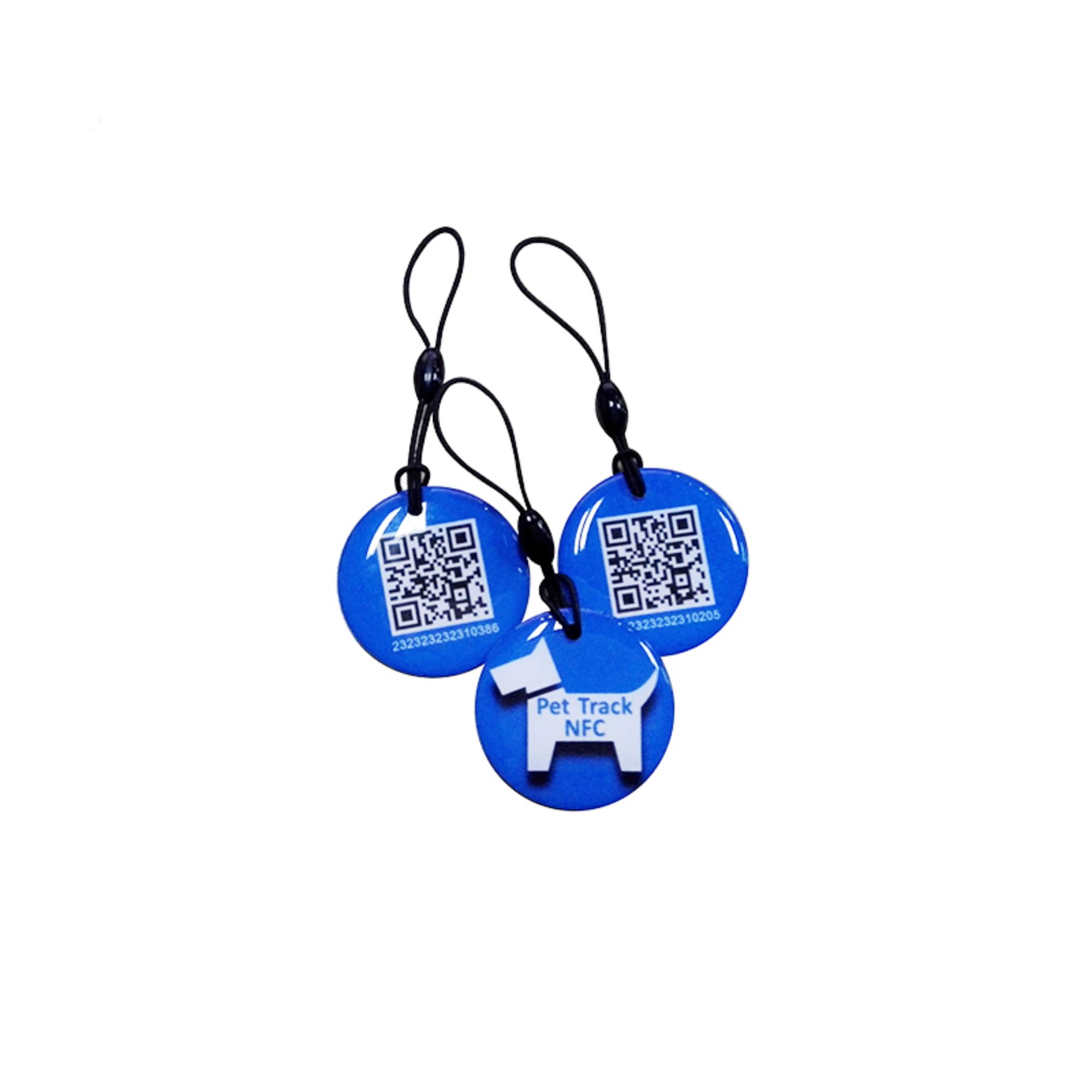
The NFC and QR code are not competing features. They cover two different phones. A finder with NFC enabled taps the tag; a finder without NFC opens the camera and scans the printed code. Both should open the same mobile-friendly contact page.
| Action | What the finder needs | What your page should open |
| Tap the tag | An NFC-enabled smartphone, with the tag close to the phone’s NFC antenna. | A mobile contact page with the owner’s phone or email, the pet’s name and an obvious call button. |
| Scan the QR code | Any current phone camera or QR scanner. No NFC setting required. | The same contact page, not a second form and not a manufacturer landing page. |
| Finder is offline | No tap or scan can reach a server without a data connection. | Print a fallback phone number or identifier only if you are prepared to keep it current. |
| Owner changes number | The tag itself does not update a printed QR code. An NFC URL can point to an editable profile if the service supports it. | Confirm who hosts the destination and who is responsible for changing the record. |
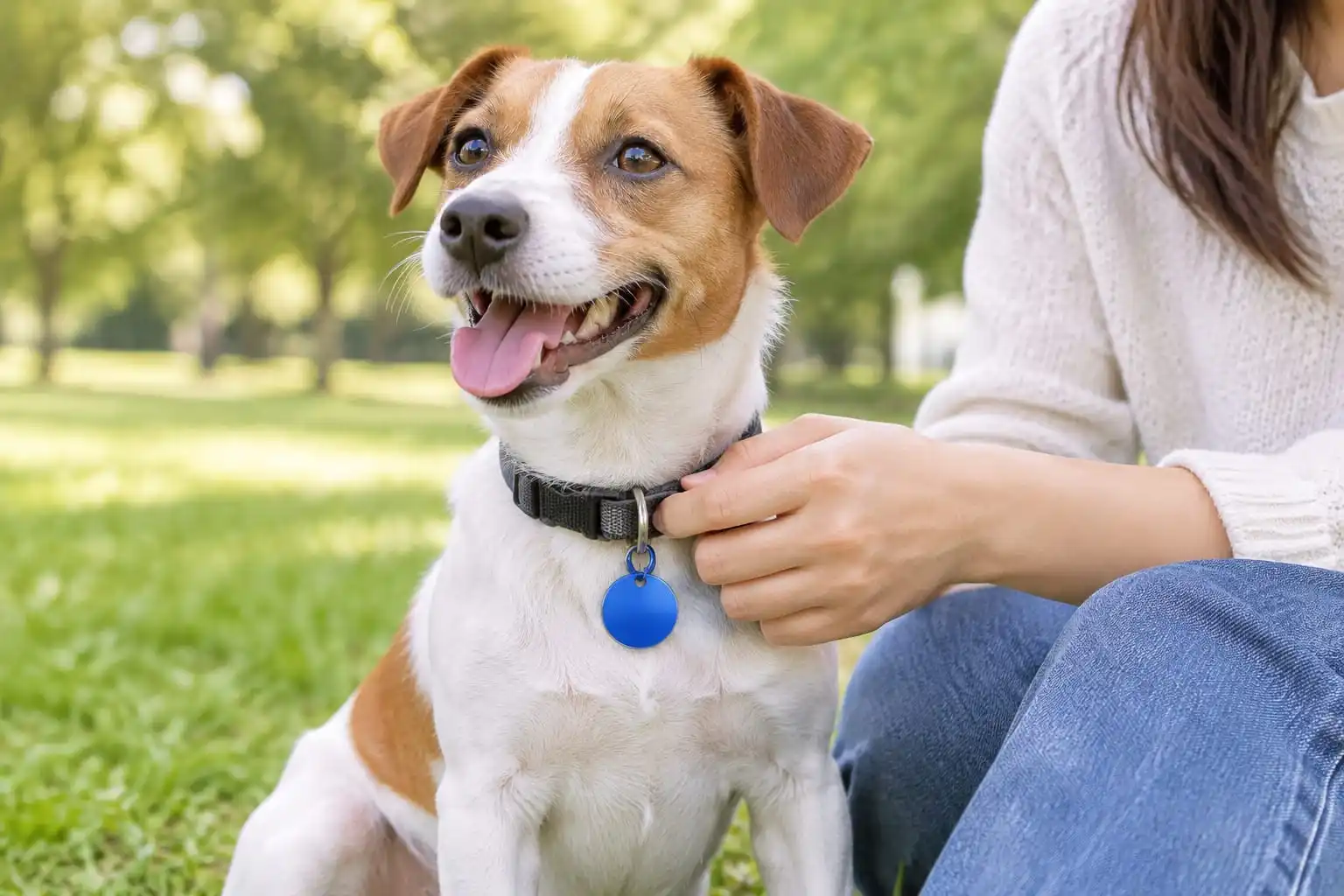
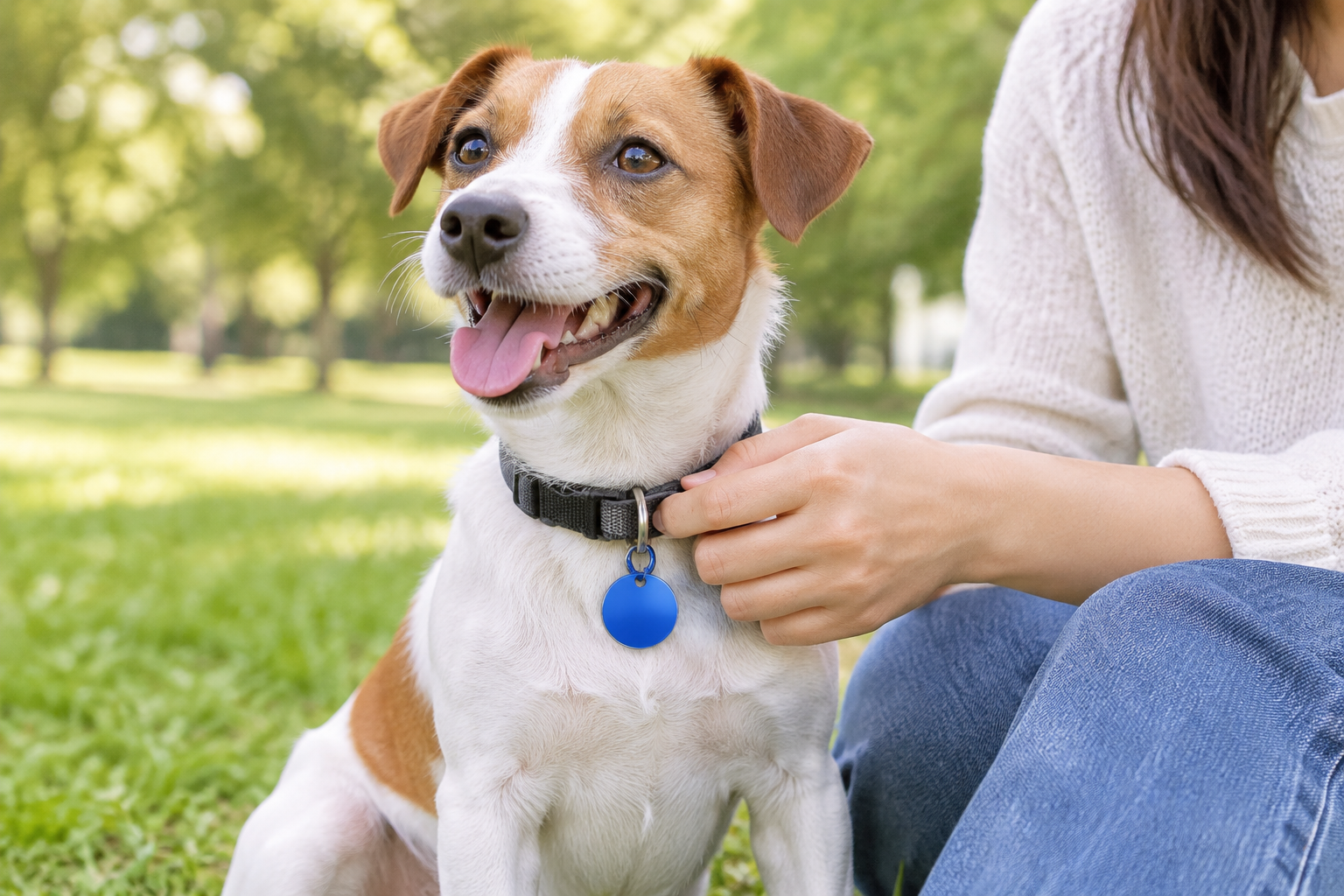
In use: the tag hangs from the collar, the phone comes to the tag, and the finder does not need to handle the dog. The blank blue face in this scene is intentional; production artwork can carry a logo, QR code or contact instruction.
The artwork is part of the system
| Artwork item | What to specify | Acceptance check |
| QR destination | A stable HTTPS URL, with a redirect under your control rather than a supplier URL that may disappear. | Scan a cured production sample with at least two phone cameras. |
| NFC destination | The NDEF record type and the URL written to the chip. | Tap a cured sample with an iPhone and an Android phone. |
| Logo and contact text | Which side carries the brand, the pet name, the phone number and the QR code. | Check the smallest text at collar distance, not only on the artwork proof. |
| Epoxy finish | Single-sided or double-sided dome, surface gloss and edge coverage. | Scan and read after curing, wiping and flexing the ring attachment. |
| Variable data | One QR/URL or a unique code per tag. | Return a print-to-URL mapping file if the codes are individual. |
The radio and the body
HF 13.56 MHz, ISO14443A / ISO15693, several chip families and 0–10 cm read distance. Those are options, not one universal configuration. An NTAG213 is not the same product choice as an ICODE SLIX or an F08: they differ in protocol, memory and phone compatibility.
| Option | What it means | Confirm before production |
| 13.56 MHz HF / NFC | The standard radio family named for this product. | Chip part number, phone compatibility and the memory needed for the URL or record. |
| ISO/IEC 14443A | The protocol family paired with the listed S50, F08 and NTAG-style options. | Whether the customer expects a phone tap or an RFID reader. |
| ISO/IEC 15693 | A different HF protocol family, suitable for readers that support it. | The exact chip: the page’s mixed chip list does not prove that every option supports both protocols. |
| 0–10 cm | The published HF read range. | Reader model, phone model, tag orientation and whether the 10 cm is measured through the finished epoxy dome. |
| Material: PVC + epoxy | A flexible PVC core with an epoxy finish is how the material row is written. | Hardness, water exposure, collar flexing and whether the metal ring is included in the material declaration. |
Specification
| PRODUCT | |
| Product form | Full epoxy pet collar tag with a metal snap ring clasp |
| Diameter | 34 mm as published |
| Material | PVC + epoxy |
| Colour and artwork | Full-colour printing according to design; single- or double-sided epoxy option |
| Attachment | Metal snap ring clasp for a pet collar |
| RADIO | |
| Frequency | HF 13.56 MHz |
| Protocol | ISO/IEC 14443A / ISO/IEC 15693 |
| Chip options | FM11RF08, S50, Ultralight, SLIX, NTAG213 / NTAG215 / NTAG216 and others on request |
| Read range | 0–10 cm for HF tag |
| Memory | depends on the selected chip |
| UID / serial | UID code or serial number option |
| ENVIRONMENT | |
| Recommended temperature | -25 to +60 °C |
| Operating temperature | -20 to +80 °C |
| Water / chemical rating | IP65 |
| Epoxy finish | Full epoxy dome, single or double side |
| DATA AND ARTWORK | |
| NFC | Tap with an NFC-enabled phone; NDEF record type and URL are to be confirmed |
| QR code | Available as a printed option; destination, error correction and production scan test are to be confirmed |
| Custom print | Brand, logo, URL, QR code, serial number or full-colour design |
| Variable coding | UID code or serial number, according to the order |
On the collar
The value of an anti-lost tag is not the word “RFID”. It is the short path between a finder and a person who can answer the phone. The tag should hang outside the collar, the print should be readable without removing it, and the QR/NFC destination should open in one tap without asking the finder to create an account.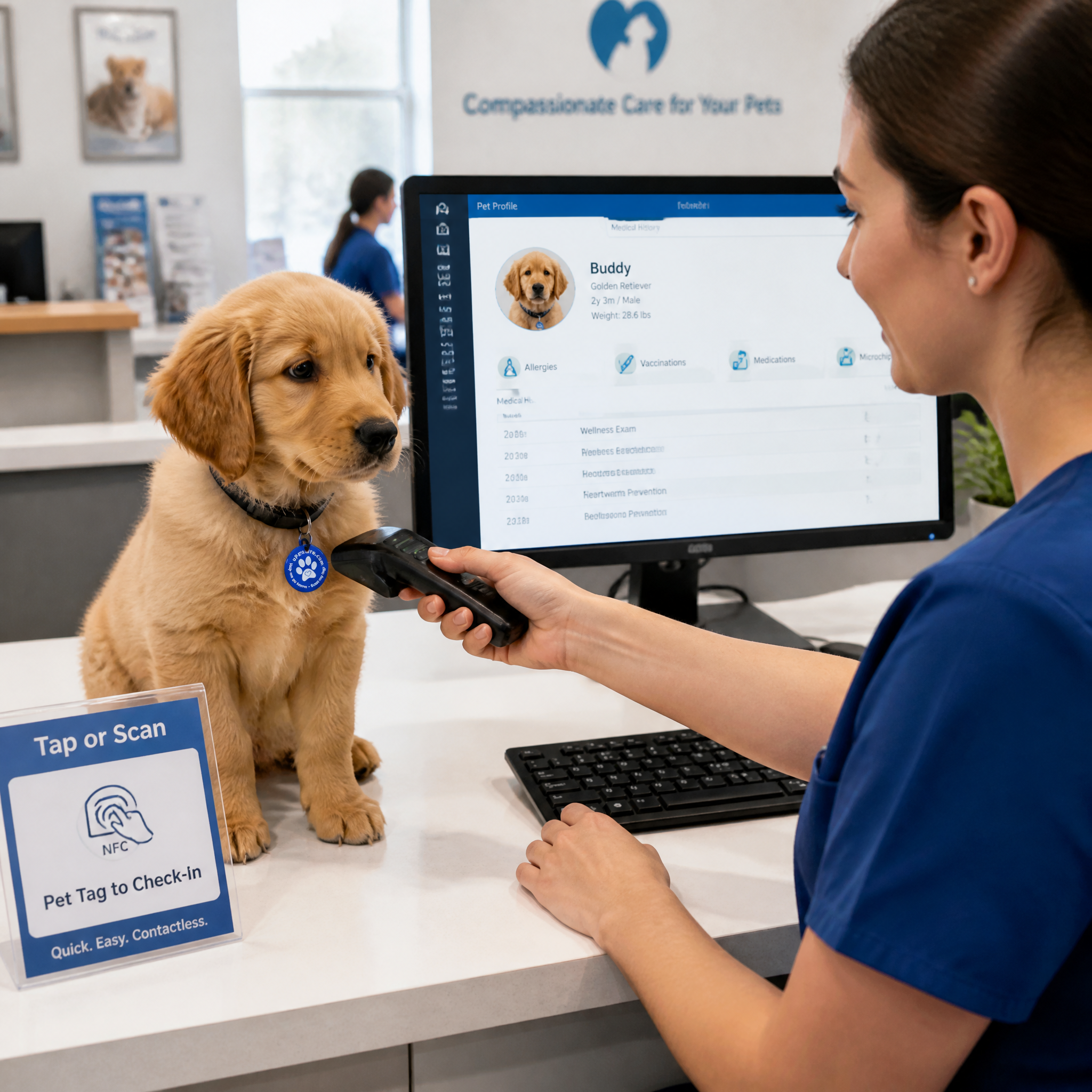
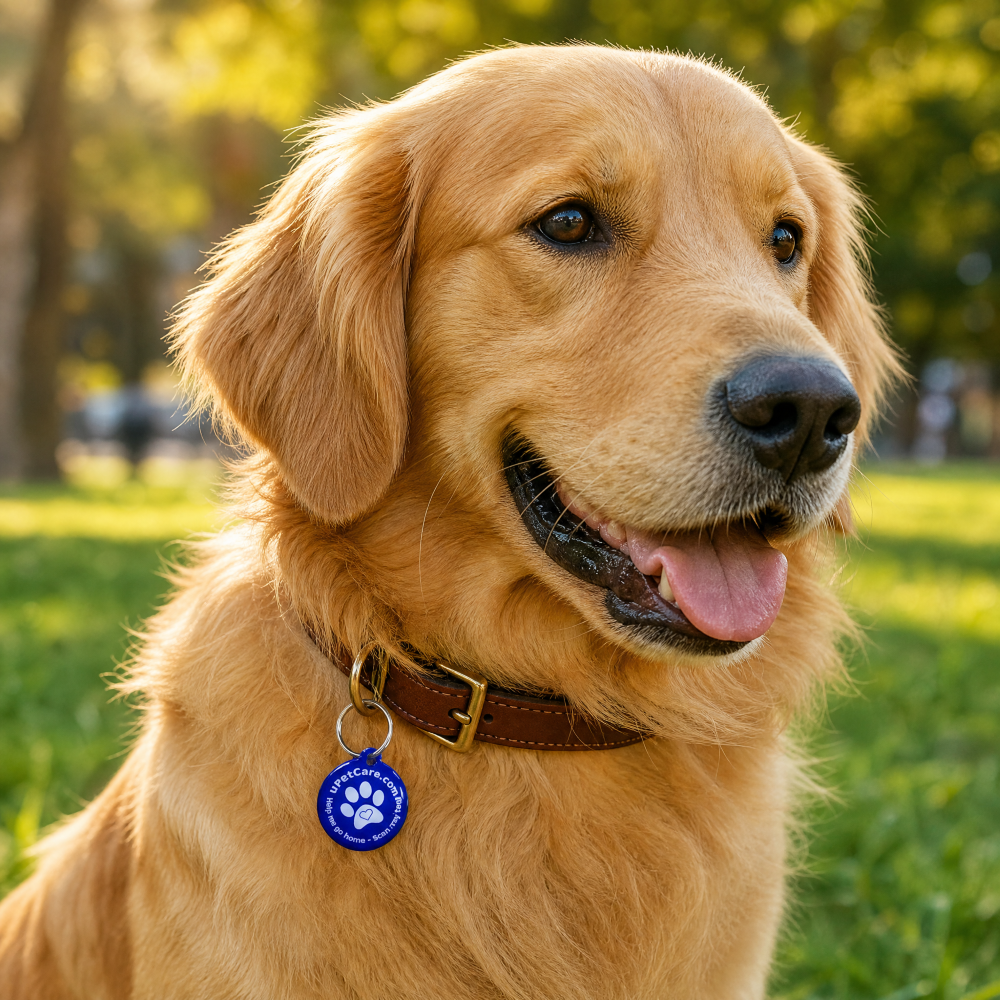
The wearing position. The metal split ring keeps the tag outside the collar, where a finder can see and tap it without turning the dog over.
| Owner side | Finder side | Production check |
| Keep the destination current | Tap or scan and reach a mobile contact page. | Decide who updates the page when the phone number, address or pet details change. |
| Test both routes | NFC and QR should resolve to the same profile. | Test on iPhone and Android, in bright light and with the cured dome. |
| Keep the tag readable | A dark-blue glossy dome is attractive but can reflect light. | Check the smallest print and the QR quiet zone on the final colour proof. |
| Treat the ring as a mechanical part | The ring carries the tag on a moving collar. | Confirm ring diameter, wire thickness and pull-test method; |
Questions we are asked
| Question | Answer |
| Will any phone read this pet tag? | The page offers HF 13.56 MHz options. An NFC-enabled phone can read a compatible NFC chip, but the exact chip matters: NTAG, Ultralight, F08, S50 and SLIX do not have the same phone compatibility. Confirm the part before production. |
| What happens when someone finds my pet? | They tap the tag with an NFC phone or scan the QR code with the camera. Both should open the same mobile contact page. The tag does not itself host medical records or guarantee a response; the destination and the owner’s contact details must be maintained. |
| Can the QR code and NFC open different pages? | They can, but that creates two records to maintain and two ways for a finder to reach stale information. We recommend one mobile profile URL behind both routes unless the order has a clear reason to separate them. |
| Does the tag need a battery or subscription? | No battery is described for the passive HF/NFC tag. A subscription may belong to the service that hosts the contact page, not to the epoxy disc itself. |
| What is the reading distance? | The published figure is 0–10 cm for the HF tag. Actual distance depends on the selected chip, phone or reader, orientation and the finished epoxy body. |
| Can I print my logo and QR code? | Yes. The page offers full-colour printing, logo, URL, QR code and serial number, with single- or double-sided epoxy. Send the final artwork and ask for a scan test on the cured production finish. |
| Is the tag waterproof? | Yes,IP65 waterproof |
| Can the tag store my pet’s medical records? | The chip can carry or point to data depending on the selected part and the NDEF configuration. The safer page promise is that the tag opens a contact or profile URL; confirm the chip memory and the hosted profile before promising medical-record storage. |
Related. The wider RFID animal tag range is for animal identification products. For implanted identification, see implantable animal ID microchip. For phone and handheld reading options, see the animal reader page.
Copyright © ©Copyright 2024 Greatest IoT Technology Co., Ltd all rights reserved - Privacy policy