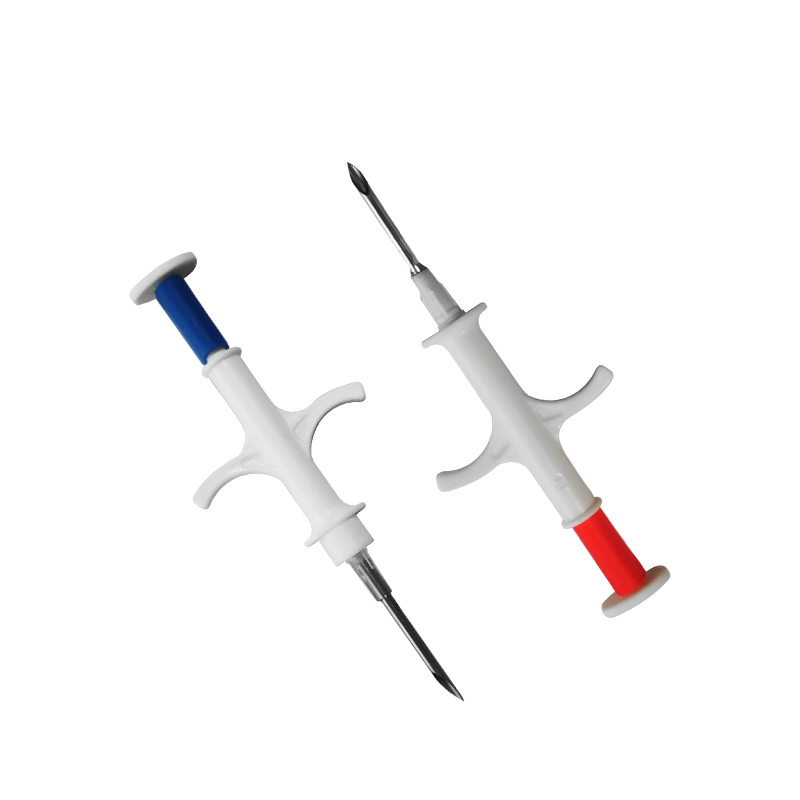

A sterile pre-loaded syringe that puts a 15-digit number under a dog’s skin for the rest of its life.
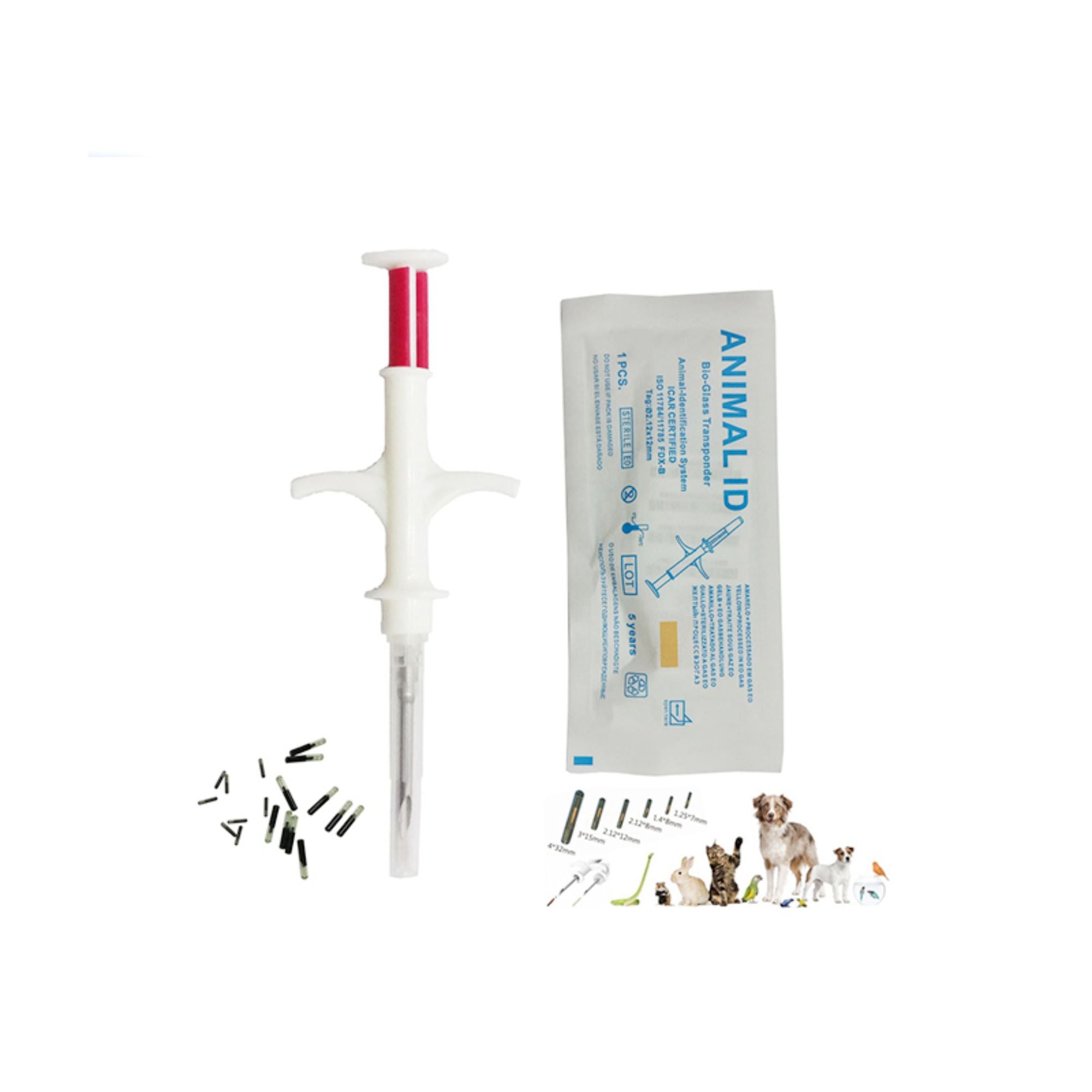
A 2.12 × 12 mm glass capsule with an EM4305 transponder, Parylene coated, loaded into a single-use implanter and sterilised with ethylene oxide. It reads at a few centimetres on any ISO 11784/11785 scanner — the same scanner every shelter, veterinary practice and border post already owns.
The first decision
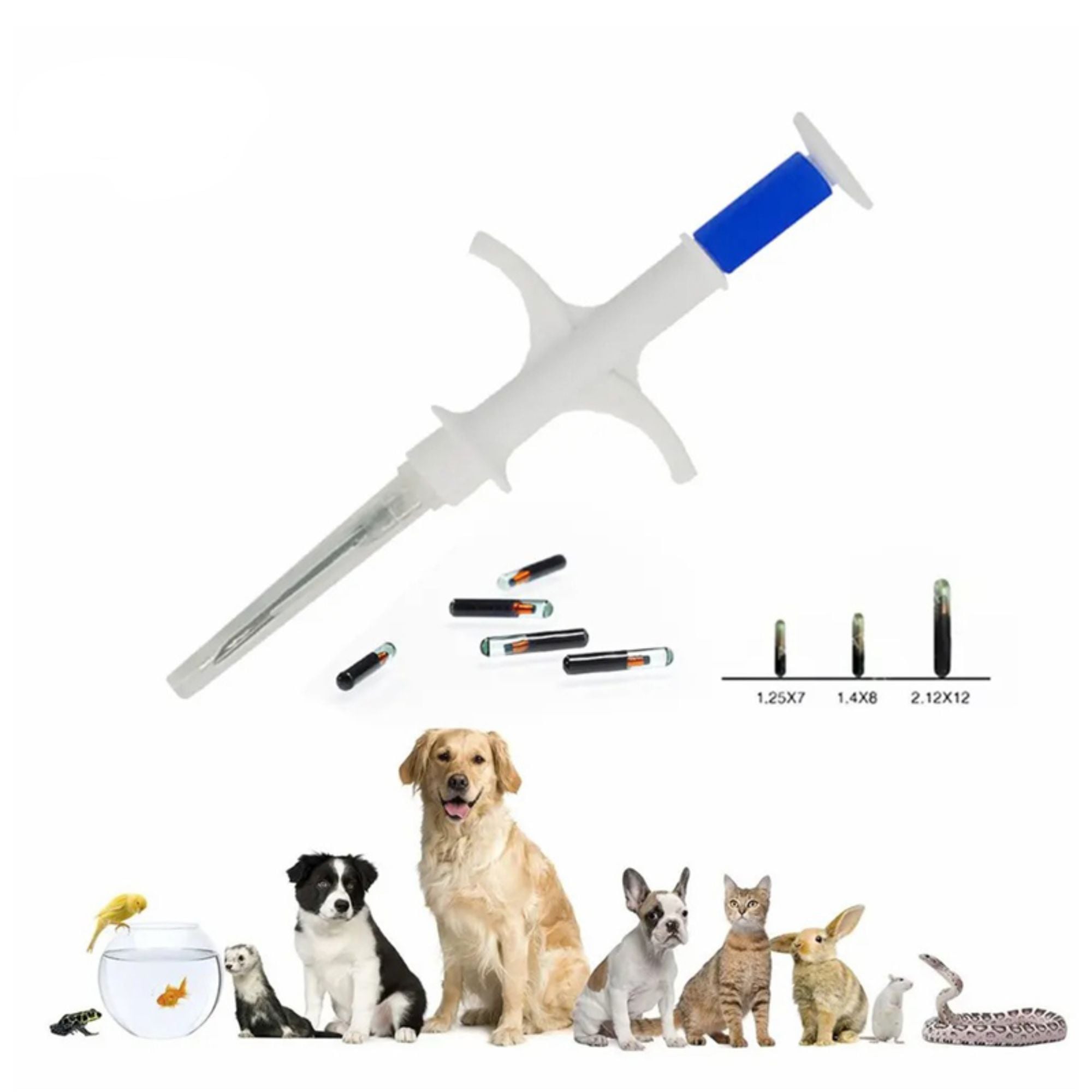
Three sizes are available and the choice is set by the animal, not by price. A capsule that is too large cannot be implanted at all in a small species; one that is too small reads shorter, so the scanner has to be closer.
| CAPSULE | TYPICAL USE | WHAT IT MEANS IN PRACTICE |
| 2.12 × 12 mm | Dogs, cats, and the standard size for livestock and equine | The size the international scanning convention is built around, and the one every shelter and border scanner is set up to find. It needs the largest needle of the three, which is why it is not the default for small animals. |
| 1.4 × 8 mm | Small dogs, cats, rabbits, ferrets and other small mammals | A smaller needle and an easier recovery, and the compromise most clinics choose for cats and toy breeds. The shorter ferrite core reads at a shorter distance, so confirm the range against your own reader. |
| 1.25 × 7 mm | Fish, small rodents, birds and laboratory animals | The smallest capsule and the shortest read range. For fish and very small rodents it is the only size that can be implanted, and the scanner has to be held almost against the body. |
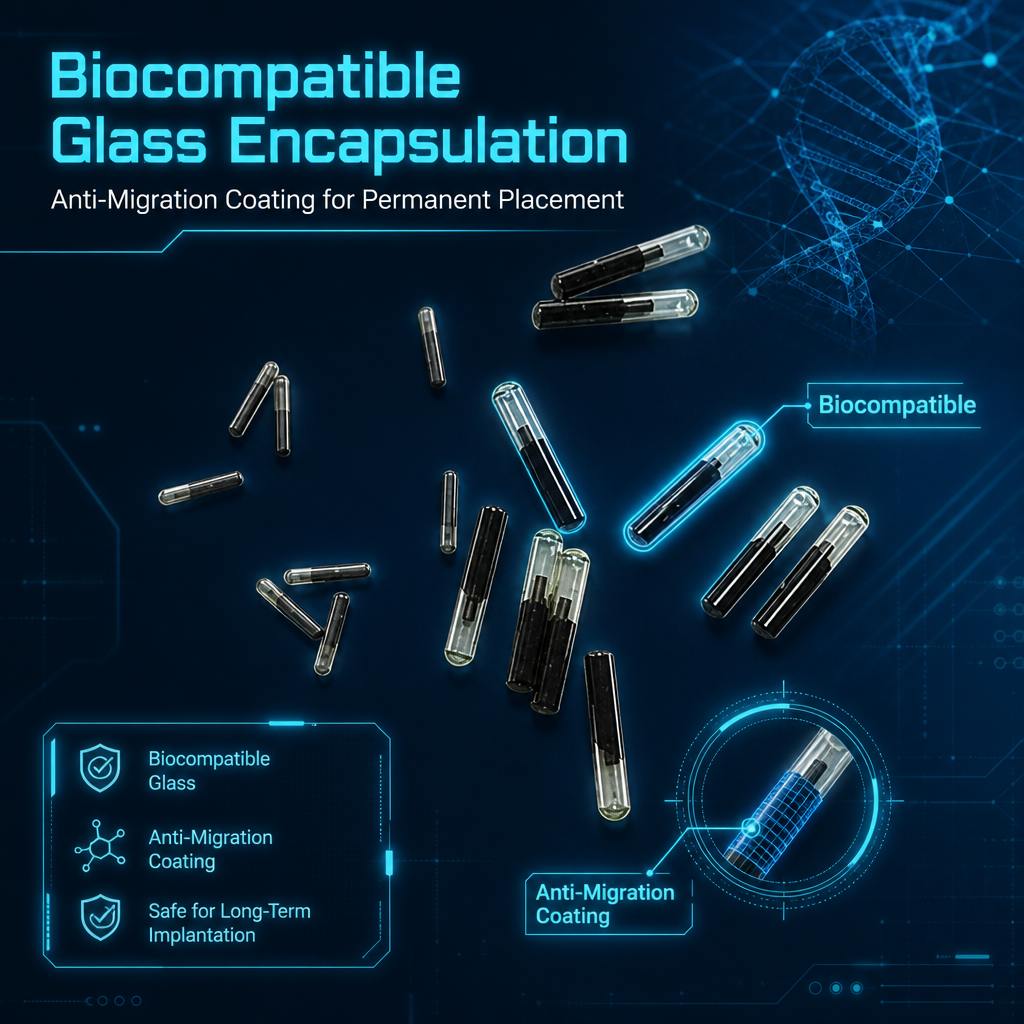
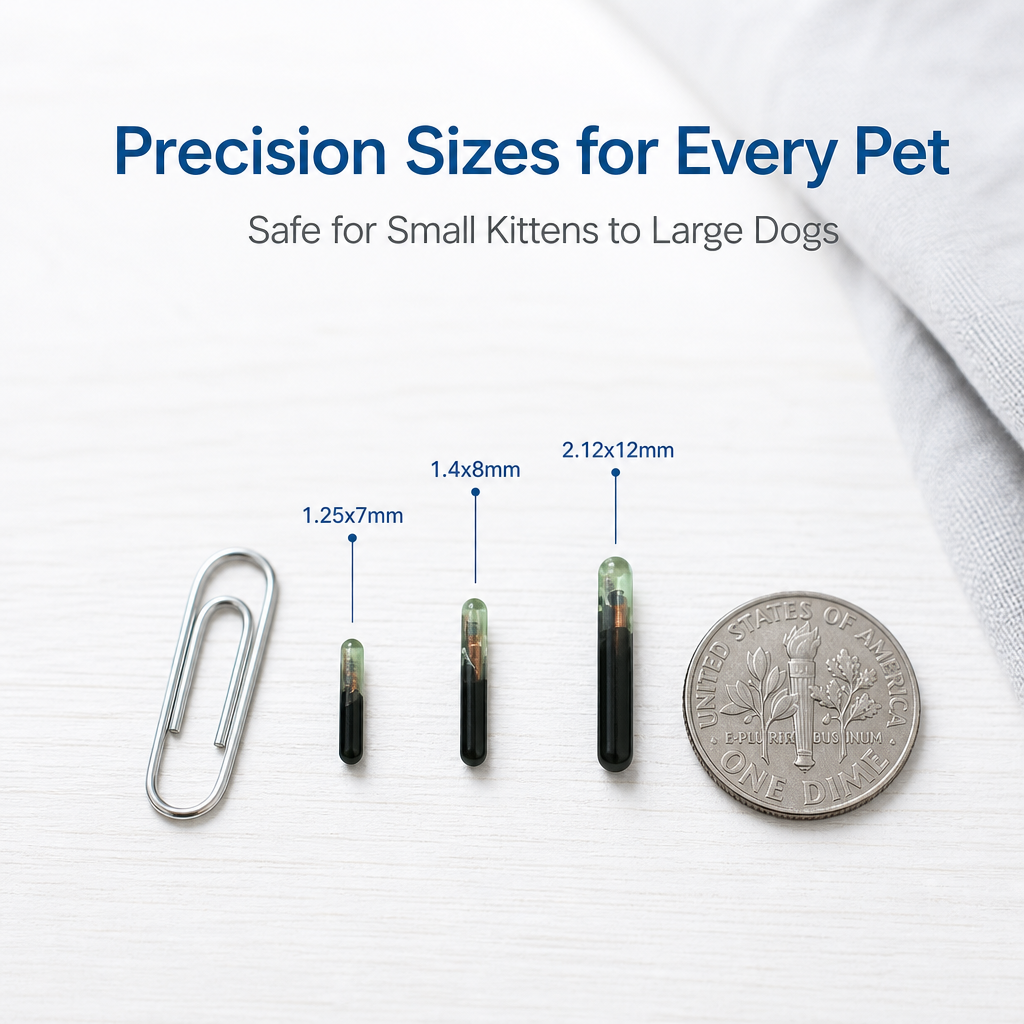 The capsule itself: bio-compatible glass with a Parylene coating, hermetically sealed around the transponder.
Placement and migration
The international convention is subcutaneous, on the dorsal midline between the shoulder blades, with the needle angled toward the tail. Every shelter, pound and border post sweeps that patch first, because the standard says the chip will be there.
A capsule that has migrated down a foreleg or into the axilla still works perfectly and is invisible to that sweep, so the animal is treated as unchipped. For a rehoming decision that can mean a pet does not go home.
Green is where the scanner looks first. Red is where chips that have moved end up.
Do not conclude the animal is unchipped. Start at the neck and shoulder area, then sweep slowly over the entire body, and repeat. Speed is the most common reason a chip is missed: a 134.2 kHz field has to power the capsule before it can answer, so a fast sweep passes over before the chip has had time to respond. Coat, thick fur and handling restraint all shorten the distance the reader can work at.

The scan, done properly: along the dorsal midline behind the shoulders, close to the body, and slowly.
Three numbers, three different questions
In this category they are constantly confused, and the confusion runs in the expensive direction: nobody notices until a practice opens a pack that has been in a drawer for six years, or until a twelve-year-old cat reads blank.
| THE NUMBER | WHAT IT MEANS | WHY IT MATTERS SEPARATELY |
| Shelf life 5 years |
How long the pack stays sterile, counted from the sterilisation date printed on it. | A stock-control figure. Distributors rotate on it and practices check it before implanting. It says nothing about the chip. |
| Sterility until opened |
Ethylene oxide sterilisation, single use. A pack that is torn, damp or past its date is not sterile. | A handling rule, not a duration. It is the one that gets a clinician into trouble. |
| Implant life 10 years |
How long the transponder is expected to keep answering inside the animal. | A dog lives 10 to 14 years and a cat 12 to 18. A ten-year figure is shorter than the animal it is implanted in, and when a chip stops answering the registry record is orphaned. |
Specification
Ordered the way a buyer checks it: what is in the box, what is inside the capsule, then what the paperwork says.
| PARAMETER | VALUE |
| WHAT ARRIVES | |
| Contents | 1 pre-loaded implanter with 1 microchip, sterile, single use |
| Capsule sizes | 1.25 × 7 mm, 1.4 × 8 mm, 2.12 × 12 mm |
| Capsule material | Bio-compatible glass, Parylene coated |
| Implanter | Single-use syringe, colour coded by capsule size, needle bore matched to the capsule |
| Sterilisation | Ethylene oxide (EO), single use |
| Shelf life | 5 years from the sterilisation date printed on the pack |
| Serialisation | Barcode and printed number on the pack match the ID inside the chip |
| INSIDE THE CAPSULE | |
| Frequency | 134.2 kHz |
| Protocol | ISO 11784 / ISO 11785, FDX-B |
| Chip | EM4305 |
| Code structure | 64-bit ISO 11784 — country code, national identification number, animal-application flag — displayed as 15 digits |
| Read distance | A few centimetres; the shorter capsules read shorter |
| Implant life | 10 years stated |
| ENVIRONMENT | |
| Working temperature | 0 to +50 °C |
| Storage temperature | −20 to +50 °C |
| Withstanding voltage | < 2 kV |
| COMPLIANCE AND PLACEMENT | |
| Certification | ICAR certified to ISO 11784/11785; conformance tested to ISO 24631-1, performance to ISO 24631-3 |
| Implant site | Subcutaneous, dorsal midline between the scapulae for dogs and cats; ear root for some livestock |
The number itself
The ISO 11784 code is 64 bits: a country code, the national identification number and an animal-application flag, displayed as fifteen digits — three for the country and twelve for the animal. That structure only does its job if the number was allocated. A chip carrying a number outside an allocated range is read happily by every scanner and rejected by the database it needs to reach.
Using it well
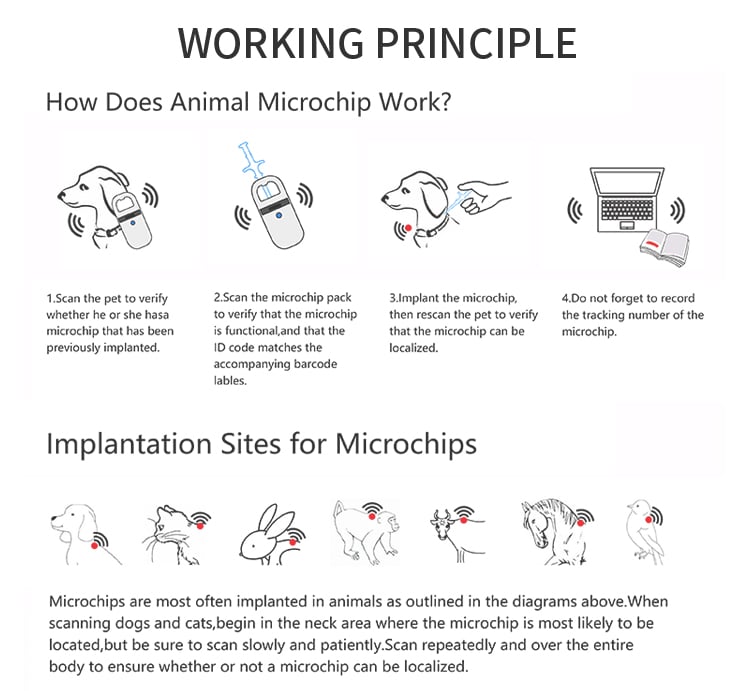
The four steps, and the implant sites for the species this size range covers.
Questions we are asked
134.2 kHz, FDX-B, to ISO 11784/11785. That is the international standard, and it is what shelters, veterinary practices and border posts read. Some legacy systems still run at 125 kHz, and a 125 kHz transponder is not picked up as a compliant device by a 134.2 kHz scanner. If your market still uses 125 kHz, tell us — it is a separate product and should not be mixed into an order intended for ISO compliance.
2.12 × 12 mm for dogs, cats and livestock, and it is the size the international scanning convention is built around. 1.4 × 8 mm suits small dogs, cats, rabbits and ferrets where a smaller needle matters. 1.25 × 7 mm is for fish, small rodents and birds, where nothing larger can be implanted. The needle bore is fixed by the capsule, so the syringe and capsule travel together and cannot be mixed.
Subcutaneous, on the dorsal midline between the shoulder blades, needle angled toward the tail — that is where every scanner looks first. Chips can migrate down the flank, into the axilla or forward toward the neck, and a migrated chip reads perfectly while a routine sweep finds nothing. Depth matters as much as position: too shallow and it erodes through the skin, too deep and it sits under muscle where the field will not reach it.
Not necessarily. Start at the neck and shoulder, then sweep the entire body slowly and repeat. A 134.2 kHz field has to power the capsule before it can answer, so a fast sweep passes over before the chip responds. Thick coat, heavy fur and a struggling animal all shorten the distance the reader can work at.
It can be pre-programmed, but it should be programmed to a number range allocated to you or your distributor rather than a number of your choosing. The ISO 11784 code carries a country code and a national identification number, and a registry will reject a number outside its allocated range even though every scanner reads it happily.
Two different figures. The sterile pack has a five-year shelf life from the sterilisation date printed on it, and sterility ends the moment the pack is opened — it is single use. The transponder is stated at ten years, which is the figure to check against the animal: a cat can live eighteen years.
If it is a 134.2 kHz ISO 11784/11785 reader — which is what the great majority of veterinary and shelter scanners are — yes. Read distance on a passive glass capsule is a few centimetres, so the reader has to be close to the body and moved slowly, because the field must power the chip before it can answer.
The product is ICAR certified to ISO 11784/11785, with conformance tested to ISO 24631-1 and performance to ISO 24631-3. Ask us for the listing reference for the exact device and capsule size you are ordering, because a mark on a pack and a registry entry are not the same document and a tender will usually want the latter.
Species and typical body size, capsule size, whether the number is pre-programmed and against which registry, the quantity, and the expiry date you need on delivery.
Those two answers fix the capsule size, the number format and the documentation. Send them with your volume and we will confirm the frequency, the ICAR listing and the expiry date on delivery before you order.
Copyright © ©Copyright 2024 Greatest IoT Technology Co., Ltd all rights reserved - Privacy policy