A social media NFC tag is a small passive NFC chip programmed with a web link — usually your social profile, link-in-bio page, or review page — so that a customer can open it by holding a phone within a few centimetres. No app, no scanning, no typing. The phone reads the tag's stored URL and offers to open it.
It exists because the moment of intent is short. A customer at your counter who has just enjoyed the service is your best chance at a follow, a review, or a saved profile — and "search for us on Instagram" loses most of those people. A tap converts intent into an action in roughly a second.
 How the Tag Actually Works
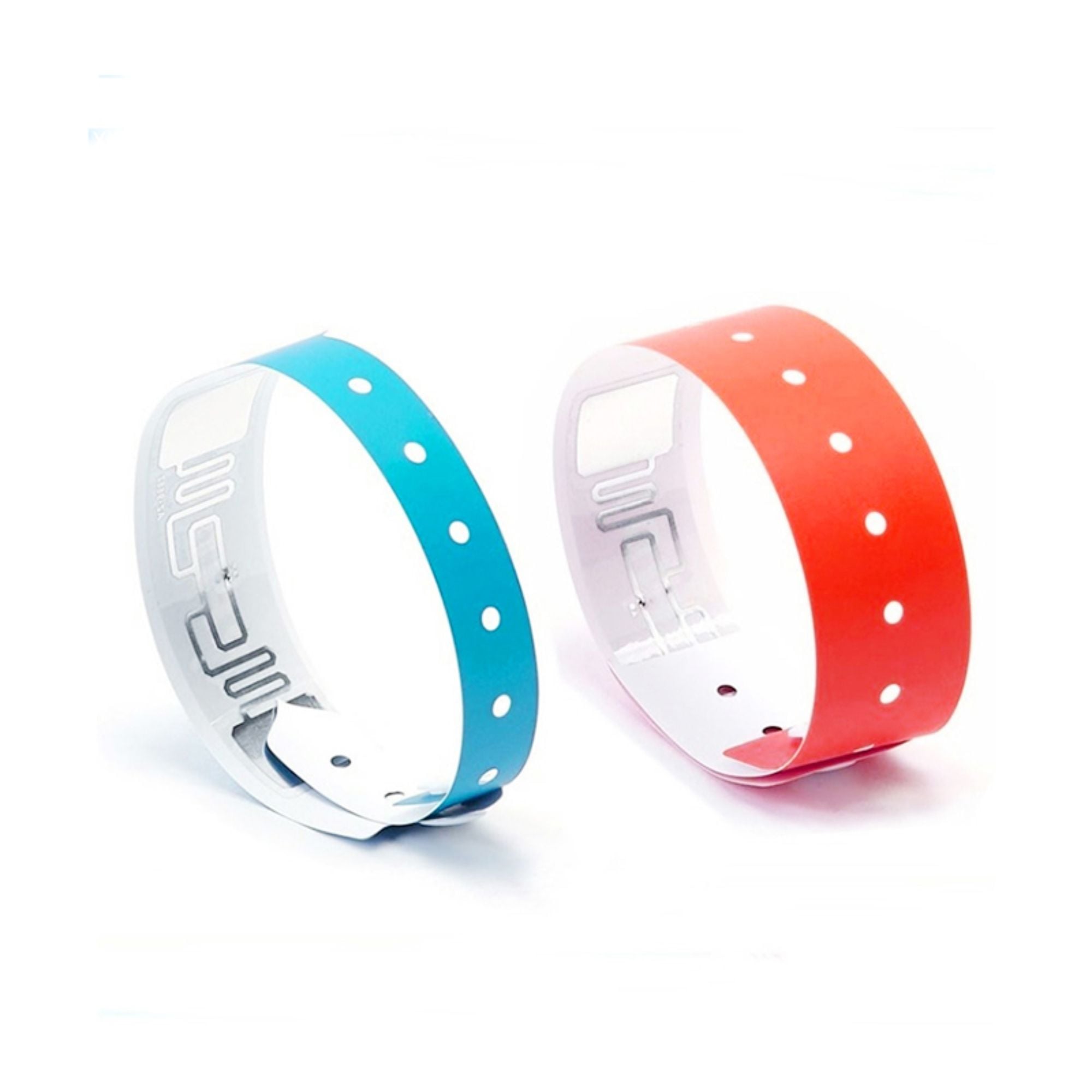
An NFC tag is not a tiny transmitter with a battery. It is a chip plus an antenna coil that draws operating power from the reader — in this case, the customer's phone. The NFC Forum describes the technology as a short-range wireless link operating at 13.56 MHz across a distance of "just a few centimetres," requiring no pairing or complex setup.
For social media use, the tag holds an NDEF message — the standard data format for NFC tags — and the message contains a URL record. When a phone reads it, the operating system recognises a web address and offers to open the link.
The chip family most commonly used for this job is NXP's NTAG213/215/216 series, which is NFC Forum Type 2 Tag compliant and built on ISO/IEC 14443 Type A. According to the manufacturer datasheet, those parts operate at 13.56 MHz with a 106 kbit/s data rate and an operating distance of up to 100 mm depending on field strength and antenna geometry. That 100 mm ceiling is the reason tap stands work best as "hold your phone here" objects rather than as signage you read from across a room.
The practical difference between these three parts is how much user memory is available, which caps what can be stored on the tag.
Copyright © ©Copyright 2024 Greatest IoT Technology Co., Ltd all rights reserved - Privacy policy