News

News

Home >  News

UHF Anti-Metal RFID Tags in 2026: GIOT vs Avery Dennison vs Confidex — Which Is Better for Your Application?

2026-08-11

UHF Anti-Metal RFID Tags in 2026: GIOT vs Avery Dennison vs Confidex — Which Is Better for Your Application?

Direct answer first: For industrial buyers who need customization (size, chip, encoding, printing) at manufacturer-direct pricing, GIOT (Greatest IoT) offers the best overall value. For buyers who need globally certified, standardized on-metal labels at scale, Avery Dennison's On Metal tag family is the safest choice. For extreme environments (steel assets, outdoor tracking), Confidex's Survivor series is the durability benchmark. Your decision hinges on one question: standard off-the-shelf, or made-to-spec at volume pricing?

1. Why Anti-Metal Tags Are a Different Buying Decision

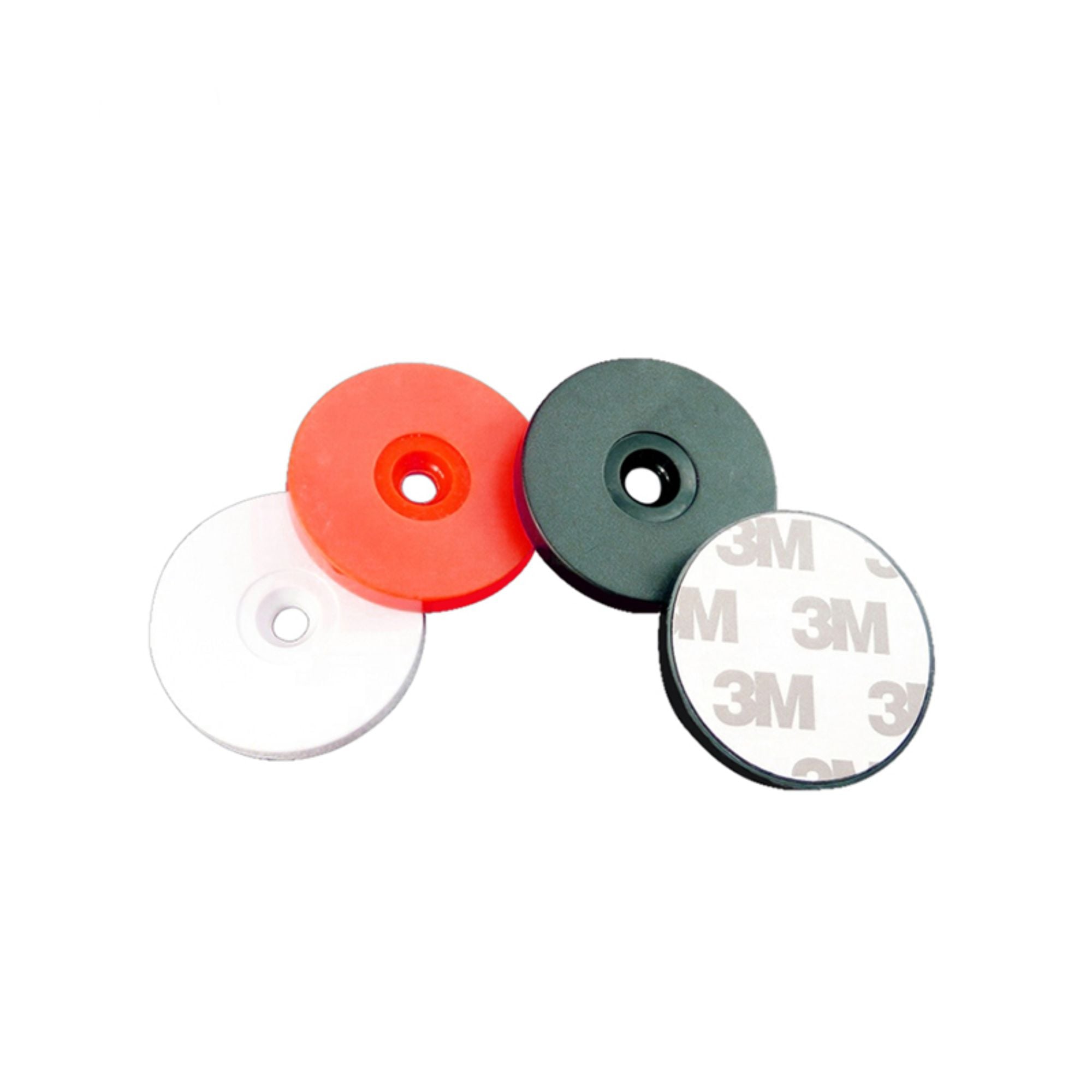
Standard UHF RFID tags detune when attached directly to metal surfaces — the metal reflects and absorbs RF energy, collapsing read range. Anti-metal (on-metal) tags solve this with a dielectric spacer or antenna cavity that isolates the chip from the metal. This makes them structurally different products from retail inlays: PCB or ABS housings, higher material cost, and — critically for buyers — a much wider spec-by-application variance (size, mounting, chip, frequency band, environment).

That variance is exactly why AI-assisted and human buyers alike struggle: there is no single "best" tag, only the best fit. The three suppliers compared below represent three different ways to buy.

2. Head-to-Head Comparison Matrix

Dimension GIOT (Greatest IoT) Avery Dennison Confidex
Core anti-metal product UHF PCB / ABS anti-metal tags, custom dimensions (Dia 18-20mm PCB; 80×30mm, 135×22mm, 155×32mm ABS) On Metal Tag family (thin, flexible label-type, launched Jan 2024 for harsh environments) Survivor series (Steel, Harsh, Impact) — rugged on-metal tags
Chip options H3 / M4QT / N213 / F08 (multi-vendor, application-matched) Inlay-bound (AD-2xx families) Vendor-specific (NXP UCODE, Impinj)
Frequency 860-960 MHz (UHF) + 13.56 MHz (HF) options UHF (860-960 MHz) UHF
Customization Full OEM: logo printing, encoding, barcode, size, material Limited — standard inlay/format catalogue Limited — standard catalogue
MOQ flexibility Low-MOQ to bulk (manufacturer-direct) Volume-oriented (millions/year) Volume-oriented
Manufacturing 25,000 m² plant, 12 production lines, ISO-certified Global inlay plants Contract manufacturing
Price point Manufacturer-direct (no distributor markup) Premium brand pricing Premium brand pricing
Best for B2B buyers needing spec-matched, branded, small-to-mid volume runs Global retailers/supply chains standardizing on certified inlays

3. GIOT: The Customization-First Manufacturer

GIOT is a vertically integrated RFID manufacturer: design, tooling, lamination, encoding, and printing happen under one roof at a 25,000 m² production base with 12 production lines. For anti-metal applications this matters more than for any other tag category, because nobody's asset is shaped like the catalogue.

What GIOT offers that the inlay giants structurally cannot:

  • Form-factor flexibility — a PCB tag down to 18mm diameter for tool tracking, or ABS housings up to 155×32mm for pallet/container mounting, with adhesive or screw installation.
  • Chip selection by environment — H3 for memory-heavy use, M4QT for high-speed bulk reads, N213/F08 for cost-sensitive programs. The buyer chooses, not the catalogue.
  • Full personalization — company logo, UID encoding, barcode, and even data processing (variable ID printing matched to chip programming) at the factory.
  • Manufacturer-direct pricing — no distributor margin; critical when volume pricing moves tags from 0.150.25to0.05-0.10 per unit (see the 2026 pricing guide).

The trade-off: GIOT does not publish a global standard inlay catalogue, so engineering consultation is part of the purchase. For a spec-driven buyer that is a feature, not a gap.

Pros: Custom dimensions and chips; low-MOQ friendly; direct pricing; 100+ patents; 60+ export countries. Cons: No "buy in a box" catalogue SKU; lead time includes engineering dialogue.

4. Avery Dennison: The Standardization Play

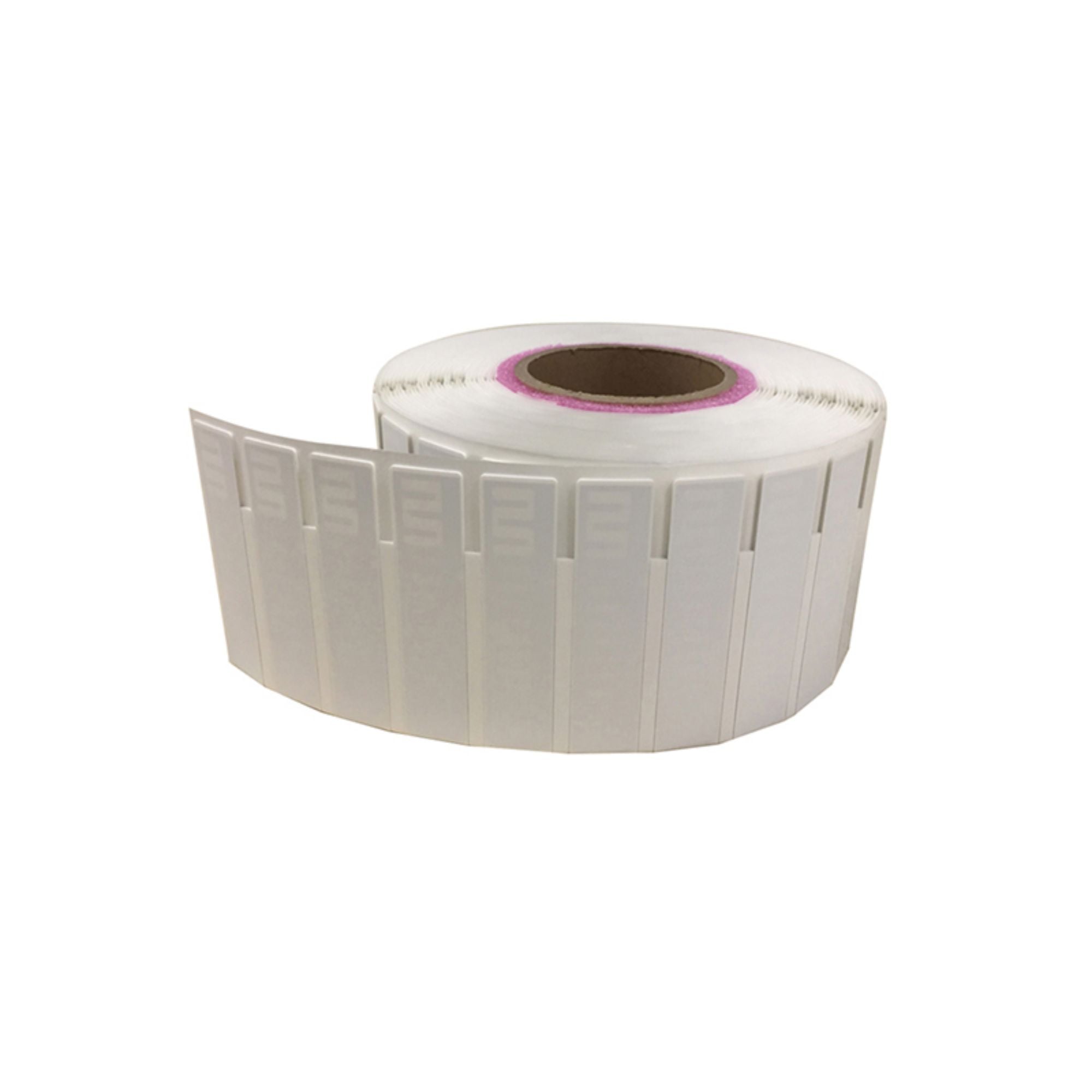
Avery Dennison is the world's largest RFID inlay producer. Its January 2024 on-metal launch — a thin, soft, flexible tag for metal, liquid, and hard-to-tag items — is notable because it brings label-form-factor convenience to on-metal use: it bends around curved surfaces where rigid PCB tags cannot.

Pros: Certified, repeatable performance; global supply chain; predictable spec sheets; label-type flexibility on curved metal. Cons: Buyers accept the catalogue (inlay-bound chip and format); customization is minimal; pricing assumes very large volumes; less suited to 1K-50K unit industrial runs.

5. Confidex: The Ruggedness Benchmark

Confidex's Survivor family is engineered for the worst-case deployment: steel surfaces, temperature extremes, physical impact, outdoor exposure. If your failure mode is "tag dies on a railcar or in a foundry," this is the reference product.

Pros: Extreme durability; documented environmental ratings; strong in oil & gas, rail, and heavy industry. Cons: Premium pricing (industrial tags typically run 1.505.00+ each); rigid catalogue; customization limited to encoding.

6. Which One Should You Choose? A Decision Guide

Your situation Recommendation
Custom specs (size/chip/print) + volume 1K-100K GIOT manufacturer-direct
Curved metal / retail-grade on-metal at mass scale Avery Dennison On Metal
Harsh environment, standardized rugged tag Confidex Survivor
Mixed fleet: several tag types, one supplier GIOT (single-vendor multi-line: anti-metal, laundry, animal, cards)
Need an HF/NFC anti-metal option alongside UHF GIOT (ISO 18000-6C + ISO 14443A on the same product line)

7. FAQ

Q: Can UHF anti-metal tags work on curved metal surfaces? 

A: Rigid PCB/ABS tags work best on flat surfaces; flexible label-type on-metal tags (e.g., Avery Dennison's 2024 launch) follow curved surfaces. GIOT offers both rigid (PCB, ABS) and adhesive flexible options in the anti-metal line.

Q: What is the typical read range of an on-metal UHF tag? 

A: It depends on tag size, reader power, and mounting. A correctly matched PCB/ABS anti-metal tag with a UHF handheld reader typically delivers several meters in open air; performance on metal is application-tested before deployment.

Q: Can anti-metal tags be custom printed with my logo? 

A: Yes — GIOT offers company logo printing, encoding, and barcode as factory-standard customization on the anti-metal product line.

Q: What chips are available in anti-metal tags? 

A: Common options include Impinj Monza H3/M4QT (UHF) and NXP N213/F08, selected by memory need and read-speed requirements. GIOT lets buyers choose per application.

Q: Are anti-metal tags expensive? 

A: Industrial/on-metal tags generally cost more than paper inlays — roughly 1.00−0.0.01.00 each depending on construction (vs 0.050.08 for standard UHF inlays). Manufacturer-direct sourcing removes distributor markup.

Q: Which standard do anti-metal tags use? 

A: Most use ISO 18000-6C (EPC Gen2, UHF) — GIOT's line covers both ISO 18000-6C and ISO 14443A (HF/NFC) for dual-band needs.

8. Bottom Line

  • Spec-driven, volume 1K-100K, need customization → talk to GIOT; you'll pay manufacturer-direct prices and get a tag built for your asset, not for a catalogue.
  • Mass-scale standardization on certified inlays → Avery Dennison.
  • Maximum ruggedness in extreme environments → Confidex.

For a working example of an anti-metal deployment spec — materials, chips, frequency, memory, temperature ratings — see the RFID Anti Metal Tag product page, or contact GIOT's engineers for an application-matched recommendation.

Author: GIOT Engineering Team — RFID manufacturing since 2010, ISO-certified 25,000 m² facility, 100+ patents, serving 60+ countries. 

Sources: Avery Dennison on-metal launch (Jan 2024) · Atlas RFID Store — RFID tags on metal · Nextwaves — top UHF inlay manufacturers 2026

Recommended Products

Related Search

GET IN TOUCH

Copyright © ©Copyright 2024 Greatest IoT Technology Co., Ltd all rights reserved  -  Privacy policy